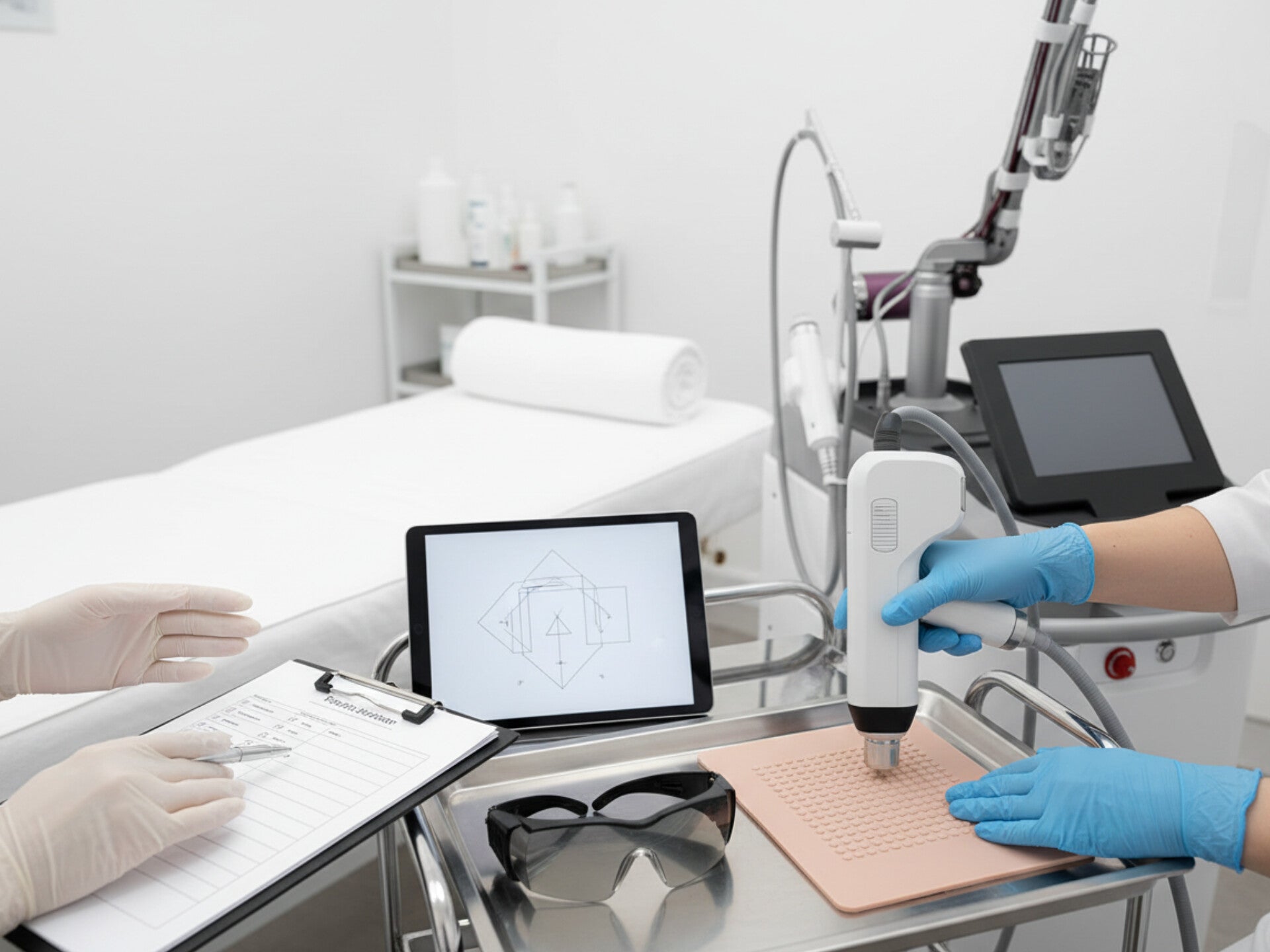
Pico Laser vs Picosecond Laser: What Is the Difference for Tattoo & Pigment Removal?
A clinic owner in Istanbul spent two weeks last spring comparing what looked like the same machine sold under 14 different supplier listings on a B2B marketplace. Every listing called the product a 'pico laser.' The prices ranged from $4,800 to $82,000. The marketing photos looked nearly identical. The spec sheets used the same buzzwords. She had no idea why the spread was so wide — or which one was the right purchase for her clinic's tattoo removal and pigmentation services.
When she sent the technical specs of the cheapest unit to an independent laser engineer for review, the answer was clarifying: the device's actual pulse duration was 5–8 nanoseconds, not picoseconds. The unit was a basic Q-switched Nd:YAG with 'pico' branding stamped on the front panel and the marketing copy. True picosecond performance starts below 1,000 picoseconds — most premium platforms run 300–500 picoseconds. A 5-nanosecond machine being sold as a “pico laser” does not meet true picosecond criteria.
This is the most common confusion in the pico laser market in 2026. Clinic buyers see the same word — pico — applied to platforms ranging from genuine sub-500ps premium picosecond lasers down to mislabeled nanosecond Q-switched units. The label does not equal the technology. This guide clarifies the difference, explains what actually matters for tattoo and pigment removal, and gives clinic buyers the language to verify what they are buying before signing a purchase order.
Quick Answer: Is Pico Laser the Same as Picosecond Laser?
Yes — in clinic marketing, “pico laser” is commonly used as a short market term for picosecond laser technology. It is not a strict technical synonym. “Picosecond laser” is the more precise term because it refers to the device’s ultra-short pulse duration, measured in trillionths of a second. Both are used to describe lasers emitting energy in pulses less than a nanosecond.
The difference between 'pico' and 'picosecond' is not really a big one. The actual differences lie between the various picosecond platforms, specifically: PicoSure (Alexandrite, 755nm, Cynosure); PicoWay (Nd:YAG, 1064nm + 532nm, Candela); PicoPlus (Nd:YAG multi-wavelength, Lutronic); Discovery Pico (Nd:YAG multi-wavelength); and the larger family of Nd:YAG picosecond platforms by clinical-grade manufacturers across the world. It's more about the pulse duration, the number of wavelengths, the power, the handpiece choices, cooling and operator training than the marketing label.
|
TERM |
WHAT IT MEANS |
CLINIC BUYER NOTE |
|
Pico laser |
Short market name |
Usually means picosecond laser technology |
|
Picosecond laser |
Technical term for ultra-short pulse duration |
More precise term for the device category |
|
PicoSure / PicoWay / PicoPlus / Discovery Pico |
Brand or model names |
These are brand/model names, not interchangeable technical categories. A brand name alone does not guarantee the same pulse duration, wavelength set, peak power, handpiece options, or clinical performance. |
|
Q-switched laser |
Nanosecond pulse laser |
Older pigment/tattoo platform still used in clinics |
|
Nd:YAG / Alexandrite / Ruby |
Laser medium or wavelength family |
Determines pigment and tattoo color suitability |
Buyer Note: endeavor not to make hasty buying decisions on a device simply because the word 'pico' appears on the front panel. Verify the actual pulse duration in writing (premium platforms are 300–500ps; entry picosecond runs 450–750ps; anything above 1,500ps is nanosecond-territory marketed as pico).
What Is a Pico Laser Machine?

A pico laser machine is a laser machine capable of delivering energy in pulses that are a trillionth of a second. The ultra-short pulse duration produces a photoacoustic effect which is basically a controlled mechanical shock wave at the focal point, breaking the tattoo ink and skin pigment into microscopic particles. Over the next few weeks, the body's lymphatic system eliminates the broken-up particles. Unlike longer pulse lasers, fragmentation is mechanical - not just thermal, so collateral heat damage to surrounding tissue is minimized and the risk of post-inflammatory hyperpigmentation is minimized.
Some of the most common clinical applications include tattoo removal in a variety of colors, freckle and lentigines treatments, sun spot and age spot removal, melanised skin tone and texture improvements at conservative settings, post inflammatory pigmentation work, acne mark improvement, skin tone and texture improvements and laser toning rejuvenation. Browse professional pico laser machine options for current LEFIS platforms covering most of these clinical indications.
What Does 'Picosecond' Mean?
A picosecond is one trillionth of a second — 10⁻¹² seconds, or 0.000000000001 of a second. For comparison: a millisecond is one thousandth of a second, a microsecond is one-millionth of a second, a nanosecond is one-billionth of a second and a picosecond is one-trillionth of a second. Picosecond pulses are about 1,000 times shorter than nanosecond pulses of the Q-switched lasers and the significantly different pulse length alters the interaction of the laser energy with the tissue.
Shorter pulses are important because they produce a greater photoacoustic (mechanical) effect in a shorter time, allowing less time for the heat to spread into the adjacent tissue. The energy is expended in breaking up the pigment not in raising its temperature. This produces better fragmentation of stubborn tattoo inks, lower PIH risk on darker skin types, and shorter recovery times. Outcomes still depend on device settings, ink type, pigment depth, skin tone, and operator skill — picosecond technology is not magic, but it is a meaningful improvement over nanosecond Q-switched for the right indications.
Pulse Duration Comparison
|
LASER CATEGORY |
PULSE TIMING |
COMMON USE |
BUYER NOTE |
|
Q-switched laser |
Nanoseconds (5–20 ns typical) |
Tattoo and pigment removal |
Established but more heat-based |
|
Picosecond laser |
Picoseconds (300–750 ps typical) |
Tattoo, pigment, texture |
Faster pulse, strong photoacoustic effect |
|
Fractional ablative laser |
Variable, longer pulses |
Resurfacing, scars, wrinkles |
Different technology category entirely |
|
IPL |
Broadband pulsed light, ms range |
Pigment, redness, hair removal |
Not a true laser — broad-spectrum light |
Pico Laser vs Q-Switched Laser
Picosecond and Q-switched lasers share the same general purpose — fragmenting tattoo ink and skin pigment so the body can clear it — but they achieve the effect through different mechanisms.
Pulse duration
Picosecond lasers deliver energy in picoseconds, usually around 300–750ps on many clinical platforms. Q-switched lasers deliver energy in nanoseconds, often around 5–20ns. This means a picosecond pulse is much shorter than a Q-switched pulse.
Heat vs photoacoustic effect
Q-switched lasers use a mix of photothermal and photoacoustic effects. That means more heat is involved during pigment fragmentation. Picosecond lasers create a stronger photoacoustic effect, which is more mechanical than heat-driven. This can help fragment pigment with less surrounding heat spread when the device is used correctly.
Tattoo color range
Q-switched lasers remain reliable for black ink and selected tattoo colors. Picosecond platforms can offer stronger performance on difficult colors such as green, blue, and multicolor tattoos when the correct wavelength is available.
PIH risk and darker skin types
Picosecond lasers may reduce heat exposure compared with older nanosecond systems, which can be helpful for Fitzpatrick IV–VI patients. Still, safety depends on wavelength selection, fluence, skin diagnosis, treatment spacing, and operator skill. Q-switched lasers can carry a higher PIH risk when settings are too aggressive or when shorter wavelengths are used on darker skin.
Session count
Picosecond platforms may reduce the number of sessions for some tattoos and pigment cases, especially stubborn ink colors or dense pigment. They do not remove every tattoo in one or two visits. Most tattoo removal plans still require a series of treatments with proper spacing.
Capital cost
Q-switched platforms usually cost less and can still support an established pigment and tattoo removal menu. Picosecond platforms cost more, but they may support premium positioning, broader tattoo color coverage, and higher-value pigmentation services.
Clinic positioning
Choose Q-switched if the clinic needs a lower-cost, proven platform for basic tattoo and pigment work. Choose picosecond if the clinic wants to position itself around premium tattoo removal, stubborn pigment cases, multicolor tattoo work, and broader skin tone coverage.
|
FACTOR |
PICO / PICOSECOND VS Q-SWITCHED |
|
Pulse duration |
Pico: picoseconds (300–750ps). Q-switched: nanoseconds (5–20ns). |
|
Main effect |
Pico: photoacoustic/mechanical pigment fragmentation. Q-switched: photothermal + photoacoustic mix. |
|
Tattoo colors |
Pico: strong on difficult colors with right wavelength. Q-switched: strong on black + selected colors. |
|
Heat spread |
Pico: usually lower. Q-switched: usually higher. |
|
PIH risk on darker skin |
Pico: lower with appropriate settings. Q-switched: higher. |
|
Capital cost |
Pico: $40K–$200K+ premium platforms. Q-switched: $15K–$60K typical range. |
|
Clinic positioning |
Pico: premium pigment and tattoo service. Q-switched: established mid-tier service. |
|
Training requirement |
Both require significant operator training. |
Why 'Pico' Devices Are Not All the Same

Two clinics can both say they offer 'pico laser' treatments and use devices that perform very differently. The labelling is the same, but the technical ability is not. The actual factors that affect performance: pulse duration (premium 300-500ps, mid-range 450-750ps, above 1,500ps is a marketing ploy), wavelength options (1064nm, 532nm, 755nm, 785nm, 694nm — each is suited for different tattoo colors and skin pigments), peak power (often quoted in gigawatts; higher peak power fragments stubborn pigments more effectively), spot size flexibility, energy stability during long sessions, optional fractional/focus lens handpieces for skin rejuvenation, integrated cooling architecture, and long-term support from the manufacturer. Two devices marketed identically as 'pico' can sit at opposite ends of all these specifications.
Pico Laser Wavelengths Explained
Wavelength is the key to the treatment of a picosecond laser. The pigments and tattoo ink colors have different wavelengths that light can absorb — some wavelengths work better with the pigment, while others absorb the light and cause collateral damage. Multi-wavelength platforms span more indications, and single-wavelength platforms specialize.
- 532nm
Frequency-doubled from 1064nm, the 532nm green wavelength is highly absorbed by red and orange tattoo inks and by superficial brown pigment (freckles, lentigines, sun spots). The shallow penetration depth limits 532nm to superficial work. Higher PIH risk on Fitzpatrick IV–VI requires careful fluence selection on darker skin.
- 694nm
The ruby laser wavelength sits between 532nm and 755nm in melanin absorption. Useful for selected superficial pigmented lesions and some tattoo colors. Less common in modern picosecond platforms compared to ten years ago — Q-switched and picosecond Nd:YAG systems have largely displaced ruby for pigment work.
- 755nm
The Alexandrite laser wavelength has high melanin absorption with moderate penetration depth. Effective on superficial brown pigment, blue and green tattoo inks (depending on platform), and clean lentigines on lighter skin types. PicoSure operates primarily at 755nm. Skin type selection matters — 755nm increases PIH risk on Fitzpatrick IV–VI without conservative protocols.
- 785nm
Used in PicoWay and selected platforms specifically for blue and green tattoo pigments where 755nm and 1064nm don't reach efficiently. Availability depends on platform configuration — many clinics with picosecond platforms don't have 785nm capability unless they purchased the specific handpiece.
- 1064nm
The core Nd:YAG wavelength. Deeper penetration than 532nm or 755nm makes 1064nm effective for black and dark tattoo ink, deeper dermal pigmentation, and treatment of Fitzpatrick IV–VI patients where epidermal melanin competition is a safety concern. 1064nm is the workhorse wavelength of most clinic-grade picosecond platforms including the LEFIS C16 Picosecond Laser, which operates at a 1064nm center wavelength suitable for various skin types including darker skin tones.
Wavelength Planning for Tattoo and Pigment Removal
|
WAVELENGTH |
COMMON TARGET |
CLINIC USE CASE |
CAUTION |
|
532nm |
Red/orange ink, superficial pigment |
Spot pigment and warm-tone tattoo colors |
Higher PIH risk in Fitzpatrick IV–VI |
|
694nm |
Blue/green/black ink |
Selected tattoo cases |
Less common in modern platforms |
|
755nm |
Green/blue ink, some pigment |
Tattoo and pigment removal |
Skin type selection matters |
|
785nm |
Blue/green ink |
Multicolor tattoo coverage |
Availability depends on handpiece |
|
1064nm |
Black/dark ink, deeper pigment |
Core tattoo and pigment wavelength |
Still requires correct fluence and spacing |
Tattoo Removal: What Clinics Should Know

Tattoo removal outcomes depend on ink color (black is easiest, yellow and white are hardest), ink depth (deeper professional tattoos take more sessions than shallow amateur work), tattoo age (older tattoos clear faster than fresh ones), professional vs amateur tattoos (professional inks are denser but more consistent), skin tone (Fitzpatrick IV–VI patients require longer wavelengths for safety), body location (more vascular areas clear faster than fingers, ankles, and bony zones), immune system clearance rate (varies by patient), session spacing (6–8 weeks typical between sessions to allow lymphatic clearance), and previous laser history (prior aggressive treatment can complicate subsequent sessions). Most professional tattoos require 6–10+ sessions for full clearance, regardless of how the device is marketed.
Clinic buyers offering tattoo removal need wavelength coverage matching their patient base. A predominantly Asian clientele needs strong 1064nm coverage. A clientele with frequent multicolor tattoos benefits from platforms offering 532nm, 755nm, and ideally 785nm. A clinic with mixed demographics generally benefits from multi-wavelength Nd:YAG picosecond platforms over single-wavelength Alexandrite-only systems.
|
TATTOO COLOR |
COMMON LASER PLANNING |
WAVELENGTH |
BUYER NOTE |
|
Black |
Strong response across most platforms |
1064nm primary |
Core wavelength for tattoo clinics |
|
Red/orange |
Selected wavelength response |
532nm primary |
Watch skin type risk on Fitzpatrick IV–VI |
|
Blue/green |
Often most difficult |
755nm, 694nm, 785nm useful |
Check exact device capability |
|
Yellow/white |
Often poor response |
Variable across wavelengths |
Avoid overpromising patient outcomes |
|
Mixed color |
Requires multi-wavelength access |
Multi-wavelength platform preferred |
Better for full tattoo service menu |
Pigment Removal: What Clinics Should Know
Pigment removal includes the elimination of freckles, solar lentigines, sun spots, age spots, post-inflammatory hyperpigmentation, acne marks and any hyperpigmentation caused by melasma. There is a difference in response to picosecond treatment for each type and each one needs diagnosis prior to treatment. Solar lentigines and freckles typically respond well to standard picosecond protocols. PIH responds to gentle conservative settings paired with topical pigment control. Melasma is the highest-risk category — aggressive picosecond settings can trigger rebound flares that worsen the pigment. Many clinics now favor conservative low-fluence picosecond toning protocols for melasma rather than full-power treatment.
Pigmentation diagnosis precedes device selection. For broader patient-facing context on different pigment types, see our overview of how to get rid of freckles. For technical depth on selecting devices for pigmentation work specifically, see our other aesthetic laser buying guides.
Pico Laser Session Frequency
Session frequency depends entirely on the treatment goal. Laser toning protocols for pigmentation maintenance can run every 2–4 weeks at very conservative fluences. Spot pigment treatment typically runs 4–6 weeks between sessions. Tattoo removal requires 6–8 weeks minimum between sessions to allow lymphatic clearance of fragmented ink. Fractional rejuvenation runs 4–6 weeks between sessions. Twice-monthly picosecond treatment is rarely appropriate for tattoo or aggressive pigment protocols — the skin needs recovery time, and pushing intervals shorter typically increases complications without accelerating results.
|
USE CASE |
TYPICAL PLANNING |
CLINIC NOTE |
|
Tattoo removal |
6–8 week intervals, 6–10+ sessions |
Allows immune clearance and skin recovery |
|
Freckles / sun spots |
Spot or 4–6 week series |
Depends on pigment depth and skin tone |
|
Melasma-like pigment |
Conservative 2–4 week toning series |
Risk of rebound pigment if too aggressive |
|
Acne marks |
4-week series, 3–6 sessions |
Combine with acne control regimen |
|
Texture / acne scars |
Fractional pico every 4–6 weeks |
Downtime depends on intensity |
Clinic Buyer Checklist for a Pico Laser Machine

Walk through this checklist with each manufacturer before signing a purchase order. Vague answers signal post-purchase friction.
|
CHECKLIST ITEM |
WHY IT MATTERS |
|
Does the device clearly document true picosecond pulse duration (under 1,000ps)? |
Confirms genuine technology category vs marketing label |
|
Which exact wavelengths are included (1064, 532, 755, 785, 694)? |
Determines tattoo color range and pigment indications |
|
Is 1064nm available as standard? |
Important for black ink and broader skin tone use |
|
Is 532nm available? |
Useful for red/orange ink and superficial pigment |
|
Are blue/green ink wavelengths available (755 or 785)? |
Important for multicolor tattoo capability |
|
Is fractional or focus lens handpiece support included? |
Expands skin rejuvenation service menu |
|
What is the peak power output (in GW)? |
Affects pigment fragmentation effectiveness |
|
Is energy output stable across hundreds of shots? |
Supports consistent clinical results |
|
Is integrated cooling included? |
Improves patient comfort and reduces complication risk |
|
Is operator training included with the platform? |
Reduces operator error — the largest cause of complications |
|
What warranty period and scope are included? |
Protects the capital investment over device life |
|
Are spare parts stocked with documented delivery times? |
Reduces clinic downtime during service issues |
|
Are treatment protocols supplied in writing? |
Helps staff standardize service across operators |
|
Does the supplier offer OEM/ODM customization? |
Important for distributors and private-label clinic groups |
Conclusion
'Pico laser' and 'picosecond laser' describe the same technology category — pico is the casual market name, picosecond is the technical term. The real buying decision is not the marketing label but the device specification underneath it. Verify the actual pulse duration in writing (under 1,000ps for genuine picosecond performance), confirm the wavelengths included match your patient demographics, check peak power output for fragmentation effectiveness, evaluate cooling architecture and handpiece options, confirm training and after-sales support are part of the package, and run realistic ROI math against expected patient volume before signing.
The Istanbul clinic in the opening of this article eventually purchased a properly verified clinical-grade Nd:YAG picosecond platform after one of her marketplace candidates failed independent spec review. Eighteen months later her clinic is running profitable tattoo removal and pigmentation programs. The right pico laser machine choice came from verifying technical specs rather than trusting brochure language. Clinics comparing professional picosecond options can explore the LEFIS picosecond laser machines collection or visit our aesthetic laser buying guides for deeper coverage of related modalities.
FAQs
How much should a Pico laser cost?
Patient treatment cost ranges $200–$600 per session for facial pigmentation, $300–$1,500 per session for tattoo removal depending on size. Clinic device cost: premium branded platforms $80,000–$200,000+; mid-tier $35,000–$80,000; value-tier clinical-grade Nd:YAG picosecond platforms (LEFIS and similar) $15,000–$40,000. Units below $10,000 marketed as 'pico' frequently turn out to be Q-switched with picosecond branding.
Is Pico laser good for your skin?
Yes, when device choice matches diagnosis and the operator uses appropriate protocols. Picosecond technology causes less thermal damage than older Q-switched platforms and produces lower PIH risk on the right indications. Outcomes depend heavily on operator skill, settings, patient skin type, and post-treatment care — the device alone doesn't determine results.
Why is Pico so expensive?
Genuine picosecond engineering is genuinely difficult. Stable sub-1,000ps pulse generation requires precision optics, advanced Q-switching, high peak power output, multi-wavelength integration where offered, sophisticated handpieces including fractional options, integrated cooling, regulatory certification, and ongoing service infrastructure. The combined engineering cost is what drives premium platform pricing.
How Long will Pico Laser Last?
Clinical-grade picosecond platforms typically deliver 5–10+ years of service life with proper maintenance and component replacement. Flashlamps and other consumable components require periodic replacement. Diode-pumped systems carry different maintenance schedules than flashlamp-pumped systems. Manufacturer warranty terms typically cover 1–2 years on the laser source with extended service contracts available.
Why is my skin darker after Pico?
Treated areas often appear darker before clearing — normal in many cases. Fragmented pigment migrates to skin surface as 'coffee ground' debris before flaking. Problematic darkening can result from PIH triggered by excessive fluence, sun exposure post-treatment, melasma rebound flare from aggressive settings, hormonal pigmentation, or inadequate skincare recovery.
Can Pico be used on dark skin?
Yes — but not every wavelength and setting is safe. The 1064nm wavelength is the workhorse for Fitzpatrick IV–VI darker skin protocols because it penetrates past epidermal melanin without burning surrounding skin. 532nm and 755nm carry significantly higher PIH risk on darker skin and require conservative protocols or substitution with 1064nm-only treatment plans.
What are the disadvantages of pico laser?
Significant capital cost; most indications still require multiple sessions; pain and discomfort during treatment; temporary side effects including redness, swelling, crusting, pigment darkening; PIH and hypopigmentation risk on improper protocols; not all tattoo colors respond equally; results depend heavily on operator skill; maintenance and calibration drift affect long-term performance; not a replacement for HIFU/RF lifting or full ablative resurfacing.
What is the most painful area to laser?
Bony zones are most uncomfortable — ribs, ankles, fingers, feet, and the sternum. The reduced soft-tissue padding between the laser focal point and underlying bone makes treatment sharper. Inner thighs, neck, and abdomen are moderate. Facial work is typically most tolerable due to patient familiarity with cosmetic procedures and consistent use of topical numbing creams.
Can I do Pico laser twice a month?
Rarely appropriate for tattoo or aggressive pigment protocols. Most picosecond indications require 4–8 week intervals to allow lymphatic clearance and skin recovery. Twice-monthly treatment is occasionally acceptable for very conservative pigmentation toning protocols at low fluences, but typically increases complication risk without accelerating results. Provider-led scheduling based on skin response is essential.
What laser does Kim Kardashian use?
Specific celebrity treatment details vary and we won't speculate on private practice choices. Multiple celebrities including Kim Kardashian have publicly mentioned picosecond and PicoSure treatments specifically over the years. The general celebrity pattern combines picosecond pigmentation work, HIFU lifting, fractional resurfacing, and topical maintenance programs to delay surgical intervention.
Does Pico lighten skin?
Picosecond can lighten targeted pigment (melanin) when applied to specific lesions or zones, but does not 'whiten' overall skin tone in the cosmetic-bleaching sense. Lightening of treated pigment is the intended clinical effect. Some toning protocols produce modest overall tone improvement through cumulative pigment fragmentation. Patients seeking dramatic skin lightening should be redirected to combination protocols with topical pigment control rather than aggressive laser approaches.
Which laser is best for skin tightening?
HIFU (Ultherapy, Ultraformer, LEFIS C3-L) leads for non-surgical structural lifting at SMAS depth. RF microneedling improves dermal tightening with surface texture. Fractional CO2 ablative resurfacing produces strong contraction with significant downtime. Picosecond is not primarily a skin tightening device — pico fractional rejuvenation supports mild texture improvement but doesn't deliver dedicated lifting effects.
Which is better, HydraFacial or Pico Laser?
They are different treatment categories answering different patient questions. HydraFacial is a maintenance service (cleansing, exfoliation, hydration, glow) suitable for monthly repeat scheduling. Pico laser is a corrective treatment (pigment, tattoo, texture refinement) used in scheduled series. Most clinics offer both — HydraFacial for maintenance and event prep, picosecond for corrective treatment plans.
Can I use vitamin C after Pico Laser?
Yes, with timing controlled by treatment intensity. Pause vitamin C and other active ingredients (retinoids, AHAs) for 3–7 days post-treatment until redness, sensitivity, and any scabbing fully resolve. Reintroduce vitamin C as part of maintenance skincare — it complements picosecond results by suppressing tyrosinase activity and reducing pigment recurrence. Clinics should provide written aftercare specifying exactly when each active can return.
Sources
- Tattoo Removal: Options and Results · U.S. Food and Drug Administration ·
- Tattoo Removal: Lasers Outshine Other Methods · American Academy of Dermatology ·
- Tattoo Removal · American Society for Laser Medicine and Surgery ·
- Picosecond Laser · DermNet ·
- Lasers in Dermatology · DermNet ·
- Tattoo Removal: How It Works, Process, Healing & Scarring · Cleveland Clinic ·
- Laser Tattoo Removal · NCBI Bookshelf / StatPearls ·
- Comparing Efficacy and Safety of Laser Treatments in Tattoo Removal · PubMed ·
- Picosecond Lasers for Tattoo Removal: A Systematic Review · PubMed ·
- Laser Tattoo Removal: A Clinical Update · NIH / PMC ·
- Picosecond Laser Treatment for Tattoos and Benign Cutaneous Pigmented Lesions · NIH / PMC ·
- Use of Picosecond Laser for Melasma Treatment · PubMed ·
- Efficacy and Safety of Picosecond Laser for Melasma Treatment · PubMed ·
- The Complete Guide to Laser Resurfacing Treatments for Your Skin · Allure ·
- The Pico Laser Tackles Pigmentation and Acne Scars Faster than Other Devices · Marie Claire ·
- 6 Things Everyone Gets Wrong About Laser Tattoo Removal · SELF ·


Looking for something else?
How to Prepare for Laser Hair Removal: The Ultimate Step-by-Step Guide
LEARN MORE
How to Remove Facial Hair for Women: A Complete Guide to Safe. Smooth Skin
LEARN MORE
What Is Fractional CO2 Laser? Uses Benefits & How It Works
LEARN MORE
What Does Cellulite Look Like? Signs Causes & Where It Appears
LEARN MORELooking for something else?

Do Men Get Cellulite? Causes Differences & What to Know
LEARN MORE
Does Radio Frequency Skin Tightening Work? Results & How It Works
LEARN MORE
Do You Shave Before Laser Hair Removal? Prep Tips & Why It Matters
LEARN MOREYou may also like


Further reading
How to Choose a Body Slimming Machine for Your Clinic

EMS Body Sculpting Machine Buying Guide for Clinics
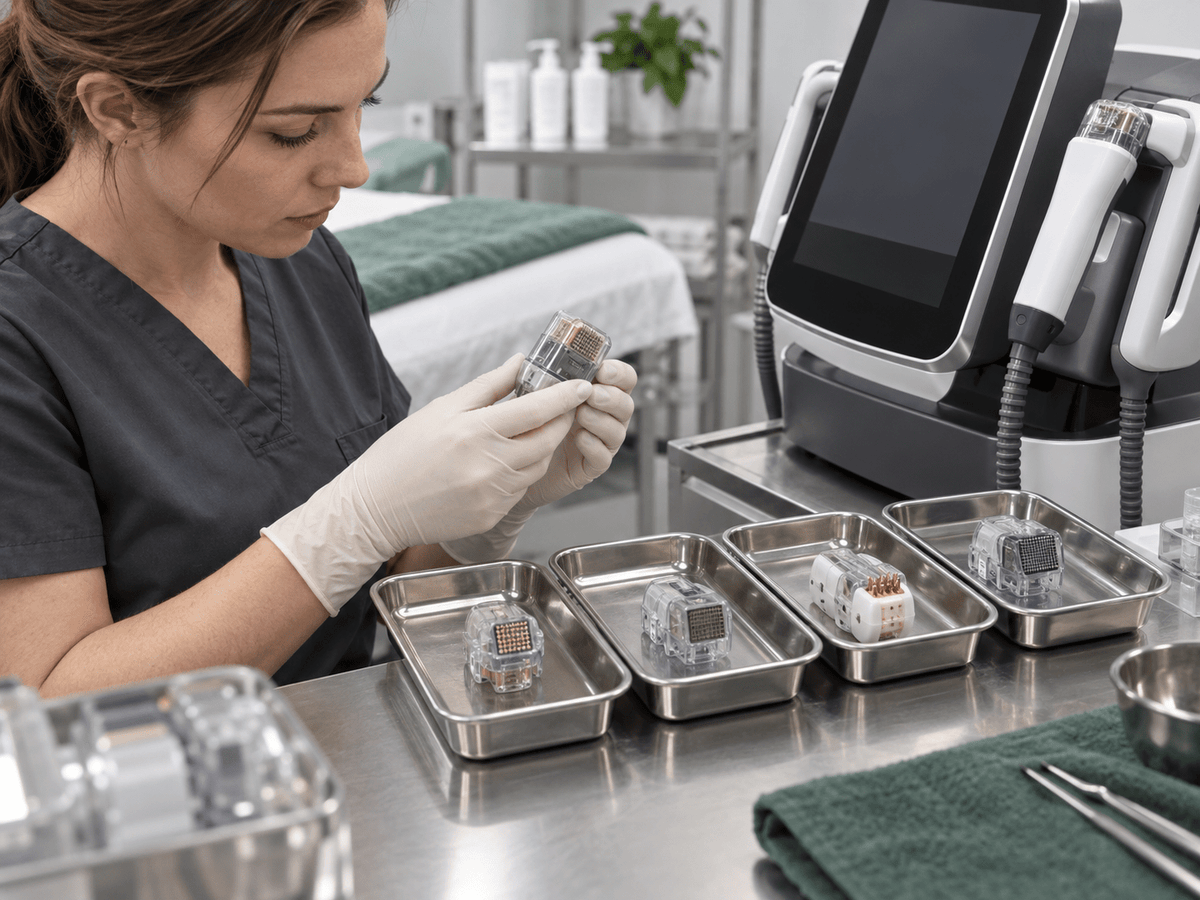
RF Microneedling Cartridge Guide for Clinics