

Pico Laser Facial_ How Pico Skin Rejuvenation Works and Who It Suits
A "pico laser facial" in one clinic is a spot-fading pass. Down the road the same words buy a fractional texture session. A third place uses them for a carbon peel. All three share one detail. The pulse. It's over in roughly 300 to 900 picoseconds, depending on the build. Wavelength, beam shape and energy? Those are up to whoever bought the machine.
What Is a Pico Laser Facial?
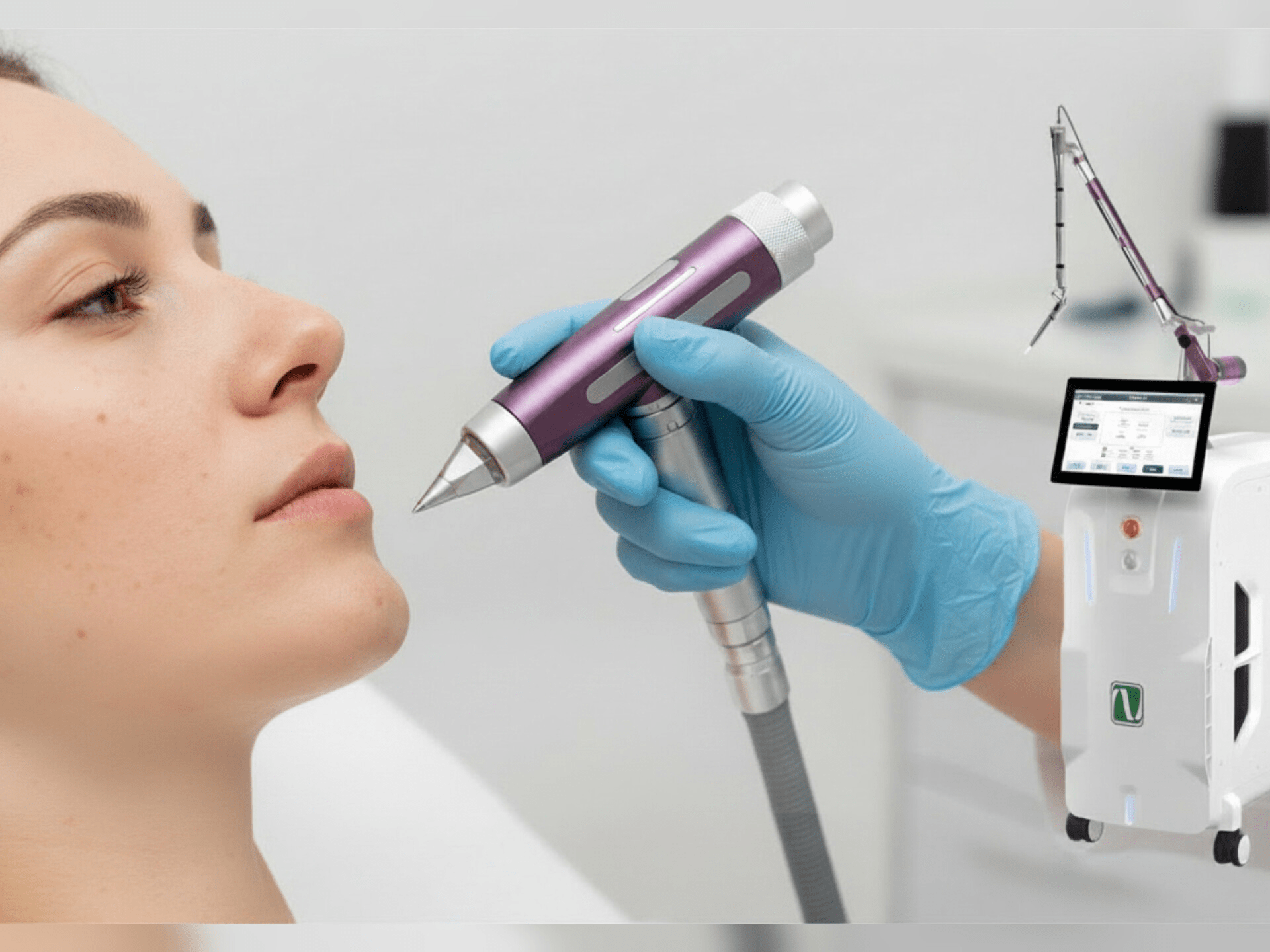
Nobody steams your face here. It's a laser, moved over the skin in overlapping passes, with the energy ending up in pigment or down in the dermis.
"Pico" refers to pulse length. Nothing else. Put a 532 nm handpiece on one machine and a fractional 1064 nm head on another; both clinics can still print "pico facial" on the price list.
On real menus it usually comes down to these three:
|
Treatment
|
What the laser does
|
Main aim
|
|
Pigment-focused picosecond facial
|
Flat beam, no fractional optic; breaks up excess melanin
|
Sun spots, freckles, blotchy tone
|
|
Fractional picosecond facial
|
Light chopped into a grid of tiny dots
|
Bumpy texture, fine lines, big-looking pores
|
|
Carbon-assisted laser facial
|
Carbon mask, then the laser; the machine is often nanosecond Q-switched, not pico
|
Oily skin, dullness
|
Get them confused and somebody ends up unhappy. The patient who came in about rough texture gets a spot-fading pass that does next to nothing for it.
How Does Pico Laser Skin Rejuvenation Work?

With nanosecond Q-switched lasers, part of the pigment-clearing work is plain heat. Picosecond pulses don't hang around long enough for that. They end before the granule even warms through. What hits it is a pressure shock and the granule shatters. In the papers you'll see this called photoacoustic, now and then photomechanical.
Wavelength is the other half of the story. Melanin near the surface drinks up green 532 nm light, handy on freckles. At 1064 nm the beam slips past much of that melanin and works deeper, the reason many clinics reach for it on olive, brown or Black skin. Settings still decide most of the safety picture.
Pigment-Focused Picosecond Treatment
Here the beam lands as a single, even spot. Melanin-heavy cells take most of the energy while neighboring tissue is spared the brunt of it, although a little redness and swelling afterward is expected.
Fractional Picosecond Resurfacing

Inside a fractional head sits a diffractive lens array, a microlens array or a holographic optic, depending on the manufacturer. Whichever one it is, the optic packs the beam into a grid of hot little points with almost nothing in between.
Zhou, Hamblin and Wen walked through this in a 2023 Lasers in Medical Science review. Up near the surface, each point can spark laser-induced optical breakdown, LIOB for short, which is essentially a microscopic flash of plasma. Further down, in the dermis, the same points cause cavitation. The skin answers both small injuries with remodeling and new collagen. The surface mostly stays closed. Hence the menu name pico laser skin resurfacing, though nothing gets vaporized the way an ablative CO2 or erbium laser vaporizes tissue.
One quirk matters for safety. Melanin often seeds LIOB. A setting that behaves nicely on a Fitzpatrick II cheek can misbehave on a Fitzpatrick V cheek.
What Skin Concerns Can a Pico Facial Address?
Wu and colleagues went through 77 studies in 2020 and graded them: level I to IV for benign pigmented lesions, level II for rejuvenation, II to III for scar revision. Pigment work stands on the firmest ground.
Uneven Pigmentation and Selected Benign Pigmented Lesions

Freckles and sun spots (solar lentigines, on a chart) make up most of the bookings. A short run of pigment-focused sessions often fades them well. One rule doesn't bend: anything new, changing or odd-looking gets checked by a doctor first, laser second.
Melasma plays by its own rules. It relapses and it darkens with heat. Send it to a specialist rather than a facial menu.
Photoaging and Uneven Skin Tone
Years of sun tend to arrive as a bundle. Usually it's brown blotches plus a dull cast plus that fine-sandpaper feel. Fractional picosecond sessions may chip away at several of these over a course of treatment, slowly rather than all at once.
Fine Lines and Textural Concerns
Lee's group gets cited a lot. In their 2021 Annals of Dermatology paper, 22 people with wrinkles or acne scars had three fractional 1064 nm picosecond sessions three weeks apart. The authors rated the treatment effective and safe. Twenty-two people, though. Open-label. No control group. Fine lines are fair game. Deep folds and sagging jowls are a job for other tools.
Enlarged-Looking Pores and Superficial Texture
Pores? A few small studies, mostly in Asian patients, say they look better after fractional 1064 nm treatment. The change was modest. Nobody followed patients for very long either.
Selected Acne Scar Concerns
Acne scars have a 2023 meta-analysis behind them. Seven studies pooled. Fractional picosecond lasers landed about level with other fractional lasers on atrophic scars. Pain and post-treatment darkening were also lower on the picosecond side of the ledger. Deep or tethered scars? Usually a combination job.
Pico Laser Facial vs. Other Skin Rejuvenation Treatments

Pick by the complaint, the skin type and the patient's calendar (a wedding next Saturday changes things).
|
Option
|
What happens in the skin
|
Usually chosen for
|
Downtime, roughly
|
The catch
|
|
Pigment-focused picosecond
|
Photoacoustic breakup of pigment with a flat beam
|
Brown spots, uneven tone
|
Usually short
|
Little effect on texture and lines
|
|
Fractional picosecond
|
Micro-points create LIOB; surface mostly intact
|
Texture, fine lines, pores, tone
|
Short to moderate
|
Several sessions; gradual, modest change
|
|
Conventional nonablative fractional
|
Columns of heat in the dermis
|
Texture, scars, fine lines
|
Moderate
|
Heat can raise pigment risk in some skin
|
|
Fractional CO2
|
Removes tiny columns of skin
|
Deeper wrinkles, scars
|
Longest of the group
|
More aftercare; higher PIH risk
|
|
IPL
|
A flash lamp, not a laser, throwing broad-spectrum light at pigment and vessels
|
Brown spots, redness
|
Usually short
|
Riskier on darker skin; does little for texture
|
Honest head-to-head trials? There aren't many. The best available is a randomized split-face trial. Each of its 25 Asian patients, all with mild to moderate acne scars, got fractional picosecond 1064 nm on one half of the face and fractional CO2 on the other, once. Improvement came out statistically similar. Mild post-inflammatory hyperpigmentation (PIH) showed up on six CO2 sides and on zero picosecond sides. A single session in 25 people can't crown a winner. It does neatly show what you give up when you pick strength over recovery.
Who Is a Good Candidate for a Pico Laser Facial?

Here's what a decent consultation runs through.
|
Factor
|
Why it matters
|
|
Primary concern
|
Pigment and texture need different settings and sometimes different machines
|
|
Fitzpatrick skin type
|
Guides the choice of wavelength and energy
|
|
Pigment characteristics
|
Depth, pattern and diagnosis decide whether laser is suitable
|
|
Skin sensitivity
|
Rosacea, eczema, an irritated barrier: any of these can change the plan
|
|
Treatment history
|
Ask about recent peels and lasers, retinoids and isotretinoin; each can shift the timing
|
|
PIH tendency
|
Darkening after acne or scratches points to higher pigment risk
|
Darker Skin Types Need Thoughtful Assessment
Dark skin isn't off-limits. Melanin is reactive stuff. The more melanin there is, the likelier pigment shifts afterward, which is why cautious clinicians keep to 1064 nm and start the energy low. A test patch comes first. Sunscreen afterward isn't optional. One gap is worth flagging. Most published research covers Fitzpatrick III and IV. For V and VI there isn't much.
When to Pause or Choose Another Route
Pregnancy is a reason to wait. So are active infections or cold sores near the area, a keloid history, photosensitizing medication and a fresh tan. Any spot nobody has diagnosed goes on that list too. In those cases a doctor's opinion or a different treatment comes first.
What Happens During a Pico Laser Facial?
Expect questions first. Your health, your medicines, anything done to your skin before and what's bothering you now. From there they decide whether to target pigment, texture or both and confirm the machine in the room can actually do it.
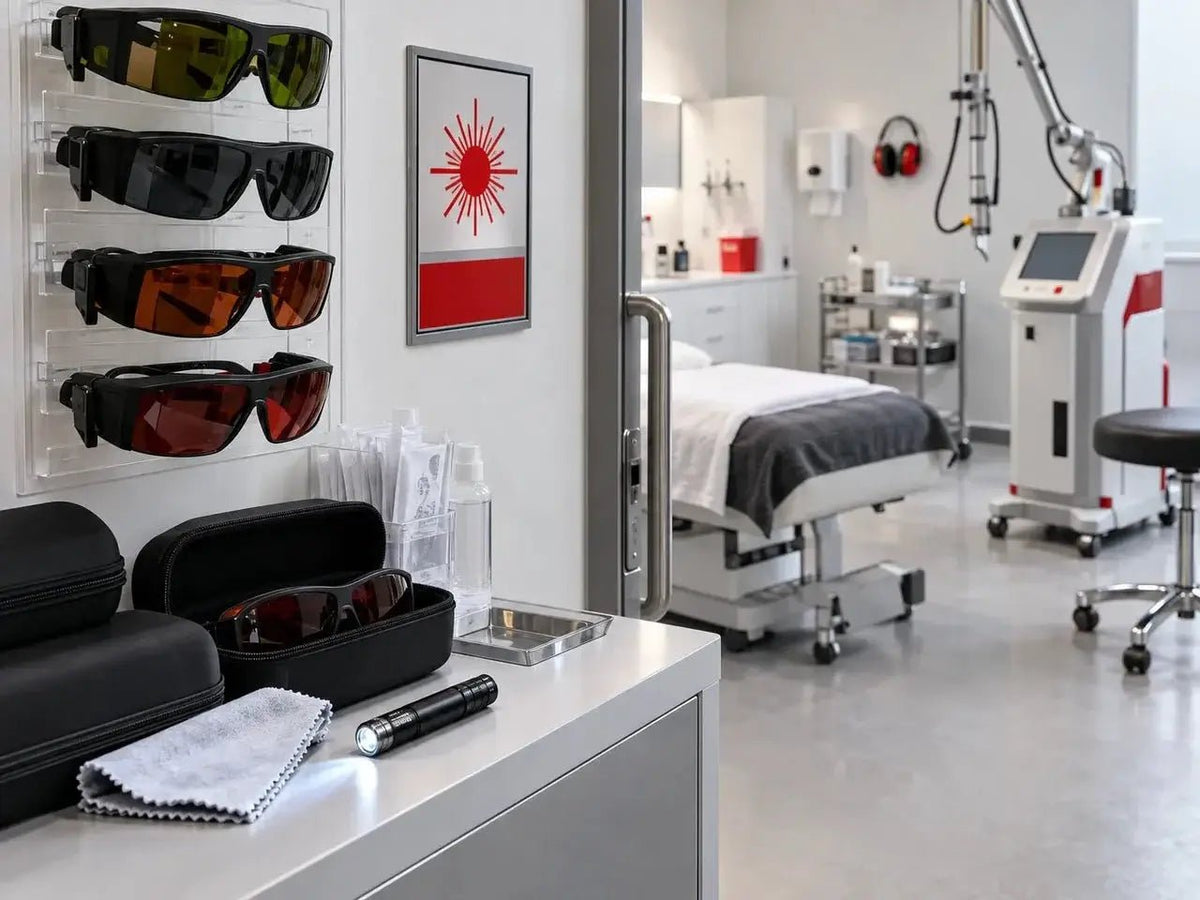
Protective glasses go on everyone in the room, matched to the laser's wavelength. The pulses snap and prickle. There's a popping sound too, which can surprise first-timers more than the feeling does. Numbing cream is common before fractional work.
You'll probably walk out pink. A cool compress helps and so do bland products for the next few days. Forget sunscreen and pigment can punish you for it. Round two only gets planned after round one has been reviewed.
Pico Laser Facial Results: What Can Patients Realistically Expect?

Spots usually win the race. Expect them to look worse first: a few dark days, a thin crust, then flaking. Texture lags. It depends on collagen remodeling and collagen takes its time, often weeks to months. Lee's team noted that wrinkle and scar changes often aren't obvious until session three or four.
Two other things shape the outcome. One is technique, meaning spot size, energy, pass count and, frankly, who's holding the handpiece. The other is you. Skin type plays in. So does whether you actually wore the sunscreen.
Published numbers describe groups. They're a reasonable guide, not a promise for any single face.
Pico Facial Downtime, Side Effects, and Recovery

How long you look "treated" depends on what was done. After a light pigment pass it might be a flush. After a strong fractional pass, several days of visible healing.
|
Effect
|
What usually happens
|
|
Redness
|
Expected; usually gone fairly quickly
|
|
Swelling
|
Worse after fractional work and around the eyes
|
|
Pinpoint bleeding (petechiae)
|
Small red dots, mostly after fractional treatment
|
|
Pigment changes
|
Darkening (PIH) is the big one for darker skin; rarely, repeat sessions leave pale patches
|
|
Rarer trouble
|
Blisters, crusting, infection or scarring; aggressive settings or sloppy aftercare usually sit behind it
|
The 2021 Annals group mostly saw redness, itching and petechiae, gone within a few days. That's one small study, not a guarantee. Risk-free and painless for everyone? No laser is. Cheapest protection against unwanted pigment? Boringly, it's sunscreen. Every day.
What Clinics Should Look for in Pico Facial Equipment
Write your treatment menu before you look at brochures. A machine that's brilliant on tattoos won't sell you a single texture package if it has no fractional head. Whatever the sales rep says, get these points in writing:
|
Check
|
What to ask for
|
|
Pulse duration
|
Measured pulse width for each wavelength and mode, since "pico" is used loosely in listings
|
|
Wavelengths
|
Which wavelengths support the facial treatments you plan to offer
|
|
Delivery optics
|
A documented fractional handpiece if texture or pore treatments are planned
|
|
Heads and applications
|
Each treatment head matched to an indication in the instructions for use
|
|
Safety documentation
|
Instructions for use, risk documentation, laser class labeling, eyewear specifications
|
|
Training
|
Skin typing, PIH prevention and complication management
|
|
Support and parts
|
Who services the machine locally, what the warranty excludes, how fast a spare handpiece reaches you
|
|
Regulatory status
|
Is it registered for the facial indications you'll advertise, in your country?
|
|
Menu fit
|
Facial machine or tattoo machine wearing a facial brochure?
|
No paperwork? Then treat the feature as missing.
Exploring LEFIS Picosecond Laser Equipment

LEFIS Laser builds its own machines instead of reselling someone else's. Clinics, med spas and distributors in more than 100 countries buy from the company. Its picosecond models are grouped in the LEFIS picosecond laser machines collection.
One of them is the C16 dual-wavelength Nd:YAG laser, listed at 532 nm and 1064 nm. LEFIS sells it mainly for tattoo and pigment work. Get LEFIS to confirm its pulse width before the menu goes to print. Heads in your configuration, indications registered in your country, compliance paperwork, training, warranty, shipping: ask about those too.
FAQs
Is a pico laser facial the same as a brand-name pico treatment?
Not always. Some clinics name the facial after the device they bought. Others use "pico facial" loosely for anything with a short pulse. Two questions clear it up:
-
The machine's model name (look up its wavelengths and heads afterward)
-
Pigment pass or fractional? That tells you how pink you'll be and for how long.
How many pico facial sessions might someone need?
Usually three or more. That's what most rejuvenation studies used, with a few weeks between visits. Texture work and darker skin often take extra rounds because each one is kept gentle. A single stubborn sun spot might need fewer. The number gets set once someone has actually looked at your skin.
Can a pico laser facial be used on darker skin tones?
Yes, in many cases, with more planning than usual. Here's what changes:
-
Pigment shifts are more likely, mostly darkening (PIH).
-
Settings get adjusted and a test patch is common, usually at 1064 nm.
-
Research on the darkest skin types is still limited. A careful provider says so up front.
Is a pico laser facial the same as fractional laser resurfacing?
Only with a fractional picosecond handpiece. Here's how the three compare:
|
|
Pigment pass
|
Fractional pico
|
|
|
Beam
|
Flat and even
|
Split into micro-points
|
Split into micro-columns
|
|
Skin surface
|
Intact
|
Mostly intact
|
Tiny columns removed
|
|
Counts as resurfacing?
|
No
|
Yes, nonablative
|
Yes, ablative
|
How long does it take to notice pico facial results?
Spots tend to move first. They darken and crust in the first few days, then fade over a few weeks. Texture and fine lines are slower; give them months and expect the change to show around session three or four.
Will a pico laser facial hurt much?
Less than people fear. A snap, a prickle, some heat. Fractional work stings more. Numbing cream turns up more often for it. Speak up if it's too much and the provider can lower the energy or the number of passes.
Carbon laser facial vs. pico facial: same thing?
No. With a carbon facial, a layer of carbon lotion goes on before the laser. Quite often that laser is a nanosecond Q-switched one, not picosecond.
A pico facial skips the carbon. The picosecond pulse works on pigment or, with a fractional head, on texture.
Can every picosecond laser perform a pico facial?
No. Plenty of picosecond systems started life as tattoo machines and never got a fractional handpiece. Before facial rejuvenation goes on your menu, read the spec sheet:
-
Heads: is there a documented fractional or microlens head?
-
Modes: which modes are listed for facial work?
-
Registered indications: is skin rejuvenation registered where you operate?
Conclusion
"Pico laser facial" is an umbrella, not a recipe. Pigment passes shatter excess melanin. Fractional passes coax the skin into slow remodeling. Carbon facials sit off to one side. Match the method to the skin in front of you and keep expectations tied to the evidence.
For clinics, the machine has to fit the menu. Comparing picosecond systems? Explore the LEFIS picosecond range and ask the team for configuration guidance before you buy.


Looking for something else?
Body Contouring Machine 101: Types, Treatment Areas & Buyer Checklist
LEARN MORE
12 Best Laser Hair Removal Machine Manufacturers in 2026
LEARN MORE
Top 11 Diode Laser Manufacturers for Professional Hair Removal Equipment
LEARN MORE
CO2 Laser Machine Complete Guide for Aesthetic Clinics: Uses, Buyer Tips, Costs & ROI
LEARN MORELooking for something else?
10 Laser Treatments for Dark Spots: What Clinics Should Know Before Choosing a Device
LEARN MORE
Non-Surgical Body Contouring Machines: Types, Results & Clinic Buyer Guide
LEARN MORE
Top 11 Aesthetic Laser Machine Manufacturers for Clinics & Distributors in 2026
LEARN MOREYou may also like


Further reading

CO2 Laser on Dark Skin: Fitzpatrick IV to VI Safety and Settings
Fifty-seven Middle Eastern patients with Fitzpatrick skin types IV and V had their acne scars treated with fractional CO2. Their clinic used a customized fluence and density protocol. In a retrosp...

CO2 Laser for Melasma_ When It Helps, When It Worsens and Safer Protocols
In 2003, six Thai women with stubborn melasma had one side of the face treated with an ultrapulse CO2 laser plus a pigment laser. The other side got the pigment laser alone. The combined side loo...

CO2 Laser Mole and Skin Tag Removal_ How Surgical Mode Works
One clinic reviewed 684 facial moles removed with a CO2 laser. Eighty-one percent cleared in a single session. Most of the rest needed one or two more visits. Numbers like that explain why co2 l...

CO2 vs Erbium Laser Resurfacing: Which System Should a Clinic Buy?
Twenty-four Thai patients had acne scars treated with fractional erbium on one side of the face and fractional CO2 on the other. Six months after two sessions, 65% of the CO2 sides and 55% of the ...


