

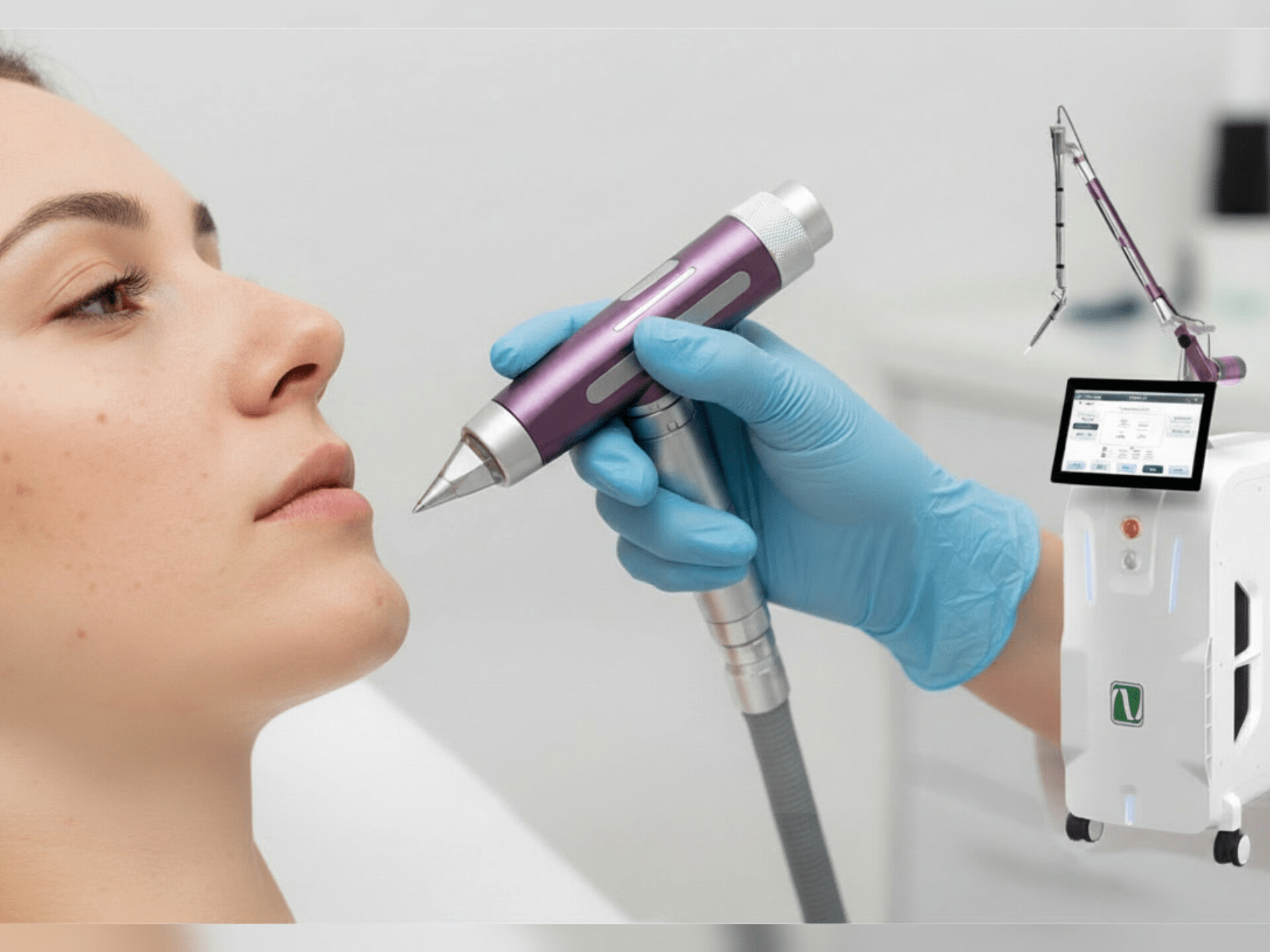
10 Laser Treatments for Dark Spots: What Clinics Should Know Before Choosing a Device
A clinic owner bought a Q-switched Nd:YAG specifically marketed as a 'dark spot removal laser' in late 2024. The device performed as advertised — clean clearance of solar lentigines, dramatic results on freckle clusters, satisfied patients in photographs. Then the bookings ratio came in. Roughly 60 percent of her pigmentation patients had melasma, not lentigines. About 20 percent had post-inflammatory hyperpigmentation from prior acne. Only the remaining 20 percent had the clean lentigines the device was actually ideal for.
When the same protocols were applied to the melasma patients, several came back darker than before treatment — a classic rebound flare. The clinic spent the next nine months retreating with conservative non-ablative protocols, refunding sessions, and slowly rebuilding trust. The Q-switched device was excellent. It just wasn't the right device for most of the patients walking through her door.
This is the most common failure mode in dark spot laser purchasing: clinic buyers treat 'pigmentation' as one category when clinically it is several. Solar lentigines respond differently from melasma, which responds differently from PIH, which responds differently from mixed photodamage. Not just the marketing brochures of a laser device, but also the type of pigment, the depth of the pigment, patient's Fitzpatrick skin type, downtime tolerance, and operator skill. These all influence the choice of the right laser treatment for dark spots.
What Are Dark Spots?
'Dark spots' is a patient-language term that covers a clinical reality made of several distinct conditions. These are all caused by different factors, have varying pigment intensity, varying prognosis, and varying laser responsiveness. Some clinics use the same procedure for every dark spot and end up with patchy results, if any, thereby increasing the risk of suboptimal outcomes or complications.
The most common causes of dark spots in aesthetic clinics: chronic UV exposure (most common driver), ageing and accumulated photodamage, genetic/familial freckle pattern, post-acne dark marks after inflammatory process, pigmentation that remains after the skin has been injured or irritated, heat and visible light triggers in heat induced pigmentation, hormonal triggers in melasma. Each requires identification before treatment.
|
DARK SPOT TYPE
|
COMMON CAUSE
|
LASER SUITABILITY
|
CLINIC NOTE
|
|
Solar lentigines
|
UV exposure over years
|
Responds well to pigment-focused lasers and IPL
|
Must combine with strict sun protection post-treatment
|
|
Freckles (ephelides)
|
Genetics + sun exposure
|
Responds to IPL or pigment lasers
|
Recurrence is normal with sun exposure
|
|
Post-inflammatory hyperpigmentation
|
Acne, injury, irritation, burns
|
Requires conservative protocols
|
PIH risk higher in Fitzpatrick IV–VI
|
|
Melasma
|
Hormones, heat, UV, visible light
|
Needs cautious low-fluence protocols
|
Aggressive laser settings can worsen pigment
|
|
Mixed photodamage
|
Multiple causes layered together
|
Combination plan needed
|
Diagnosis and skin typing matter most
|
How Lasers Treat Dark Spots
The principle of pigment-targeting lasers is selective photothermolysis. The light produced by the device has a particular wavelength which is absorbed more efficiently by melanin than the surrounding skin tissue. The absorbed energy raises the temperature of the pigment, breaking it down, and then the body's macrophages remove the broken down pigment over the next few days or weeks. Spots often darken before they fade — the broken pigment migrates to the surface as 'coffee grounds' debris that flakes off naturally.
Why cooling matters: the same melanin absorption that targets dark spots will burn epidermal melanin in surrounding tissue without proper cooling. Contact cooling, sapphire windows, integrated air cooling, and operator-controlled cryogen sprays all play different roles in protecting the surrounding skin. Cooling architecture is the single largest predictor of complication rates on darker skin tones.
Key Device Factors for Dark Spot Treatment
|
FACTOR
|
WHY IT MATTERS
|
|
Wavelength
|
Determines pigment target depth and skin tone suitability — 532nm for superficial, 1064nm for deep / darker skin
|
|
Pulse duration
|
Picosecond and nanosecond pulses fragment pigment differently than longer pulses; shorter is generally safer and more precise
|
|
Fluence
|
Controls treatment strength; lower fluence with multiple passes is often safer than aggressive single passes
|
|
Spot size
|
Affects precision and coverage speed — small spots for individual lesions, large spots for broad photodamage
|
|
Cooling
|
Protects epidermis from collateral heat damage; critical on Fitzpatrick IV–VI
|
|
Fractional vs full-field delivery
|
Fractional preserves untreated skin between treatment columns; full-field treats entire surface area
|
|
Operator settings
|
Single largest variable in outcomes; training matters more than device prestige
|
Quick Comparison: 10 Laser and Light Treatments for Dark Spots
Ten options for laser treatment for dark spots, side by side. The table ranks each category by clinic relevance, downtime, and buyer fit. No single device wins across every patient profile, which is exactly why most successful aesthetic clinics run two or three of these platforms rather than one.
|
|
TREATMENT TYPE
|
BEST FOR
|
DOWNTIME
|
CLINIC BUYER NOTE
|
|
01
|
IPL Photofacial
|
Sun spots, freckles, redness + pigment mix
|
Low
|
Strong entry-level service for aesthetic clinics treating lighter skin types
|
|
02
|
BBL-Style Broadband Light
|
Photoaging, sun damage, uneven tone
|
Low
|
Premium IPL alternative with strong marketing appeal for clinic packages
|
|
03
|
Q-Switched Nd:YAG Laser
|
Lentigines, freckles, tattoo crossover
|
Low to moderate
|
Core pigment platform for any clinic offering dedicated dark spot treatment
|
|
04
|
Picosecond Laser
|
Stubborn pigment, mixed pigment, tattoo work
|
Low to moderate
|
Premium pigment device with broad clinic demand and tattoo crossover
|
|
05
|
Fractional CO2 Laser
|
Severe sun damage + texture + wrinkles
|
Moderate to high
|
Strong resurfacing platform for clinics willing to manage higher downtime
|
|
06
|
Er:YAG Laser
|
Superficial resurfacing, texture
|
Moderate
|
Less thermal effect than CO2; useful in clinics needing shorter recovery
|
|
07
|
Non-Ablative Fractional Laser
|
Melasma-prone skin, mild pigment
|
Low to moderate
|
Best fractional option for clinics treating melasma-prone patients
|
|
08
|
755nm Alexandrite Pigment Laser
|
Superficial brown pigment, lentigines
|
Low to moderate
|
Strong pigment absorption; skin typing discipline critical in clinic workflow
|
|
09
|
Ruby Laser
|
Superficial pigmented lesions
|
Moderate
|
Older but pigment-focused; rarely a first purchase for new clinics
|
|
10
|
KTP 532nm Laser
|
Superficial brown and red lesions
|
Low to moderate
|
Good clinic option for mixed redness and superficial pigment cases
|
Top 10 Detailed Treatment Reviews
What it's best for, pros and cons, ideal patient profile, device features to check before buying and treatment planning notes from clinical practice are all included in each section.
01. IPL Photofacial

CATEGORY: BROAD-SPECTRUM LIGHT · PIGMENTATION + PHOTODAMAGE
Intense Pulsed Light (IPL) is not a laser but it does emit a wide range of wavelengths of light, which are filtered to target pigment and superficial vessels. The light is absorbed by melanin in lentigines and freckles, which heats up the pigment causing it to break down and travel to the skin's surface where it is shed as ‘coffee ground’ debris over 4-7 days. IPL is the most common entry-level light-based pigmentation service in clinics worldwide because the platforms are versatile, the downtime is minimal, and patient demand is consistent.
BEST FOR: sun spots, freckles, mild brown discoloration, mixed redness with pigment, and broad photodamage on face, chest, hands, and arms — primarily on Fitzpatrick I–III skin.
PROS
-
Versatile across pigment and vascular concerns
-
Low downtime — patients return to normal activities the same day
-
Lower per-treatment cost than dedicated lasers
-
Strong patient marketing appeal as a 'photofacial' service.
CONS
-
Less precise than focused-wavelength lasers
-
Higher PIH risk on Fitzpatrick IV–VI without specialized platforms
-
Requires strict patient screening for recent sun exposure and tanning
-
Less effective on stubborn or deep pigment.
IDEAL PATIENT
-
Fitzpatrick I–III with broad photodamage
-
Sun spots
-
Freckles plus mild diffuse redness
-
No active tan
-
Willing to commit to a series of treatments and disciplined sun protection.
02. BBL-Style Broadband Light

CATEGORY: ADVANCED BROADBAND LIGHT · PIGMENTATION + PHOTODAMAGE
BBL (BroadBand Light) is the premium evolution of the IPL category, originally pioneered by Sciton with the BBL HERO platform. The technology delivers higher peak power, faster pulse repetition, and more precise filter cutoffs than entry-tier IPL — which translates to faster treatment times, more consistent results, and better tolerance on a broader range of patient demographics. Clinics often position BBL as a premium photofacial service at a higher price point than standard IPL.
BBL platforms in this category, such as the BBL Machine SD9, are designed for clinics that want the broadband-light positioning without premium Western brand markup. It offers the same wavelength filter technology, along with clinic-grade peak power output, built-in cooling and OEM/ODM flexibility for distributors creating private-label photofacial brands.
BEST FOR: diffuse photodamage, age spots, freckles, mild pigmentation in combination with redness, and continuous maintenance programs for photoaging in clinic settings that create rejuvenation menus.
PROS
-
Premium marketing positioning supports higher per-treatment pricing
-
Faster treatment times than standard IPL
-
Better consistency across multiple treatment sessions
-
Strong patient retention through package-based programs.
CONS
-
Premium platforms carry premium capital cost
-
Same Fitzpatrick limitations as IPL on darker skin without specialized cooling protocols
-
Patients still require strict sun avoidance and SPF compliance.
IDEAL PATIENT
-
Fitzpatrick I–IV with diffuse photoaging seeking a maintenance-style aesthetic service
-
Willing to invest in 3–6 session packages with seasonal top-ups.
03. Q-Switched Nd:YAG Laser

CATEGORY: NANOSECOND PIGMENT LASER · LENTIGINES + TATTOO CROSSOVER
Q-switched Nd:YAG lasers are capable of producing nanosecond pulses at 532nm (frequency-doubled KTP) and 1064nm. The ultra-short pulses break up pigment particles by a photoacoustic effect – a process that literally shatters the pigment particles, not heats them – resulting in precisely targeted treatment of dense lentigines and tattoo pigments with minimal collateral thermal damage. The 1064nm wavelength penetrates deeper and is safer on Fitzpatrick IV–VI skin; the 532nm is more superficial and more efficient on lighter skin lentigines.
The platform is appropriate for emerging-market clinics where cost of capital is important; and where the robust OEM/ODM support provides value for positioning with the distributor.
BEST FOR Solar lentigines, freckles, superficial pigmentation, tattoo removal, and selected dermal pigment concerns. When applied at proper fluences, 1064nm is safer on darker skin types.
PROS
-
Dual wavelength (1064nm + 532nm) to treat deep and superficial pigment
-
Strong precision on individual lesions
-
Excellent crossover to tattoo removal services
-
Established peer-reviewed evidence base for pigmentation work.
CONS
-
Patient comfort scores trail picosecond systems — Q-switched feels like rubber-band snapping at higher fluences
-
Risk of PIH if fluence is set too high, especially on Fitzpatrick IV–VI
-
Less effective on diffuse melasma than dedicated low-fluence protocols.
IDEAL PATIENT
-
Fitzpatrick I–IV with discrete solar lentigines or ephelides
-
Fitzpatrick V–VI for 1064nm-only conservative protocols
-
Patients seeking a specific spot treatment rather than diffuse photofacial.
04. Picosecond Laser

CATEGORY: ULTRA-SHORT PULSE PIGMENT + TATTOO LASER
Picosecond lasers produce pulses of light in trillionths of a second, which is about 100× shorter than the nanosecond pulses produced by Q-switched lasers. The significantly shorter pulse duration produces a cleaner photoacoustic effect (less collateral heat) with less risk of PIH, especially on darker skin tones, and with better results on recalcitrant, unburnt pigments. Picosecond is the current premium category for both pigmentation work and multi-color tattoo removal, including the notoriously stubborn green inks.
The picosecond laser machines collection consisting of theC16 Picosecond Laser, C16 Picosecond Laser System, and C19 Picosecond Laser System compete in the best value-tier. They are suitable for clinics and distributors who want genuine picosecond capability at lower capital cost than premium Western and Korean picosecond brands.
BEST FOR: stubborn dark spots that resist Q-switched treatment, mixed pigment concerns, multi-color tattoo removal including green inks, and pigment work on patients with Fitzpatrick IV–VI where PIH risk needs to be minimized.
PROS
-
Shorter pulse duration, reducing PIH risk significantly
-
Effective on stubborn pigments that Q-switched cannot clear
-
Tattoo removal crossover including difficult ink colors
-
Patient comfort is better than Q-switched at equivalent clinical effect.
CONS
-
Premium capital cost — typically 2–4× the price of Q-switched Nd:YAG platforms
-
Operator training requirements are higher
-
Some marketing claims about session counts are unrealistic and should be moderated with patients.
IDEAL PATIENT
-
All Fitzpatrick types with mixed pigmentation
-
Prior failed Q-switched treatments
-
Specific demand for tattoo removal capability alongside pigmentation work
-
Patients with realistic expectations about session counts.
05. Fractional CO2 Laser

CATEGORY: ABLATIVE RESURFACING LASER · 10,600nm
Fractional CO2 lasers emit 10,600nm wavelength energy in micro-columns, instead of one large beam, forming thousands of treatment micro-columns and leaving the surrounding areas of skin untreated. The treated columns remove the outer skin layers (epidermis and upper dermis) including pigmented cells, triggering aggressive collagen remodeling and resurfacing as the skin heals. This is the most powerful resurfacing option in the laser category — but with the highest downtime and the highest complication risk if used carelessly.
BEST FOR: severe sun damage with rough texture, dark spots combined with wrinkles and photoaging, acne scars with uneven pigmentation, and patients willing to commit to 7–14 days of recovery for dramatic results.
PROS
-
Dramatic results — addresses pigment, texture, wrinkles, and laxity in one treatment plan
-
Often produces results in 1–2 sessions where lighter modalities require 6–8
-
Strong revenue per treatment due to depth and downtime.
CONS
-
High downtime (7–14 days minimum)
-
Significant PIH risk in Fitzpatrick IV–VI without conservative protocols
-
Strict pre-treatment topical therapy required (hydroquinone + retinoid for 4 weeks)
-
Not suitable for casual cosmetic indications.
IDEAL PATIENT
-
Fitzpatrick I–III with significant photoaging combining dark spots, wrinkles, and texture changes
-
Patients willing to accept 7–14 day downtime
-
Those committed to strict pre- and post-treatment topical regimen.
06. Er:YAG Laser

CATEGORY: ABLATIVE RESURFACING LASER · 2,940nm
Er:YAG lasers operate at 2,940nm, a wavelength absorbed by water roughly 10–15× more efficiently than CO2's 10,600nm. The higher water absorption translates to more precise tissue ablation with less residual thermal damage to surrounding skin. The tradeoff is less collagen contraction than CO2 — Er:YAG removes layers cleanly but doesn't drive the same deep tightening response. Many clinics use Er:YAG where precise resurfacing is needed but downtime must stay shorter than CO2.
BEST FOR: superficial pigmentation with mild texture changes, sun damage requiring resurfacing but not full CO2 depth, and patients who need shorter downtime than CO2 fractional can deliver.
PROS
-
Less thermal damage to surrounding skin than CO2
-
Faster healing than CO2 fractional
-
Lower PIH risk than aggressive CO2 protocols
-
Good precision for delicate areas like around the eyes and mouth.
CONS
-
Less collagen tightening than CO2
-
Often requires more sessions to achieve equivalent depth results
-
Bleeding can occur with aggressive settings due to the precise ablation depth.
IDEAL PATIENT
-
Fitzpatrick I–IV with superficial photodamage and texture concerns
-
Preference for shorter downtime over maximum result depth
-
Willing to commit to multiple sessions.
07. Non-Ablative Fractional Laser

CATEGORY: NON-ABLATIVE FRACTIONAL · 1540 / 1550 / 1927nm
Non-ablative fractional lasers (Fraxel Re:Store, Clear + Brilliant, Halo) operate at infrared wavelengths (typically 1540nm, 1550nm, or 1927nm) that heat dermal tissue without removing the epidermis. The treatment creates micro-columns of dermal injury that trigger collagen remodeling while the surface skin remains intact — which dramatically reduces downtime compared to ablative options. The tradeoff is slower, milder results requiring more sessions. This is the safest fractional category for melasma-prone patients and Fitzpatrick IV–VI when standard CO2 fractional would carry PIH risk.
BEST FOR: melasma-prone patients needing conservative protocols, Fitzpatrick IV–VI with mild pigmentation, patients with active careers who cannot accept significant downtime, and texture concerns with mild pigment.
PROS
-
Lowest downtime in the fractional category — most patients return to work the next day
-
Significantly safer on darker skin types than CO2 fractional
-
Strong evidence base for melasma when used at conservative settings
-
Combines well with topical pigment control programs.
CONS
-
Requires more sessions than ablative options — typically 4–6 versus 1–2 for CO2
-
Mild results per session, with cumulative improvement
-
Slower visible improvement timeline.
IDEAL PATIENT
-
Patients with melasma
-
Fitzpatrick IV–VI with mild diffuse pigmentation
-
Busy professionals needing minimal downtime
-
Patients committed to 4–6 session courses with consistent topical regimens.
08. 755nm Alexandrite Pigment Laser

CATEGORY: PIGMENT-FOCUSED LASER · 755nm
The 755nm wavelength sits in a sweet spot for melanin absorption — high enough to target pigment efficiently, deep enough to reach lentigines without ablating the epidermis. Alexandrite lasers have a long clinical history for pigmentation work and remain a respected platform for clean lentigines on lighter skin. The wavelength's high melanin absorption is both a strength and a liability: it works brilliantly on Fitzpatrick I–III lentigines, and it becomes risky on darker skin or recently tanned patients because the epidermal melanin competes with the target lesion.
BEST FOR: superficial brown spots on Fitzpatrick I–III, selected lentigines, some freckle patterns, and clean pigment lesions on appropriate skin types.
PROS
-
Strong pigment targeting through high melanin absorption at 755nm
-
Established clinical evidence base
-
Effective single or limited-session treatment for clean lentigines.
CONS
-
Not safe for Fitzpatrick IV–VI without specialized protocols
-
Increased risk on tanned or recently sun-exposed patients
-
Skin typing and screening discipline is critical to avoid burns and PIH.
IDEAL PATIENT
-
Fitzpatrick I–III with discrete solar lentigines or freckle clusters
-
No recent tan
-
Willing to maintain strict sun avoidance during the treatment course.
09. Ruby Laser

CATEGORY: OLDER PIGMENT LASER · 694nm
The 694nm ruby laser was one of the earliest pigment-targeting laser platforms and produced the foundational clinical evidence for laser pigmentation treatment. The 694nm wavelength sits between 532nm (very superficial) and 755nm (deeper) in melanin absorption — making it a useful intermediate option for superficial lentigines and pigmented lesions. The category has been largely displaced by Q-switched Nd:YAG and picosecond systems in modern clinics, but ruby platforms remain in service in some markets.
BEST FOR: superficial pigmented lesions in clinical contexts where ruby laser is already part of an established service, selected lentigines on lighter skin types.
PROS
-
Long-established clinical evidence base
-
Effective on appropriate superficial pigment lesions
-
Useful where existing infrastructure already supports the platform.
CONS
-
Largely displaced by newer Q-switched and picosecond platforms in modern clinic environments
-
Service network is limited as manufacturer attention has shifted
-
Higher cost per treatment than newer alternatives.
IDEAL PATIENT
-
Patients with established prior history on ruby platforms in clinics where the device is already in service
-
Primarily Fitzpatrick I–III with superficial pigment.
10. KTP 532nm Laser

CATEGORY: SUPERFICIAL PIGMENT + VASCULAR LASER · 532nm
KTP (potassium titanyl phosphate) lasers produce 532nm green light through frequency-doubling a 1064nm Nd:YAG beam — the same wavelength used in the 532nm channel of Q-switched Nd:YAG platforms but typically delivered with different pulse characteristics for vascular and superficial pigment work. The 532nm wavelength is highly absorbed by both melanin and hemoglobin, making KTP useful for mixed pigment and vascular concerns (telangiectasia, port-wine stains, superficial brown lesions) in a single treatment.
BEST FOR: superficial brown lesions, mixed redness and pigment, small facial spots, patients with visible vascular and pigment overlap, and clinics wanting both indications served by one wavelength.
PROS
-
Dual indication coverage — pigment and superficial vessels in one platform
-
Effective on selected superficial lesions
-
Strong cooling is achievable with KTP platforms.
CONS
-
Limited to superficial work — does not penetrate deep enough for dermal pigment
-
Skin type selection is critical because 532nm is highly absorbed by epidermal melanin
-
Often pulses don't fragment dense pigment as effectively as Q-switched 532nm.
IDEAL PATIENT
-
Fitzpatrick I–III with superficial brown lesions accompanied by visible facial vessels
-
No active tan
-
Patients seeking combined vascular + pigment improvement.
Best Laser Treatment for Dark Spots by Clinic Goal
Clinic positioning shapes the right device choice as much as patient demographics. A high-volume entry-level clinic needs different equipment than a dermatology practice serving premium patients with severe photodamage.
|
CLINIC GOAL
|
BEST TREATMENT CATEGORIES
|
WHY
|
|
Entry-level pigment service
|
IPL, BBL-style light
|
Versatile, broad demand, accessible price points
|
|
Premium pigment removal
|
Picosecond, Q-switched Nd:YAG
|
Strong pigment targeting with established evidence base
|
|
Texture + pigment correction
|
Fractional CO2, Er:YAG, non-ablative fractional
|
Treats more than color alone — resurfacing + pigment in one
|
|
Low downtime services
|
IPL, BBL-style light, non-ablative fractional
|
Easier package repeat scheduling with busy patients
|
|
Darker skin protocols
|
1064nm Nd:YAG, conservative non-ablative
|
Lower epidermal melanin competition when used at appropriate fluences
|
|
Severe sun damage
|
CO2, Er:YAG, fractional systems
|
Intensive resurfacing pathway for advanced photoaging
|
|
Mixed redness + pigment
|
IPL, BBL-style light, KTP
|
Single platform addresses both color concerns
|
Dark Spots, Melasma, and PIH: Why Diagnosis Comes First

Not every brown patch on a patient's face should be treated the same way. Melasma can worsen with heat and aggressive laser settings — multiple peer-reviewed studies document rebound flares after Q-switched treatment of melasma without proper protocols. Post-inflammatory hyperpigmentation is similarly heat-sensitive. Treating these conditions like simple solar lentigines is the most common source of clinical complications in dark spot work.
More importantly: dark spots that change shape, color, size, or border should be medically evaluated before any cosmetic laser treatment. Melanoma can present as a changing 'dark spot,' and an aggressive laser pass on what turns out to be lentigo maligna is a medical and legal disaster. Build skin checks and dermatology referrals into the consultation workflow. For broader context on different pigmentation types, see our overview of how to get rid of freckles and our age spots treatment guide.
How Many Sessions Are Usually Needed?
|
TREATMENT TYPE
|
TYPICAL SESSION DIRECTION
|
PLANNING NOTE
|
|
IPL
|
3–5 sessions, 3–4 week intervals
|
Good for diffuse photodamage and ongoing maintenance
|
|
BBL-style light
|
3–4 sessions plus annual maintenance
|
Suits package-based pricing programs
|
|
Q-switched Nd:YAG
|
1–3 sessions for clean lentigines
|
Spot-based or limited series depending on density
|
|
Picosecond laser
|
2–6 sessions, 4–6 week intervals
|
Useful for stubborn pigment and mixed concerns
|
|
CO2 fractional
|
1–2 sessions for moderate cases
|
Fewer but stronger treatments with high downtime
|
|
Er:YAG laser
|
2–4 sessions, 4–8 week intervals
|
Depends on resurfacing depth
|
|
Non-ablative fractional
|
4–6 sessions, 3–4 week intervals
|
Lower downtime, gradual cumulative change
|
|
Alexandrite
|
1–3 sessions for clean lentigines
|
Skin type selection essential
|
|
Ruby
|
1–3 sessions, spot-focused
|
Less common in modern clinic environments
|
|
KTP 532nm
|
2–4 sessions, 4-week intervals
|
Mixed pigment + vascular work
|
Clinic Buyer Checklist

Walk through this checklist with each manufacturer before signing a purchase order. Vague answers signal areas that will create post-purchase friction.
|
CHECKLIST ITEM
|
WHY IT MATTERS
|
|
Does the device treat the pigmentation types your clients actually ask about?
|
Prevents buying a device with narrower clinical use than your patient demographics need
|
|
Does it support your client skin tone range (Fitzpatrick I–VI)?
|
Reduces safety risk and protects clinic from PIH complications
|
|
Are the exact wavelengths emitted clearly documented?
|
Matches device capability to pigment depth and skin tone
|
|
Is cooling integrated, and what type (contact, air, cryogen, sapphire)?
|
Improves patient comfort and protects epidermal melanin
|
|
Are treatment protocols documented and provided in writing?
|
Helps staff use the machine correctly from day one
|
|
Is operator training included? Initial and advanced certification?
|
Reduces operator error — the largest cause of complications
|
|
Are replacement parts stocked locally with documented delivery times?
|
Reduces clinic downtime during component failures
|
|
What warranty period and scope are included?
|
Protects the capital investment over 5+ year device life
|
|
Can the device support multiple service indications?
|
Improves ROI through broader service menu coverage
|
|
Are before and after claims realistic and documented?
|
Helps avoid overpromising patient outcomes
|
Conclusion
The right laser treatment for dark spots depends on diagnosis, skin tone, pigment depth, downtime tolerance, and clinic business goals — not on which platform has the loudest marketing. IPL and BBL-style devices serve broad photodamage on lighter skin. Q-switched and picosecond lasers handle discrete pigment lesions and tattoo crossover demand. CO2 and Er:YAG fractional address texture and pigment together for severe photoaging. Non-ablative fractional is the safest option for melasma and darker skin types.
Clinics should prioritize training, patient selection, wavelength fit, cooling architecture, aftercare protocols, and realistic outcome expectations before choosing a device. LEFIS produces devices in four of these ten categories — BBL Machine SD9, Q-switched Nd:YAG platforms, C16/C19 picosecond systems, and D6 fractional CO2 — and we are honest about the categories where we don't compete. For clinics comparing professional aesthetic laser equipment, browse the full LEFIS lineup or visit our aesthetic laser buying guides for deeper coverage on specific modalities.
FAQs
Does laser treatment work for dark spots?
Yes, for many types of pigmentation, when device choice matches diagnosis. Solar lentigines, freckles, and post-acne marks generally respond well to appropriate pigment-targeting lasers. Melasma needs conservative protocols and often combination treatment with topicals. PIH responds best to gentle approaches with strict sun protection. Aggressive treatment on the wrong pigment type can worsen the appearance.
What is the strongest treatment for dark spots?
Fractional CO2 laser is the strongest single treatment for combined dark spots, texture, and wrinkles in photoaged skin. For pigment-only concerns without texture issues, picosecond lasers and Q-switched Nd:YAG deliver strong targeted results.
How much does it cost to remove dark spots on face?
As approximate U.S. ranges in 2026, per-session costs typically run $150 to $500 for IPL and BBL, $250 to $800 for Q-switched Nd:YAG, $400 to $1,500 for picosecond, and $1,500 to $4,000+ for fractional CO2 resurfacing. Pricing varies significantly by region, provider, treatment area, and the specific protocol used, and these figures should be treated as planning estimates rather than fixed clinic rates.
Do dark spots come back after laser?
Most do, unless patients maintain disciplined sun protection. Recurrence is driven by continued UV exposure, hormonal triggers, inflammation, inadequate sunscreen, tanning behavior, and lack of maintenance skincare. Daily broad-spectrum SPF 50+ and topical pigment control are essential for results to hold long-term.
How long does it take to remove dark spots with laser treatment?
Most patients see initial improvement within 1–3 sessions over 4–12 weeks. Stubborn or deep pigment may require 4–6 sessions over 6 months or longer. Severe photoaging treated with fractional CO2 typically shows dramatic results within 1–2 sessions but requires 7–14 days of downtime per session and 3–6 months for full skin remodeling to complete.
Can dark spots be removed permanently?
Existing spots can typically be cleared, but the skin remains susceptible to forming new spots with continued UV exposure or hormonal triggers. With strict daily sunscreen, topical pigment control, and seasonal maintenance treatments, results can hold for years. Without that maintenance, new spots regularly appear within months.
What do Koreans use for dark spots?
Korean dermatology popularized picosecond lasers (Pico Way, Pico Sure, Lutronic platforms) for pigmentation work, often paired with topical brightening regimens and gentle non-ablative fractional treatments. Korean protocols tend to emphasize conservative settings with multiple sessions over aggressive single-treatment approaches — which suits Asian skin types and reduces PIH risk.
What permanently lightens dark spots?
No treatment 'permanently' lightens skin without ongoing maintenance — but consistent laser treatment combined with daily SPF, topical hydroquinone (where appropriate), retinoids, vitamin C, and niacinamide can hold lightened results for years. Hydroquinone has been the topical gold standard for over 50 years; combination protocols deliver the most durable results.
What does skin look like immediately after a laser treatment?
IPL and BBL: mild redness, treated spots darkening. Q-switched and picosecond: immediate frosting of treated pigment, mild swelling. Non-ablative fractional: sunburn-like appearance for 1–3 days. Ablative CO2 and Er:YAG: pink to red sensitive skin, weeping for 48 hours, peeling over 5–10 days. All reactions should be communicated to patients in writing before treatment.
Is 6 sessions of laser enough?
For most pigmentation work, yes — 6 sessions covers the typical range for IPL series, picosecond protocols, and non-ablative fractional courses. Some stubborn pigment or melasma may need more. Single-treatment indications like clean solar lentigines often resolve in 1–3 sessions. The answer depends entirely on the pigment type and laser used.
Which is better, PRP or CO2 laser?
They address different problems. CO2 laser resurfaces skin and removes pigmented cells through ablation, producing dramatic results for sun damage and texture. PRP (platelet-rich plasma) supports collagen and healing but doesn't directly target pigment. Many advanced protocols combine the two — CO2 fractional for resurfacing followed by PRP for accelerated healing and collagen support.
What are the disadvantages of skin laser treatment?
Disadvantages include cost (especially for premium platforms), downtime (especially for ablative options), risk of PIH on darker skin types or with wrong protocols, risk of burns from operator error, scarring risk in rare cases, hyperpigmentation from inadequate sun protection post-treatment, and the need for multiple sessions for most indications. Realistic expectations and proper patient selection minimize these risks.
Sources
- Aesthetic Cosmetic Devices · U.S. Food and Drug Administration ·
- How to Fade Dark Spots in Darker Skin Tones · American Academy of Dermatology ·
- Laser Resurfacing · American Society for Dermatologic Surgery ·
- Age Spots: Diagnosis and Treatment · Mayo Clinic ·
- Treatment of Solar Lentigines: A Systematic Review · PubMed ·
- Treatment of Solar Lentigines: A Systematic Review of Clinical Trials · NIH / PMC ·
- Postinflammatory Hyperpigmentation: Epidemiology, Clinical Features, Treatment · NIH / PMC ·
- Use of Picosecond Laser for Melasma Treatment · PubMed ·
- Efficacy and Safety of Picosecond Laser for Melasma Treatment · PubMed ·
- Laser Treatment in Dermatology · DermNet ·
- Laser Hair Removal and Hyperpigmentation Prevention · Allure ·
- Laser vs IPL vs BBL Treatment · Good Housekeeping ·
- Hyperpigmentation Treatment · Byrdie ·


Looking for something else?

Do Men Get Cellulite? Causes Differences & What to Know
LEARN MORE
Does Radio Frequency Skin Tightening Work? Results & How It Works
LEARN MORE
Do You Shave Before Laser Hair Removal? Prep Tips & Why It Matters
LEARN MORE
How to Get Rid of Age Spots: Treatments. Natural Remedies & Prevention
LEARN MORELooking for something else?
How to Heal Ingrown Hair: Causes. Treatments & Healing Time
LEARN MORE
How to Get Rid of Freckles: Effective Treatments & Natural Tips
LEARN MORE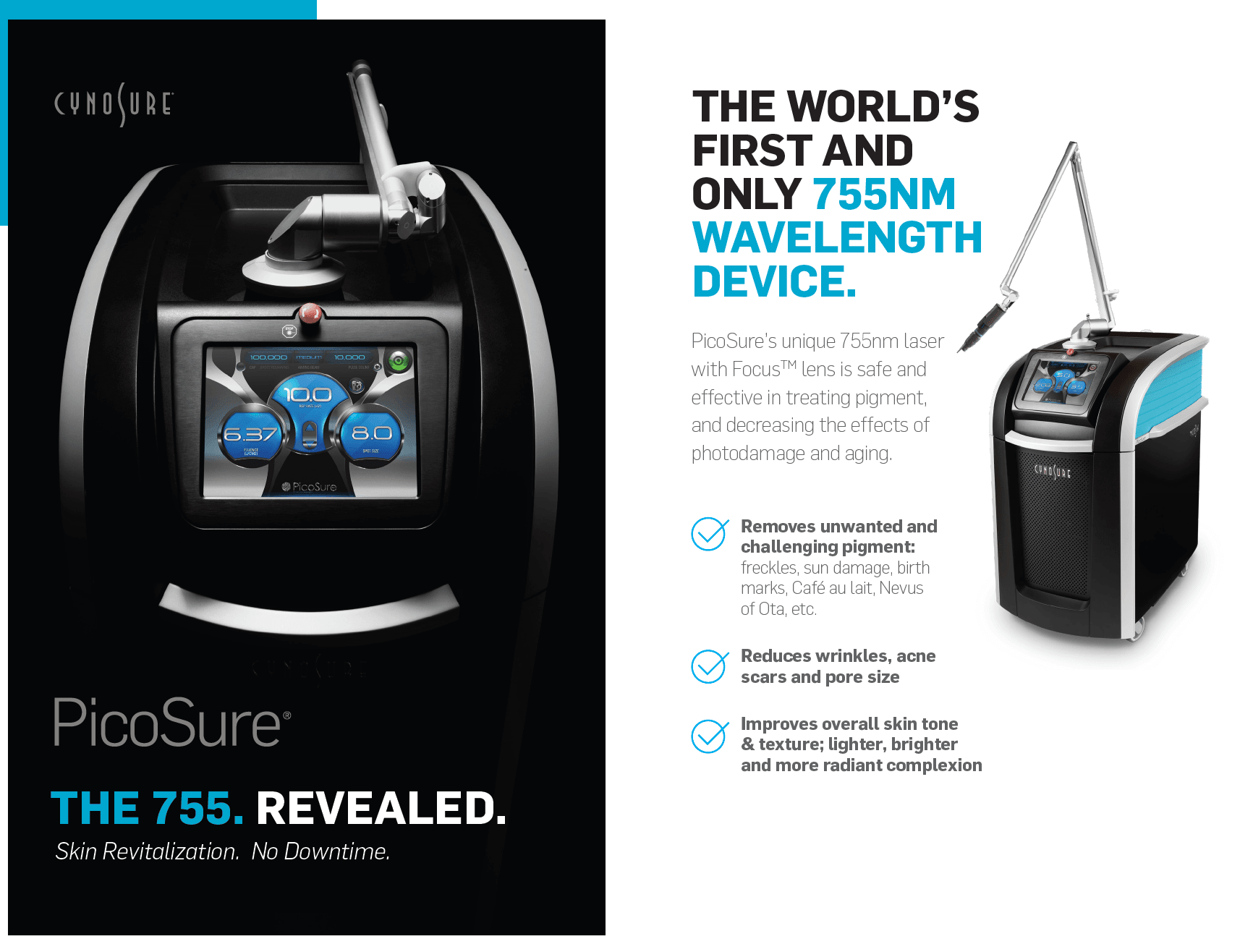
Top 10 Picosecond Laser Machine Manufacturers for Clinics in 2026
LEARN MOREYou may also like


Further reading

Tattoo Removal Laser Machine Cost and Ownership Guide
The purchase price is only one part of a tattoo removal laser machine’s cost. A clinic also needs the correct wavelength configuration, cooling, eyewear, room controls, staff training, documentati...

CO2 Laser Treatment Room Setup Checklist
A CO2 laser purchase is not complete until the treatment room can support safe, repeatable operation. Room planning should happen before shipment so the clinic can address smoke evacuation, access...

Aesthetic Machine Factory Acceptance Test Before Shipment
LEFISA factory acceptance test, or FAT, gives the buyer a defined point to confirm that the machine matches the order and completes agreed checks before shipment. It does not replace regulatory re...

Aesthetic Machine Warranty and Spare Parts Guide
A warranty is useful only when it explains what happens after a fault is reported. The number of warranty months matters, but the coverage, exclusions, evidence requirements, parts location, labor...


