

Non-Surgical Body Contouring Machines: Types, Results & Clinic Buyer Guide
Non-invasive body sculpting has shifted from a marketing trend to a serious clinic service line. Patients want stubborn fat addressed without surgery. Clinics want a treatment menu that pays back equipment costs in under 18 months. Energy-based body contouring devices provide the answer on both fronts when compared to the appropriate indication and patient.
This guide compares the seven main non-invasive body sculpting technologies side by side. It maps treatment zones to devices, sets a realistic timeline for results, and lists the buyer criteria that actually matter at the purchase stage. Body sculpting is not weight loss and if clinics make these patients think otherwise, they end up with unhappy patients. If it is done right, it generates repeat customers and high prices.
What Is Non-Invasive Body Sculpting?
Non-invasive body sculpting refers to a group of energy-based treatments. The technologies target stubborn fat pockets, loose skin, cellulite, or muscle tone. None of them require incisions or anesthetic. It's not a weight loss program. The FDA is clear that body contouring is not invasive, and not used to treat obesity.
The perfect candidates are those who are near their ideal body weight, have fat pockets that are difficult to lose with diet and exercise, have some skin laxity and have realistic expectations. Other solutions are required for patients who have BMI greater than 35 or have lost a lot of weight, causing loose skin. Refunds are usually a thing with clinics that take everyone, however, clinics that carry out proper screening always tend to retain their patients.
Body Sculpting vs Weight Loss vs Surgery
|
CATEGORY
|
MAIN GOAL
|
METHOD
|
BEST FOR
|
DOWNTIME
|
|
Non-invasive body sculpting
|
Shape target areas
|
Energy-based devices
|
Small fat pockets, mild laxity
|
Little to none
|
|
Weight loss
|
Reduce total body weight
|
Diet, exercise, medication
|
Overall weight reduction
|
Ongoing
|
|
Surgical contouring
|
Remove fat or skin
|
Liposuction, lifts, tummy tuck
|
Larger reshaping needs
|
Higher
|
How Non-Surgical Bodyyoi Contouring Machines Work

All non-invasive body sculpting devices have three main mechanisms: fat cell disruption, collagen stimulation (skin tightening) and muscle contraction (toning). According to the American Society for Laser Medicine and Surgery, fat cells that have been treated with cryolipolysis start to be removed naturally, slowly decreasing the thickness of the fat layer over a period of weeks.
Fat Reduction Mechanisms
Cooling damages fat cells through controlled cold exposure. Heat from RF or laser breaks down fat cells while integrated cooling protects skin. Ultrasound disrupts fat cell membranes mechanically. Light-based energy triggers fat cells to release contents. All four mechanisms produce gradual fat reduction as the body clears treated cells.
Skin Tightening Mechanisms
Radiofrequency heat penetrates the dermis, denaturing existing collagen and triggering new collagen synthesis over 3 to 6 months. The result is gradual firmness change, not instant lift. Results depend on starting elasticity, age, and treatment compliance.
Muscle Toning Mechanisms
EMS and HIFEM trigger thousands of forced muscle contractions per session, well beyond voluntary exercise. The muscle adaptation increases mass and tone over a treatment series. This is body shaping support, not fat loss.
Main Types of Non-Surgical Body Contouring Machines
Cryolipolysis Machines
Controlled cooling targets small fat bulges on abdomen, flanks, thighs, arms, back rolls, and under-chin areas where device clearance allows. Results develop over 2 to 3 months. The FDA notes possible side effects and rare complications including paradoxical adipose hyperplasia, where the treated area gains fat instead of losing it — uncommon but documented.
Ultrasound Cavitation Machines
Low-frequency or focused ultrasound disrupts fat cells in abdomen, flanks, thighs, and waist. Useful for clinics offering slimming packages without freezing technology. Operator contact, conductive gel, and contraindication screening matter as much as machine power.
Radiofrequency Body Contouring Machines
RF energy is used to heat the tissue to help reduce fat, improve cellulite and tighten the skin. Ideal for loose skin, cellulite-prone areas, abdomen, arms and thighs. The American Society for Dermatologic Surgery notes RF delivers controlled energy to fat areas, creating heat deep within fat cells. Our explainer on radio frequency for body shaping and contouring details the device categories and treatment protocols.
Laser Lipolysis Machines
Laser energy warms the fat beneath the skin and integrated cooling keeps the skin safe. Ideal for small to moderate localized fat deposits on the abdomen, flanks, thighs, upper arms and under the chin. The results will be seen in 6-12 weeks.
Red Light / Low-Level Light Therapy Machines
Low-level light may temporarily reduce circumference by triggering fat cells to release contents. Lower intensity than heat-based or cold-based fat reduction. Best for clinics offering low-discomfort entry-level contouring services.
EMS / HIFEM Body Sculpting Machines
EMS and HIFEM focus on muscle contraction rather than fat reduction. Best areas include abdomen, buttocks, arms, thighs, and calves. The EMS / HIFEM body sculpting machines collection serves clinics adding muscle toning to their service menu. For the underlying mechanism, see how EMS myoelectric stimulation works.
Vacuum + Cavitation + RF Combination Machines
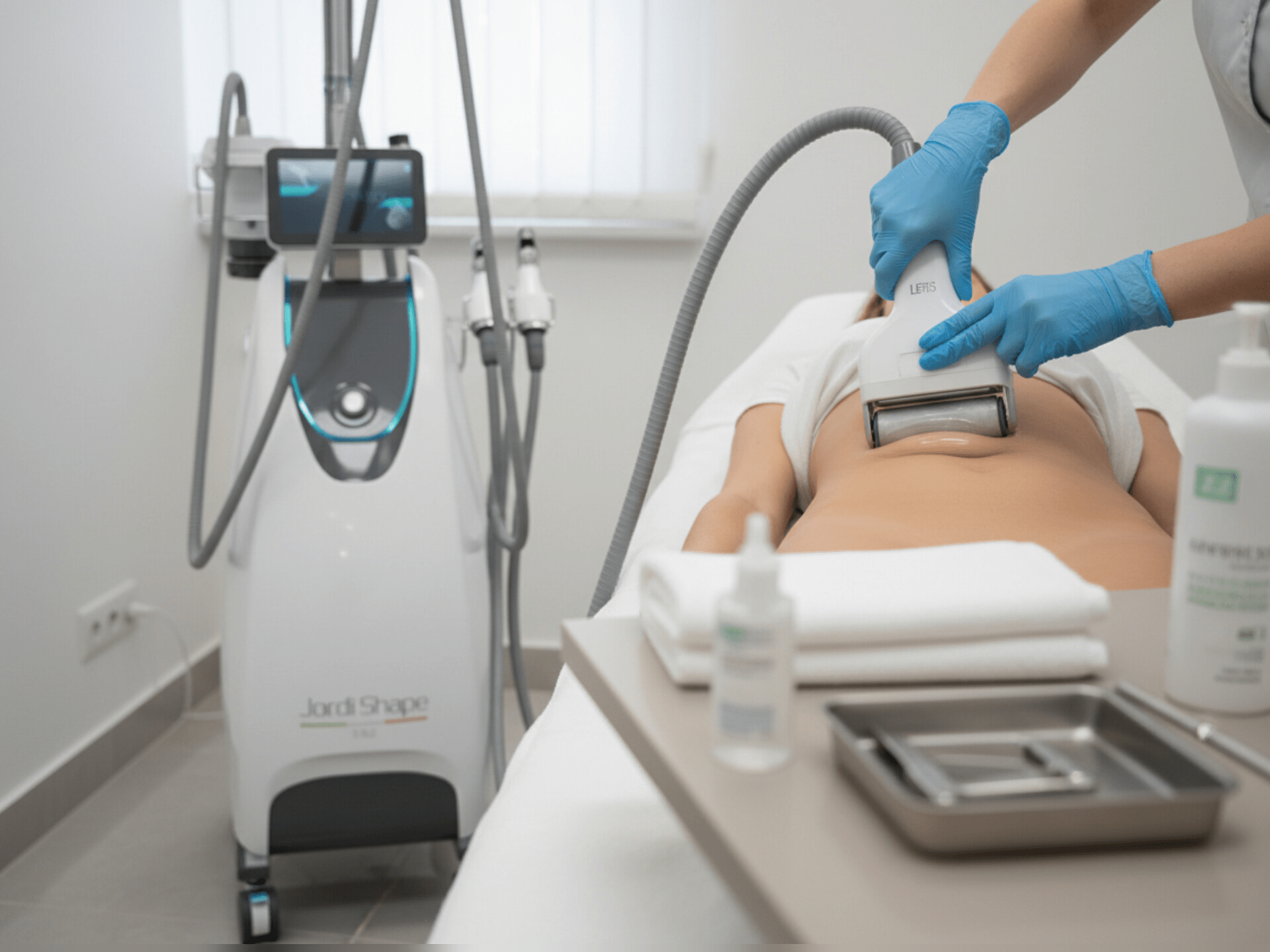
Multi-technology systems combine vacuum massage, cavitation, and RF for clinics offering broader contouring packages. The vacuum cavitation body contouring machines collection includes the H6 Vacuum Cavitation Body Slimming Machine and H8 Vacuum Cavitation Body Slimming Machine, both built on Italian Jordi Shape technology.
Body Sculpting Machine Types Compared
|
MACHINE TYPE
|
MAIN TARGET
|
COMMON AREAS
|
RESULT TIMELINE
|
DOWNTIME
|
BEST CLINIC USE
|
|
Cryolipolysis
|
Local fat pockets
|
Abdomen, flanks, thighs
|
Weeks to months
|
Minimal
|
Fat-freezing menu
|
|
Cavitation
|
Localized fat
|
Waist, thighs, abdomen
|
Gradual
|
Minimal
|
Slimming packages
|
|
RF contouring
|
Skin laxity, cellulite
|
Arms, abdomen, thighs
|
Gradual
|
Minimal
|
Tightening plans
|
|
Laser lipolysis
|
Fat + mild tightening
|
Abdomen, flanks, chin
|
6–12 weeks
|
Minimal
|
Premium fat reduction
|
|
Red light therapy
|
Circumference support
|
Abdomen, hips, thighs
|
Variable
|
Minimal
|
Entry-level option
|
|
EMS / HIFEM
|
Muscle tone
|
Abdomen, buttocks, thighs
|
Gradual
|
Minimal
|
Toning aesthetics
|
|
Vacuum + RF + cav.
|
Fat, skin, cellulite
|
Abdomen, thighs, waist
|
Gradual
|
Minimal
|
Multi-function menu
|
Common Treatment Areas for Non-Invasive Body Sculpting
Some of the body sculpting treatments provided include: abdomen, waist and love handles, thighs, buttocks, upper arms, back rolls, chin and neck, and knees or calves (device and protocol dependent). Treatment area will determine what type of device to use – each device may not be suitable for every part of the body.
Best Technologies by Treatment Area
|
TREATMENT AREA
|
COMMON CONCERN
|
SUITABLE TECHNOLOGIES
|
|
Abdomen
|
Belly fat, mild laxity
|
Cryolipolysis, RF, cavitation, EMS/HIFEM
|
|
Waist / flanks
|
Love handles, waist contour
|
Cryolipolysis, cavitation, RF
|
|
Thighs
|
Inner/outer thigh fat, cellulite
|
Cavitation, RF, cryolipolysis, vacuum RF
|
|
Buttocks
|
Shape, tone, cellulite
|
EMS/HIFEM, RF, vacuum RF
|
|
Upper arms
|
Mild laxity, small fat
|
RF, cavitation, cryolipolysis
|
|
Back rolls
|
Localized fat
|
Cryolipolysis, cavitation
|
|
Chin / neck
|
Small fat pocket, contour
|
Device-specific fat reduction or RF
|
Expected Results: What Clinics Should Tell Clients
Results are gradual, not instant. Fat reduction takes weeks to months. Muscle toning may feel noticeable after one session, but visible definition requires a series. Skin tightening requires remodeling of the collagen in the skin, which takes 3-6 months. According to the American Board of Cosmetic Surgery, non-surgical fat removal is ideal for people who are at or near their ideal body weight, have fat pockets and have realistic expectations.
Results Timeline by Technology
|
TECHNOLOGY
|
EARLY CHANGES
|
MORE VISIBLE RESULTS
|
MAINTENANCE
|
|
Cryolipolysis
|
Mild change after weeks
|
2–3 months
|
Weight maintenance
|
|
Cavitation
|
Gradual circumference change
|
Series-based
|
Lifestyle, repeat sessions
|
|
RF
|
Temporary tightness
|
Weeks to months
|
Maintenance sessions
|
|
Laser lipolysis
|
Gradual fat reduction
|
6–12 weeks
|
Stable weight
|
|
EMS / HIFEM
|
Muscle soreness
|
After treatment series
|
Exercise, maintenance
|
|
Vacuum + RF
|
Smoother feel
|
Series-based
|
Repeat plans
|
Professional Machines vs At-Home Body Sculpting Devices
Professional clinic machines deliver stronger, more controlled energy than at-home devices. At-home units run lower power and skip the safety screening that prevents complications. Clinics should not try to compete with at-home devices on price. The right play is to compete on results and clinical protocols. That is the conversation patients respond to, and it is the only one a clinic can win against a $300 consumer unit on Amazon. The patient should be informed that at home devices will provide maintenance support and not results equivalent to those achieved in the clinic.
Professional vs At-Home Devices
|
FACTOR
|
PROFESSIONAL CLINIC MACHINE
|
AT-HOME DEVICE
|
|
Energy level
|
Higher, controlled
|
Lower
|
|
Operator
|
Trained provider
|
Consumer
|
|
Treatment planning
|
Personalized
|
General use
|
|
Safety screening
|
Required
|
Limited
|
|
Expected outcome
|
Visible, structured
|
Mild or temporary
|
|
Best use
|
Clinic services
|
Maintenance
|
Risks, Side Effects, and Contraindications
Redness, swelling, bruising, tenderness, numbness, warmth and muscle soreness are all common side effects of all body sculpting technologies. Most get better in days. Though rare, there are serious side effects: Paradoxical adipose hyperplasia (cryolipolysis), burns (RF/ultrasound), prolonged numbness (RF/ultrasound), and pigment changes (laser/light treatments).
Common contraindications are pregnancy, active pacemakers and implants, metal implants in the treatment area and cold sensitivity disorders for cryolipolysis, and poorly controlled medical conditions and active skin infections. If adequate consultation is done and trained operation, most of the complications can be avoided.
Safety Checklist by Technology
|
TECHNOLOGY
|
KEY SCREENING POINTS
|
POSSIBLE SIDE EFFECTS
|
|
Cryolipolysis
|
Cold sensitivity, hernia, treatment area
|
Numbness, bruising, PAH risk
|
|
RF
|
Pacemaker, metal implants, skin sensitivity
|
Warmth, redness, burns if misused
|
|
Ultrasound
|
Implants, open wounds, compromised skin
|
Redness, swelling, burns
|
|
Laser / light
|
Photosensitivity, recent tanning, eye protection
|
Redness, burns, pigment change
|
|
EMS / HIFEM
|
Pacemaker, metal implants, pregnancy
|
Muscle soreness, cramps
|
Is Non-Invasive Body Sculpting Right for Belly Fat?
Yes, cryolipolysis, cavitation or laser lipolysis can help reduce the physical bulge in patients who are near their ideal weight in just weeks or months. Body sculpting is not a fat loss, diet or medical weight management solution. If there is loose skin after significant weight loss or loss of a lot of fat, then it should be medically managed or surgically assessed – not a series of non-invasive sessions.
Belly Fat Treatment Decision Guide
|
CLIENT GOAL
|
BETTER FIT
|
NOTES
|
|
Small lower-belly pouch
|
Cryolipolysis, cavitation, laser lipolysis
|
Patient near goal weight
|
|
Mild loose skin
|
RF or HIFU-style tightening
|
Realistic expectations
|
|
Muscle definition
|
EMS / HIFEM
|
Series of 4–6 sessions typical
|
|
Larger fat volume
|
Medical weight management
|
Body sculpting is not weight loss
|
|
Excess skin after weight loss
|
Surgical consultation
|
Non-invasive cannot remove skin
|
Clinic Buyer Guide: How to Choose Non-Surgical Body Contouring Machines
Match Technology to Your Clinic's Client Demand
Map the demand mix at your clinic before choosing a machine. Each of the different types of fat reduction, smoothing of cellulite, tightening of the skin, toning of the muscles and combination packages prefers different platforms. EMS/HIFEM is for a clinic with high muscle toning demand, while cryolipolysis or cavitation is for a clinic that's geared towards fat-pocket reduction
Check Safety Certifications and Regulatory Positioning
Check FDA clearance / marketing authorization if applicable, CE Mark and ISO 13485 information for international markets, manufacturer manuals, written treatment protocols and contraindications information. A lack of documentation means that there is liability exposure when purchasing equipment.
Compare Treatment Speed and Throughput
Session length, number of applicators, hands-free versus handheld operation, multi-area treatment support, and staff time per session affect economics. A machine that requires constant attention from an operator will be more expensive in manpower than a machine with hands-free applicators.
Evaluate Training and After-Sales Support
Confirm training/technical support response time, warranty coverage, availability of spare parts, marketing assets, and supply of consumables for the new service line. A cheaper machine with poor support costs more over five years.
Calculate ROI Before Buying
Break-even comes into play when machine cost is taken into account, an average treatment price ($150 to $600 per session is typical), package pricing, sessions per client (3 to 6 is typical), maintenance costs, and realistic monthly bookings. A clinic that has an average of 15 sessions per week and charges $300 per session has a revenue of more than $200,000 per year before overhead.
Consider Multi-Technology Systems
Combination systems serve broader client goals than single-modality machines. Cavitation plus RF plus vacuum supports fat reduction, skin texture, and cellulite packages from one platform. The vacuum cavitation body contouring machines collection covers this category for clinics expanding their service menu.
Clinic Buyer Checklist
|
BUYER FACTOR
|
QUESTION TO ASK
|
WHY IT MATTERS
|
|
Technology
|
Targets fat, skin, muscle, or cellulite?
|
Drives service menu
|
|
Treatment areas
|
Which body zones are supported?
|
Determines patient fit
|
|
Certifications
|
FDA, CE, ISO documents available?
|
Liability protection
|
|
Training
|
Operator training included?
|
Safety and outcomes
|
|
Applicators
|
How many areas treated efficiently?
|
Throughput economics
|
|
Consumables
|
Cartridges, pads, replacements?
|
Per-session cost
|
|
Maintenance
|
Service schedule required?
|
Long-term reliability
|
|
Warranty
|
Parts and labor coverage?
|
Capital protection
|
|
ROI
|
Sessions to break even?
|
Decision viability
|
Body Sculpting Machine Options
-
Vacuum Cavitation Body Contouring Machines
For cavitation, RF, vacuum massage, and multi-function contouring, the vacuum cavitation body contouring machines collection includes the H6 and H8 platforms built on Italian Jordi Shape technology — vacuum negative pressure with RF and cavitation for fat reduction, cellulite work, and tightening packages.
-
EMS / HIFEM Body Sculpting Machines
For clinics adding muscle toning, the EMS / HIFEM body sculpting machines collection targets fat loss plus muscle building. The V5 Portable HIFEM body contouring machine supports mobile, multi-area treatment for abdomen, buttocks, arms, and thighs.
-
Body Slimming Solutions for Clinics
The LEFIS non-invasive body sculpting solutions page compares the full body slimming, cellulite treatment, and muscle toning lineup for clinics evaluating which platform mix matches their demographics.
A Final Word
Non-invasive body sculpting is a credible clinic service line when matched to the right patients and indications. It is not weight loss, neither is it skin removal nor a substitute for diet and exercise. The right machine depends on your clinic's mix. Cryolipolysis or laser handles fat reduction. RF covers tightening and cellulite. Cavitation supports slimming packages. EMS and HIFEM build muscle tone.
Combination systems serve clinics with broad demand. Whichever direction you go, choose non-invasive body sculpting machines for clinics that match your actual patient base, verify the certifications on the exact model, and budget for the realistic five-year cost rather than the sticker price alone.
FAQs
Does non-surgical body sculpting actually work?
Yes for the right patient. Clinical studies show non-invasive technologies reduce treated fat layer thickness and tighten skin gradually. Results require realistic expectations and stable body weight to maintain.
What is the best non-invasive body sculpting procedure?
There is no single best procedure — the best one depends on the indication. Cryolipolysis or laser for fat pockets, RF for skin tightening, EMS/HIFEM for muscle toning, and combination systems for multi-concern patients.
How long does non-invasive body sculpting last?
Treated fat cells do not regenerate, so results can last for years if patients maintain stable weight. Weight gain causes remaining fat cells to expand, reducing visible results.
Does body sculpting work for belly fat?
Yes for small stubborn lower-belly pouches in patients near their goal weight. It does not replace weight loss for larger fat volume or significant loose skin after major weight changes.
What is the disadvantage of body sculpting?
Results are gradual rather than dramatic, multiple sessions are usually needed, costs add up across a series, and the treatment cannot match surgical liposuction for larger fat volumes or significant reshaping.
What shrinks belly fat quickly?
Nothing shrinks belly fat quickly without lifestyle changes. Body sculpting can reduce small stubborn pockets over weeks. Sustained belly fat reduction requires dietary change, exercise, and sometimes medical weight management.
How painful is body sculpting?
Most patients report mild to moderate discomfort. Cryolipolysis produces intense cold; RF and laser produce warming; EMS/HIFEM produces strong muscle contractions. Topical numbing or device cooling addresses comfort for sensitive patients.
What procedure takes 10 years off your face?
Non-invasive body sculpting targets the body, not the face. Facial rejuvenation uses different technologies: HIFU, RF microneedling, fractional laser resurfacing, or surgical face lifts depending on the patient's concerns.
What is the safest weight loss procedure?
Body sculpting is not a weight loss procedure. For medical weight loss, patients should consult physicians about appropriate options. Non-invasive body sculpting is a body shaping service for patients already near their goal weight.
Can you see results after one session of body sculpting?
Sometimes for EMS/HIFEM (muscle tightness is immediate) and for RF (temporary skin tightening). For fat reduction technologies, results develop over weeks as the body clears treated fat cells gradually.
Does fat come back after body sculpting?
Treated fat cells do not regenerate. Remaining untreated fat cells in surrounding areas can expand if patients gain weight, which makes the original results less visible without true fat regrowth.
Can body sculpting make your waist smaller?
Yes for patients with localized fat at the waist or flanks who are near their goal weight. Combining waist treatment with skin tightening or muscle toning produces more dramatic contour changes than fat reduction alone.
Sources
- Non-Invasive Body Contouring Technologies · U.S. Food and Drug Administration ·
- Non-Surgical Fat Reduction · American Board of Cosmetic Surgery ·
- What to Know About Nonsurgical Body Sculpting · WebMD ·
- Non-Invasive Body Contouring Treatments · American Society for Dermatologic Surgery ·
- Body Contouring · Cleveland Clinic ·
- Non-Invasive Body Contouring · American Society for Laser Medicine and Surgery ·
- Review of the Mechanisms and Effects of Noninvasive Body Contouring Devices · PMC / NIH ·
- Cryolipolysis for Fat Reduction and Body Contouring · PMC / NIH ·


Looking for something else?

Do Men Get Cellulite? Causes Differences & What to Know
LEARN MORE
Does Radio Frequency Skin Tightening Work? Results & How It Works
LEARN MORE
Do You Shave Before Laser Hair Removal? Prep Tips & Why It Matters
LEARN MORE
How to Get Rid of Age Spots: Treatments. Natural Remedies & Prevention
LEARN MORELooking for something else?
How to Heal Ingrown Hair: Causes. Treatments & Healing Time
LEARN MORE
How to Get Rid of Freckles: Effective Treatments & Natural Tips
LEARN MORE
Top 10 Picosecond Laser Machine Manufacturers for Clinics in 2026
LEARN MOREYou may also like


Further reading

Tattoo Removal Laser Machine Cost and Ownership Guide
The purchase price is only one part of a tattoo removal laser machine’s cost. A clinic also needs the correct wavelength configuration, cooling, eyewear, room controls, staff training, documentati...

CO2 Laser Treatment Room Setup Checklist
A CO2 laser purchase is not complete until the treatment room can support safe, repeatable operation. Room planning should happen before shipment so the clinic can address smoke evacuation, access...

Aesthetic Machine Factory Acceptance Test Before Shipment
LEFISA factory acceptance test, or FAT, gives the buyer a defined point to confirm that the machine matches the order and completes agreed checks before shipment. It does not replace regulatory re...

Aesthetic Machine Warranty and Spare Parts Guide
A warranty is useful only when it explains what happens after a fault is reported. The number of warranty months matters, but the coverage, exclusions, evidence requirements, parts location, labor...


