

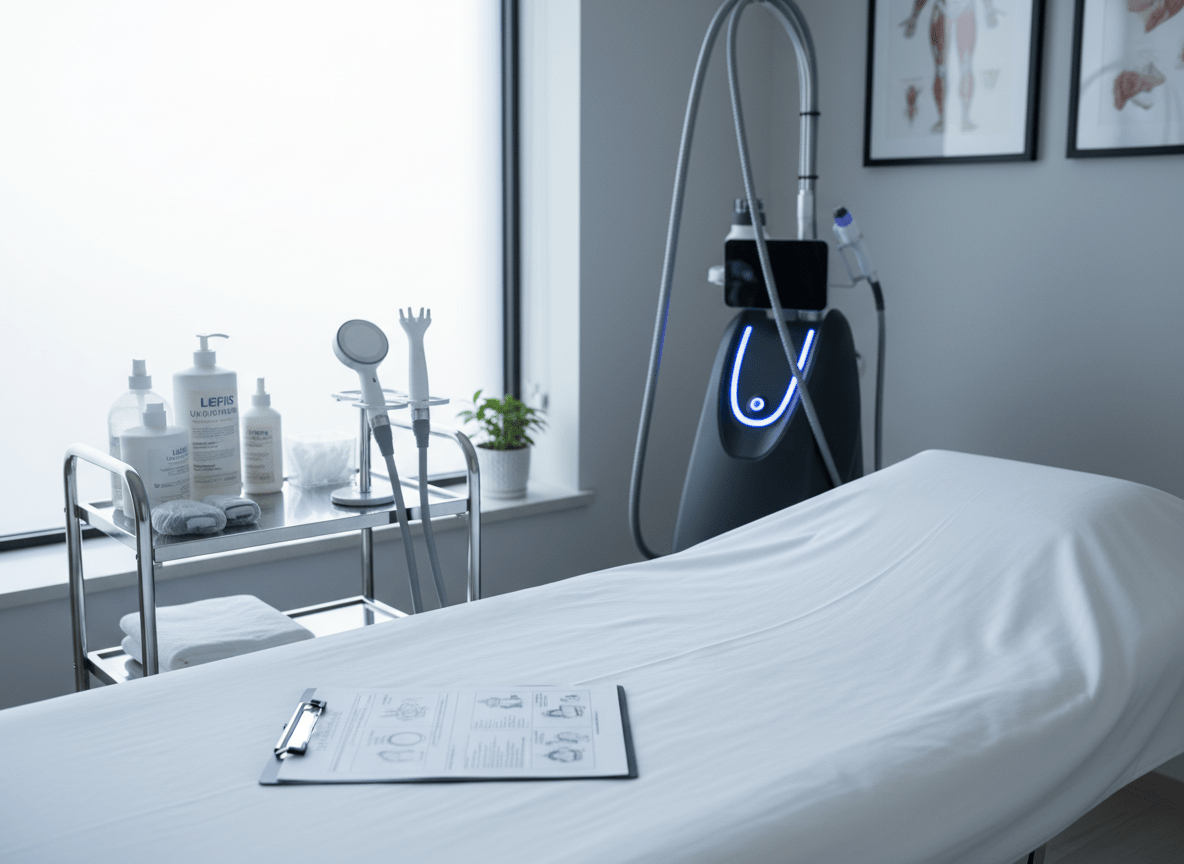
Body Contouring Machine 101: Types, Treatment Areas & Buyer Checklist
16 min read · Updated May 2026
Body contouring is the second-fastest-growing aesthetic service category in the world right now, behind only injectables. It is also one of the most misunderstood. The FDA's own guidance on non-invasive body contouring opens with a warning that most clinic marketing ignores: these treatments are not weight loss, they do not improve health outcomes, and not everyone responds. Buy the equipment, read the marketing, run the service line — fine. However, you should do more than just understanding what the technology is before working out a business plan around it.
This guide covers the five mainstream technology categories, the treatment areas each one actually serves, the safety considerations that matter (including the cryolipolysis complication the FDA has been tracking for years), and a buyer checklist clinic operators can use before signing a purchase order. Five tables map the technical, clinical, and business decisions. Read all of it before you commit — the body contouring category rewards operators who know the science and punishes those who do not.
What Body Contouring Actually Is (And What It Is Not)

If you are thinking about undergoing Body Contouring, but don't know what it is and what it isn't, here are some facts to help you understand.
Body contouring is a non-invasive or minimally invasive aesthetic procedure that reduces fat, tightens loose skin, or strengthens muscle tone in specific areas of the body. The work is done by body contouring equipment that delivers cold, ultrasound, radiofrequency, laser energy through the skin without surgical incisions. These are cosmetic medical procedures and not health interventions, according to the FDA.
In clinical practice, body contouring and body sculpting are used interchangeably. However, some will make a fine difference. Body contouring is more aimed at fat loss and skin tightening, while body sculpting leans toward muscle definition through EMS or HIFEM technology. In the equipment category, both terms point to the same platforms.
Where the category gets misrepresented is in the gap between marketing and reality. “Slim down in one session” claims do not survive a serious look at the clinical evidence. The real outcome of a complete body contouring course is a 15 to 30 percent reduction in subcutaneous fat thickness in the treated area, achieved over 8 to 16 weeks. That is a meaningful aesthetic result for the right candidate. It is not weight loss, and clinics that sell it as weight loss are setting up unhappy patients and refund conversations.
Body Contouring vs Body Sculpting vs Weight Loss
|
GOAL
|
RIGHT TOOL
|
REALISTIC OUTCOME
|
|
Reduce small localized fat pockets
|
Cryolipolysis, cavitation, RF, laser lipolysis
|
15–30 percent fat reduction in treated area over 2–4 months
|
|
Tighten lax skin
|
RF, laser, ultrasound (HIFU)
|
Visible firming over 3–6 months with multiple sessions
|
|
Build muscle definition
|
EMS, HIFEM
|
16–20 percent muscle mass increase in treated area over 4–6 sessions
|
|
Lose body weight
|
Diet, exercise, medical weight management
|
Not body contouring's job
|
|
Treat obesity
|
Bariatric surgery, GLP-1 medications, lifestyle
|
Not body contouring's job
|
|
Remove excess skin after weight loss
|
Surgical lifts (tummy tuck, body lift)
|
Body contouring helps modestly; surgery is the real answer
|
|
Reduce cellulite appearance
|
RF, vacuum + RF, mechanical massage
|
Temporary smoothing; maintenance required
|
The Five Mainstream Body Contouring Technologies
There are five main types of body contouring equipment on the market today, each built around a different physiological mechanism, anatomical target, and risk profile. They are based on different physiological mechanisms, affect different anatomical regions and have different risk profiles. To be able to understand the difference is the first step to smart purchase.
Cryolipolysis (Fat Freezing)
In other cryolipolysis procedures the fat cells are cooled between -11°C and +5°C for approximately 35 to 60 minutes per treatment, which causes the fat cells to die. The physiological basis upon which the technology is based is that fat cells are more sensitive to cold temperature than the surrounding skin, muscle and nerve tissue. The crystallized fat cells will expire within 1-3 weeks and be removed via the lymphatic system in 8-16 weeks.
Best treatment areas: pinchable skin under the arm, behind the arms, upper arms, inner and outer thighs, bra fat, love handles (the skin on the sides of the waist), double chin (submental area) and abdomen. Because this type of fat must be sucked out of a vacuum applicator, it will not work on soft, flat or fibrous fat deposits.
Weaknesses: only works on areas where soft, pinchable fat can be drawn into a vacuum applicator (which rules out flat, fibrous, or hard fat zones); requires careful patient selection and medical-level operator training, so not every clinic can run it well; and although the destroyed fat cells are permanently gone, the contouring result itself can be reversed if the patient gains weight, since the remaining fat cells will expand. Results hold up best in patients who maintain a stable weight within roughly 5 to 10 pounds of their post-treatment baseline.
Strengths: Clinical evidence base that dates back 15 years. Patient selection is critical — if it is not the right patient, the result will be disappointing — and a special complication in the technology (Paradoxical Adipose Hyperplasia) is covered in detail later. .
Ultrasound Cavitation
In the case of cavitation, a series of low frequency ultrasound waves (30-50 kHz) are used to form micro-bubbles in the fluid surrounding the fat cells. The bubbles burst, the membrane mechanical stress breaks the fat cells, and the contents of the fat cells are worked through the lymphatic system. Treatment time is approximately 20 – 40 minutes per area per session, including 6 – 10 sessions for visible results.
Best treatment areas are larger, flat fat surfaces such as the back rolls, outer thighs (saddlebags), abdomen and flanks. Cavitation does not require a pinch of fat to grab, so it works on areas cryolipolysis cannot reach.
Strengths: lower equipment cost than cryolipolysis or platforms designed for cryolipolysis, patients do not feel pain, better for cellulite improvement when used in combination with RF.
Weaknesses: It's less effective than cryolipolysis, needs more sessions, not as well studied as cryolipysis for spot fat reduction, and depends on how well the therapist performs the procedure — a bad therapist does not make for a good treatment.
Radiofrequency (RF)
RF body contouring uses RF energy in the range of 0.3 to 10 MHz to target the dermis and sub-cutaneous tissue. There are two physiologic reactions to the heat, immediate collagen contraction and longer-term activation of the fibroblasts to produce new collagen within 3-6 months. Some platforms also have adequate amounts of heat made available to the fat layer to result in a very small fat reduction, but RF is a skin tightening technology.
Ideal targets for treatment include the abdomen (particularly after pregnancy), upper arms, inner thighs, neck and jawline areas. Unlike laser technology, RF does not target melanin, making it good for nearly all skin tones.
Strengths: does not work on the skin laxity that other body contouring technologies leave behind, requires no downtime, and is very safe profile, effective across Fitzpatrick skin types I - VI.
Weaknesses: It is no magic pill for fat loss, needs several sessions to see significant tightening and is not likely to give dramatic results.
Laser Lipolysis
On non-invasive laser lipolysis systems (e.g. SculpSure), an appropriate laser wavelength heats the fat cells to 42-47°C, which results in the rupture of the cells and the release of the fat contents. Mechanism similar to both cavitation (fat cell disruption) and RF (delivery of thermal energy) but laser can target the areas more precisely due to the absorption of the particular wavelengths.
Treatment areas: abdomen, flanks, inner thighs, back and submental area. Laser lipolysis is most effective on flat fat surfaces, as with cavitation, with the added advantage of depth control.
Benefits: FDA-cleared for treatment of certain body areas, no consumables required and short treatment time (typically 25 minutes per area). Adverse effects: less percentage of fat reduction per session than cryolipolysis, patient discomfort during session (warm to hot), and high cost of equipment (in the higher tier).
EMS and HIFEM Muscle Sculpting
Electrical Muscle Stimulation (EMS) and High-Intensity Focused Electromagnetic (HIFEM) are technologies that send targeted electromagnetic or electrical pulses to muscle groups, resulting in a contraction greater than what can be achieved through normal exercise. The electromagnetic fields used in HIFEM specifically create about 20,000 contractions in 30 minutes. In the clinic, HIFEM platforms have shown an improvement of muscle mass by 16 percent and an average fat reduction of 19 percent in the treated areas after 4 sessions.
Treatment areas: abdomen (showing muscle definition), buttocks (lift and tone), upper arms (biceps and triceps), thighs (quadriceps and hamstrings), and calves. EMS is really best suited to lean patients with existing muscle to develop.
Strengths: Allows for fat reduction and muscle building in a single platform, no downtime, short session time, and good patient compliance since patients will feel muscle-building activity. Weaknesses: not recommended for patients with pacemakers or implanted defibrillators, patients with metal implants in the treatment area, or with active hernias; maintenance treatments are needed every 2-3 months.
Combination Platforms
The newer generation body contouring equipment integrates two or more technologies in one machine. Vacuum, RF, cavitation – the most popular setup for full-service body contouring; HIFEM and RF – for muscle-making and skin tightening; and cryolipolysis and shockwave – for fat reduction and cellulite improvement (the workhorse combo for cellulite and fat).
The strategic value of combination platforms is service menu efficiency. A single $25,000 to $45,000 combination unit can deliver fat reduction, skin tightening, and cellulite improvement protocols using different handpieces. Compared to buying three separate single-technology platforms at $20,000 to $40,000 each, the combination unit usually wins on capital efficiency for clinics under 1,500 monthly patient visits.
Body Contouring Equipment Technology Comparison
Comparisons of the 5 technologies side-by-side, on the key dimensions relevant to clinical/ business decision making.
|
TECHNOLOGY
|
BEST FOR
|
SESSIONS NEEDED
|
DOWNTIME
|
|
Cryolipolysis
|
Pinchable fat pockets
|
1–3 per area
|
None
|
|
Cavitation
|
Larger flat fat areas
|
6–10 per area
|
None
|
|
RF
|
Skin tightening, cellulite
|
6–8 per area
|
None
|
|
Laser Lipolysis
|
Flat fat, controlled depth
|
3–6 per area
|
None
|
|
EMS / HIFEM
|
Muscle building, definition
|
4–6 in series
|
None
|
|
Combination Platforms
|
Comprehensive contouring
|
Varies by protocol
|
None
|
Common Treatment Areas and Which Technology to Use

Body contouring is anatomy-specific. The fat distribution, skin thickness, and tissue characteristics of different body areas determine which technology works best. The mistake we see most often in newer clinics is treating every patient with the same technology for every concern, because that is what the clinic bought. The result is mediocre outcomes and patient churn.
Best Technology by Treatment Area
|
TREATMENT AREA
|
PRIMARY CONCERN
|
RECOMMENDED TECHNOLOGY
|
|
Lower abdomen
|
Localized fat pocket
|
Cryolipolysis (first choice), cavitation
|
|
Lower abdomen (post-pregnancy)
|
Loose skin plus fat
|
RF for skin, then cryolipolysis or cavitation
|
|
Flanks / love handles
|
Pinchable fat
|
Cryolipolysis
|
|
Outer thighs (saddlebags)
|
Larger fat surface
|
Cavitation, laser lipolysis
|
|
Inner thighs
|
Fat plus skin laxity
|
Cryolipolysis plus RF
|
|
Upper arms
|
Fat plus skin laxity
|
RF, cryolipolysis, EMS for tone
|
|
Back (bra rolls)
|
Pinchable fat
|
Cryolipolysis
|
|
Buttocks
|
Muscle definition, lift
|
HIFEM, EMS
|
|
Submental (double chin)
|
Small fat pocket
|
Cryolipolysis (small applicator)
|
|
Cellulite (thighs, buttocks)
|
Skin texture, fibrous septae
|
RF plus vacuum, shockwave
|
|
Whole-body toning
|
Muscle definition
|
HIFEM across multiple zones
|
The general rule: pinch the area first. If you can pinch an inch of soft, mobile fat, cryolipolysis is usually the right answer. If the fat is flat and broad, cavitation or laser lipolysis works better. If the concern is loose skin rather than fat, RF is the answer. If the patient is already lean and wants muscle definition, HIFEM is the only technology that actually delivers it.
How Body Contouring Actually Works (Where the Fat Goes)

“Where does the fat go?” is the most frequently asked patient question for any body contouring equipment. Honest practitioners answer it the same way: via the lymphatic system, filtered by the liver, excreted from the body by normal metabolic pathways in 8-16 weeks.
The longer answer matters for setting expectations correctly. A fat cell that is destroyed during the cryolipolysis cooling, cavitation ultrasound or RF or laser treatment doesn't vanish instantly. In the next few days, the dead cell is engulfed by a process known as apoptosis (programmed cell death). Macrophages, cells that remove dead fat cells, then devour the dead fat cells, breaking down the fat. The triglycerides released are carried in the lymphatic system and then converted in the liver to the same type of dietary fat.
It is in this way that results can be seen weeks to months after the procedure, that patients are encouraged to remain as active as possible to drain the lymphatic system, and that the liver is actually active during the recovery time. Patients with impaired liver function are not suitable body contouring patients.
Critical point: the fat cells destroyed by body contouring do not regenerate. After late adolescence, the number of fat cells is fairly permanent. During the body contouring procedure, 25 percent of the fat cells in a treated area can be destroyed, and these cells are permanently gone. But, there's still fat that can be stored in the rest of the fat cells if the patient puts on weight. This is why the longevity of body contouring depends on the patient keeping a steady weight, and why, if the weight difference is more than 5-10 lbs., the contouring effect will show.
Risks, Safety, and the FDA's Cryolipolysis Warning
Every body contouring equipment carries risks. Most are minor and resolve within days. A small number of complications are serious and require medical intervention. Clinic operators who do not understand the risk profile of the technology they are running expose themselves, their staff, and their patients to avoidable harm.
Standard Side Effects Across Technologies
Pain or discomfort during or after treatment, temporary redness, swelling, bruising, and small nodules (lumpiness that can be felt but not seen) appear in most body contouring procedures. These resolve within 24 hours to 2 weeks depending on the technology. Cryolipolysis specifically can cause numbness in the treatment area for several weeks as the cold-affected nerves regenerate.
The PAH Question: Cryolipolysis's Specific Complication
Paradoxical Adipose Hyperplasia (PAH) is the body contouring equipment complication most clinic operators do not learn about until it happens to one of their patients. PAH occurs when, instead of shrinking, the treated fat area grows over the 2 to 5 months following cryolipolysis. The hyperplasia produces a raised, hard, often rectangular bulge in the exact shape of the treatment applicator. It does not resolve on its own and typically requires surgical correction — either traditional liposuction or, in severe cases, abdominoplasty.
The original estimated incidence of PAH was around 1 in 4,000 cryolipolysis treatments. More recent analysis suggests the real rate is higher, possibly 0.5 to 1 percent in some patient populations. Male patients and patients of Hispanic descent appear to have higher PAH risk based on published case series. The exact reason remains unclear, but recent studies suggest that there is a special group of fat cells that are not fattening up to keep alive when they are exposed to cold.
In 2021, the supermodel revealed that she contracted PAH following CoolSculpting treatments and needed corrective surgery, bringing it to the public's attention. The case was settled with Allergan in 2022. Since then, the number of PAH cases reported to FDA has risen dramatically, in part due to increased awareness by patients and clinicians about this complication and in part due to the possibility that PAH may be more prevalent than originally reported.
Clinics that provide cryolipolysis should: (1) make it explicit in informed consent that PAH is a possibility; (2) take photos of treatment areas before each session for baseline; (3) schedule long-term follow up visits at 3 and 6 months; and (4) ensure they have a relationship with a plastic surgeon who can address PAH if it does occur. None of this is optional in a modern cryolipolysis service line.
Other Serious Complications by Technology
-
Cryolipolysis: PAH (covered above), freeze burns when applicator contact is improper, nerve damage causing temporary lip or tongue position changes when used under the jawline, hernia worsening when used in the abdominal area.
-
RF: thermal burns due to delivery of energy levels that exceed the tolerance of the tissue; contraindicated with patients who have pacemakers, implanted defibrillators, or metal implants in the treatment area; IUD patients should confer with their OB/GYN prior to treatment.
-
Cavitation: damage to tissue occurs at very high energy levels and is contraindicated with implanted devices and sometimes leads to irritation of the nerves when treatment is given close to nerve plexuses.
-
Laser lipolysis: If not cooled, burns can occur, can be dangerous if the patient does not wear protective goggles, contraindicated in patients with photosensitivity disorders or who have recently been in the sun.
-
EMS / HIFEM: muscle soreness (intended), cramps, contraindicated with pacemakers, metal implants, active hernias, recent surgical mesh, and implanted cardioverter defibrillators.
Risks and Training Requirements by Technology
|
TECHNOLOGY
|
COMMON SIDE EFFECTS
|
SERIOUS COMPLICATIONS
|
OPERATOR TRAINING LEVEL
|
|
Cryolipolysis
|
Redness, numbness, bruising
|
PAH (0.5–1%), freeze burns, hernia worsening
|
High — medical supervision recommended
|
|
Cavitation
|
Tingling, warmth, redness
|
Tissue damage (rare), nerve irritation
|
Moderate — certified therapist
|
|
RF
|
Warmth, redness, mild swelling
|
Burns, contraindicated with implants
|
Moderate — certified therapist
|
|
Laser Lipolysis
|
Discomfort, redness, swelling
|
Burns, eye injury without goggles
|
High — medical supervision recommended
|
|
EMS / HIFEM
|
Muscle soreness, mild cramps
|
Contraindicated with cardiac implants
|
Moderate — certified therapist
|
Buyer Checklist: How to Choose Body Contouring Equipment

When it comes to body contouring equipment selection, it's a four-dimensional process – clinical effectiveness, safety, business economics and manufacturer support. The following points are provided as a buyer checklist to help you select the Body Contouring Equipment that is right for you.
-
Clinical Efficacy
Check the technology with published clinical results for the platform or technology, not just within the category of technology. There are hundreds of peer-reviewed studies on cryolipolysis, but none on a no-name cryolipolysis platform using an unverified manufacturer. The difference is significant in malpractice lawsuits, when you're being evaluated by the regulators, and when you're trying to promote services that you can back up with a legitimate claim.
-
Safety Certifications
FDA clearance on the exact model (not just the brand) for medical-grade platforms intended for the US market. CE Mark for European markets, with current MDR compliance documentation. Manufacturers of ISO 13485 certification for quality management system. Clearances as required, country specific (ANVISA, MFDS, TGA, CFDA). Check certificates by certificate number and not by manufacturer claim.
-
Treatment Versatility
Single-technology platforms work for clinics with a focused service offering. Combination platforms work better for general aesthetic practices that want to serve multiple body concerns from one machine. The price difference is large, with a high end cryolipolysis only platform that costs $40,000 - $90,000 and a 3-in-1 platform with vacuum, RF and cryolipolysis that costs $15,000 - $35,000.
-
Training and Clinical Support
Before the use of the equipment on a paying patient, manufacturers should provide certified operator training, preferably on-site at your clinic. Student training should encompass technical operation, treatment protocols (by indication), contraindications, complication management, and patient consultation. The ongoing clinical support is a must-have feature for body contouring platforms, as it ensures that there's a real person available to answer questions and help with any problems when they arise.
-
Total Cost of Ownership
The total amount of money invested in a project over its lifespan. In addition to the unit price, consider the cost of consumables, 2-5 year warranty coverage, replacement parts pricing and service response time in your area for premium platforms using single-use gel pads at $30 to $80 per cycle. The $20,000 cheaper signup cost, and $15,000 higher annual costs for consumables makes a platform of that price not a deal at all.
Body Contouring Equipment Buyer Checklist at a Glance
Use this short list as a final filter before signing any purchase order for body contouring equipment:
-
Verify clinical evidence on the exact platform you are buying — not just the technology category.
-
Confirm certifications by certificate number for every target export market, not by manufacturer claim.
-
Match the platform type to your service mix. Single-technology for focused clinics, combination platforms for general aesthetic practices.
-
Demand on-site operator training, written protocols by indication, and a named clinical support contact who answers the phone after the sale.
-
Model five-year total cost of ownership including consumables, warranty terms, replacement parts pricing, and regional service response time — not just the headline unit price.
Body Contouring Equipment Buyer Scorecard
|
EVALUATION CRITERION
|
WHAT TO VERIFY
|
WHY IT MATTERS
|
|
FDA / CE clearance
|
Certificate number for the exact model
|
Liability and marketing claims
|
|
Clinical evidence
|
Peer-reviewed studies on this specific platform
|
Regulatory inspections and malpractice defense
|
|
Manufacturer track record
|
Years in operation, clinic reference clients
|
Long-term parts and service availability
|
|
Training program
|
Hours included, on-site or factory, certification
|
Operator competence and safety
|
|
Service response
|
Average response time in your region
|
Downtime is lost revenue
|
|
Consumables cost
|
Per-treatment cost over five years
|
True margin per service
|
|
Warranty terms
|
Years, what is covered, what is excluded
|
Capital protection
|
|
Software upgrades
|
How often, included or billable
|
Equipment lifecycle
|
|
Treatment versatility
|
Indications covered by one platform
|
Service menu breadth
|
|
Patient comfort features
|
Cooling, ergonomic handpieces, noise level
|
Patient retention and referrals
|
Common Mistakes Body Contouring Clinics Make
-
Marketing body contouring as weight loss — sets up patient disappointment and refund risk
-
Skipping pre-treatment photography — makes it impossible to document outcomes objectively
-
Treating poorly selected patients (significantly overweight, with photosensitivity, etc.) and producing unhappy outcomes
-
Buying a single-technology platform when patient demographics call for multi-technology
-
Not including PAH in cryolipolysis informed consent — a serious legal exposure
-
Underestimating operator training time — 30 patients of practice before going live is the minimum
-
Pricing services too low to make the service line economically viable after consumables
-
Failing to set up structured follow-up at 3 and 6 months — misses the complications that show up later
-
Buying equipment without verifying the manufacturer's service infrastructure in your region
A Final Word
Body contouring is a serious clinical service category. It is also a service category that has always been over-sold in the industry. The clinics that go on to become successful contoured body businesses are the clinics that choose the correct technology for their patient base, hire operators correctly, thoroughly document results, hold patients to realistic standards and monitor the complications that emerge months after treatment. Cryolipolysis, cavitation, RF, laser lipolysis and EMS are not synonymous. They treat different bodies, different patients and different clinical outcomes.
The clinic that has the wrong platform for their patient base, takes a year or more to retrain staff, and then goes through three years of explaining mediocre results will end up replacing the platform. Select the technology you will treat for the indications. Check the manufacturer's clinical evidence, services, etc. Budget for the complete service line, not just the machine. And include PAH in your cryolipolysis informed consent forms before you treat your first patient. The LEFIS body contouring equipment range is designed for clinics that take this seriously.
FAQs
Can I do body contouring at home?
There are also body contouring devices that can be used at home, but these work at 5 to 15 percent of the energy level of professional devices used in a clinic. They produce mild texture improvement at best and meaningful clinical results almost never. There are no home-use cryolipolysis devices that are FDA approved. Professional equipment in the hands of trained professionals is the only way to achieve actual fat reduction, skin tightening or muscle building effects.
What does it take to become a body contouring entrepreneur?
The four steps to success:
-
Learn regulatory requirements for operators' qualifications and clinic licensing in your area
-
Choose equipment appropriate to your target patient population and indication mix
-
Conduct certified operator training prior to treating your paying clientele
-
Establish the infrastructure to support your service line—consultation, documentation, marketing, and follow-up.
Most clinics miss the mark on step 3 and step 4.
Where does the fat go after body contouring?
The days after treatment, the destroyed fat cells undergo apoptosis (programmed cell death). The dead cells are then ingested and digested by a type of white blood cell known as a macrophage. The released material is carried in the lymphatic system to the liver, where it is metabolized in the same way as dietary fat. The entire procedure is completed in 8-16 weeks. Hence, body contouring is not instant.
What are the risks of body contouring?
Short-term side effects include redness, swelling, bruising, numbness and slight discomfort, which usually lasts for days to weeks. Complications encompass the risks of contraindications (in implant patients), thermal burns (RF and laser; 0.5 to 1 percent incidence, usually correctable with surgery), Paradoxical Adipose Hyperplasia (cryolipolysis; 0.5 to 1 percent incidence, correctable with surgery), and nerve damage. Even with FDA-approved equipment and certified operators there is a degree of risk.
How to do contouring for beginners?
Body contouring is not a cosmetic self-administered procedure, it's a medical procedure. In clinical practice, new operators participate in 30-50 supervised treatments before beginning to work independently. “Contouring for beginners” as a clinical practice concept does not exist in any safe form. If the question is about makeup contouring (cosmetic shading), that is a different category entirely from medical body contouring.
What shrinks belly fat quickly?
Honest answer: nothing legitimate. The fat removal from treated areas is 15 to 30 per cent in 2 to 4 months, which is significant but not immediate. It takes a significant diet and exercise plan (occasionally combined with medical weight management (GLP-1 medications)) to burn enough calories to make a difference in the amount of belly fat. Body Contouring is not a replacement for weight loss; it is a final fine tune. Products or services that promise a rapid belly fat reduction should be taken with a pinch of salt.
How painful is body contouring?
There are different technologies that have different levels of pain. The initial 5 - 10 minutes of the treatment (cold, suction, pulling) is intense, after which it will numb down as the tissue cools. RF is similar to deep heat. Cavitation usually doesn't cause much discomfort. Laser lipolysis ranges from warm to uncomfortable. EMS/HIFEM produces intense muscle contractions that are strange rather than painful. Most patients tolerate all technologies without an anesthetic, but some use topical numbing creams for the cryolipolysis.
What tools do I need to start sculpting?
In addition to the body contouring system itself: a treatment room with adequate temperature and patient comfort controls, consistent lighting and body measurement distance, body composition measurement equipment (the ideal is the 3D scanner, the minimum is a calibrating measuring tape), patient consultation and patient consent documentation systems, the body contouring treatment protocol, and the follow-up treatment schedule. Supporting infrastructure represents approximately 20-30% of the equipment cost and can make the difference between a successful service line and a failure.
What qualifications do you need to do body sculpting?
Different jurisdictions have different requirements. Non-invasive body contouring – cryolipolysis, RF, cavitation, EMS can be performed in the U.S. by trained estheticians or technicians under the guidance of a physician, depending on the state in which it is performed. Typically the laser lipolysis and minimally invasive procedures are operated by a nurse or a physician. Under MDR, the EU has increased the requirements for operators of medical devices. Before installing a service line, always check with the local authority.
What is the difference between body sculpting and body contouring?
In clinical practice, the two terms are synonymous. Body contouring is sometimes used to highlight a reduction of fat and skin tightening, and body sculpting is used to highlight muscle definition (EMS/HIFEM). There is no difference between the two terms when it comes to the specific equipment types. The difference typically isn't relevant in marketing copy, but it may indicate a preference for a particular technology in clinical discussions.
What is the best equipment for skin tightening?
Depends on amount and degree of laxity. RF is the workhorse, safe on all skin tones, no downtime and multiple sessions for cumulative results for mild skin laxity. For deeper laxity that needs to reach the SMAS layer, HIFU technology delivers more lift. If there is severe lack of firmness after weight loss, non-surgical platforms bring some modest firmness whereas surgical lifts bring dramatic. Apply the appropriate technology to the concern – not to clinic marketing.
How long does body contouring last?
Fat cells killed by body contouring are permanently gone. Results last as long as the patient maintains stable weight. Weight gains of 5 to 10 pounds will visibly reduce the contouring effect because the remaining fat cells expand. Once you have built the muscle from EMS/HIFEM, you must continue the sessions, every 2–3 months. RF and HIFU skin tightening lasts for 1-2 years, and maintenance treatments are recommended. The result of body contouring is long-lasting when it is accompanied by a stable weight and lifestyle.
How many sessions do I actually need?
Depending on technology and area.
-
Cryolipolysis: 1-3 sessions per area for noticeable results.
-
Cavitation: 6 to 10 treatments over an area.
-
RF: 6 to 8 sessions for skin tightening.
-
Laser lipolysis: 3-6 treatments.
-
EMS/HIFEM: Maintenance every 2-3 months; 4-6 sessions in a series.
Treatment combinations could be available in a short time. A reputable clinic will provide you with a realistic estimate of your session time depending on your anatomy and goals at a particular clinic, rather than a generic estimate.
Is body contouring safe for darker skin tones?
Yes, most of the time, but it depends on the type of technology. Both RF and HIFU are safe in the entire Fitzpatrick range I-VI as they do not target melanin. Cryolipolysis can be done on all skin tones. Cavitation is safe. Depending on wavelength, there may be an increased risk of pigmentation with laser lipolysis – check the clinical clearance of the platform for your skin type prior to treatment.
When will I see results?
Body contouring effects are a gradual process. The initial visible results are seen within 3-4 weeks of the first treatment with cryolipolysis, 2-4 weeks with cavitation, 4-6 weeks with RF skin tightening and 2-4 weeks with EMS muscle definition. The full results will take 8-16 weeks, as the body takes time to filter the affected fat cells out of the system via the lymph system. If immediate dramatic results are desired, surgical procedures may be a better choice for the patient.
Sources
- Non-Invasive Body Contouring Technologies U.S. Food and Drug Administration
- Non-Invasive Body Contouring Treatments American Society for Dermatologic Surgery
- Non-Surgical Fat Reduction Procedures American Society of Plastic Surgeons
- Many ways to firm sagging skin American Academy of Dermatology
- CoolSculpting (Cryolipolysis) Overview Mayo Clinic
- Body Contouring — Patient Information American Board of Cosmetic Surgery
- Paradoxical Adipose Hyperplasia After Cryolipolysis — Clinical Review PubMed · Aesthetic Surgery Journal
- Non-Invasive Body Contouring — Mechanisms and Outcomes PubMed · PMC
- High-Intensity Focused Electromagnetic Technology — Clinical Evidence PubMed · Journal of Drugs in Dermatology
- Body Contouring Overview


Looking for something else?

Do Men Get Cellulite? Causes Differences & What to Know
LEARN MORE
Does Radio Frequency Skin Tightening Work? Results & How It Works
LEARN MORE
Do You Shave Before Laser Hair Removal? Prep Tips & Why It Matters
LEARN MORE
How to Get Rid of Age Spots: Treatments. Natural Remedies & Prevention
LEARN MORELooking for something else?
How to Heal Ingrown Hair: Causes. Treatments & Healing Time
LEARN MORE
How to Get Rid of Freckles: Effective Treatments & Natural Tips
LEARN MORE
Top 10 Picosecond Laser Machine Manufacturers for Clinics in 2026
LEARN MOREYou may also like


Further reading

Tattoo Removal Laser Machine Cost and Ownership Guide
The purchase price is only one part of a tattoo removal laser machine’s cost. A clinic also needs the correct wavelength configuration, cooling, eyewear, room controls, staff training, documentati...

CO2 Laser Treatment Room Setup Checklist
A CO2 laser purchase is not complete until the treatment room can support safe, repeatable operation. Room planning should happen before shipment so the clinic can address smoke evacuation, access...

Aesthetic Machine Factory Acceptance Test Before Shipment
LEFISA factory acceptance test, or FAT, gives the buyer a defined point to confirm that the machine matches the order and completes agreed checks before shipment. It does not replace regulatory re...

Aesthetic Machine Warranty and Spare Parts Guide
A warranty is useful only when it explains what happens after a fault is reported. The number of warranty months matters, but the coverage, exclusions, evidence requirements, parts location, labor...


