

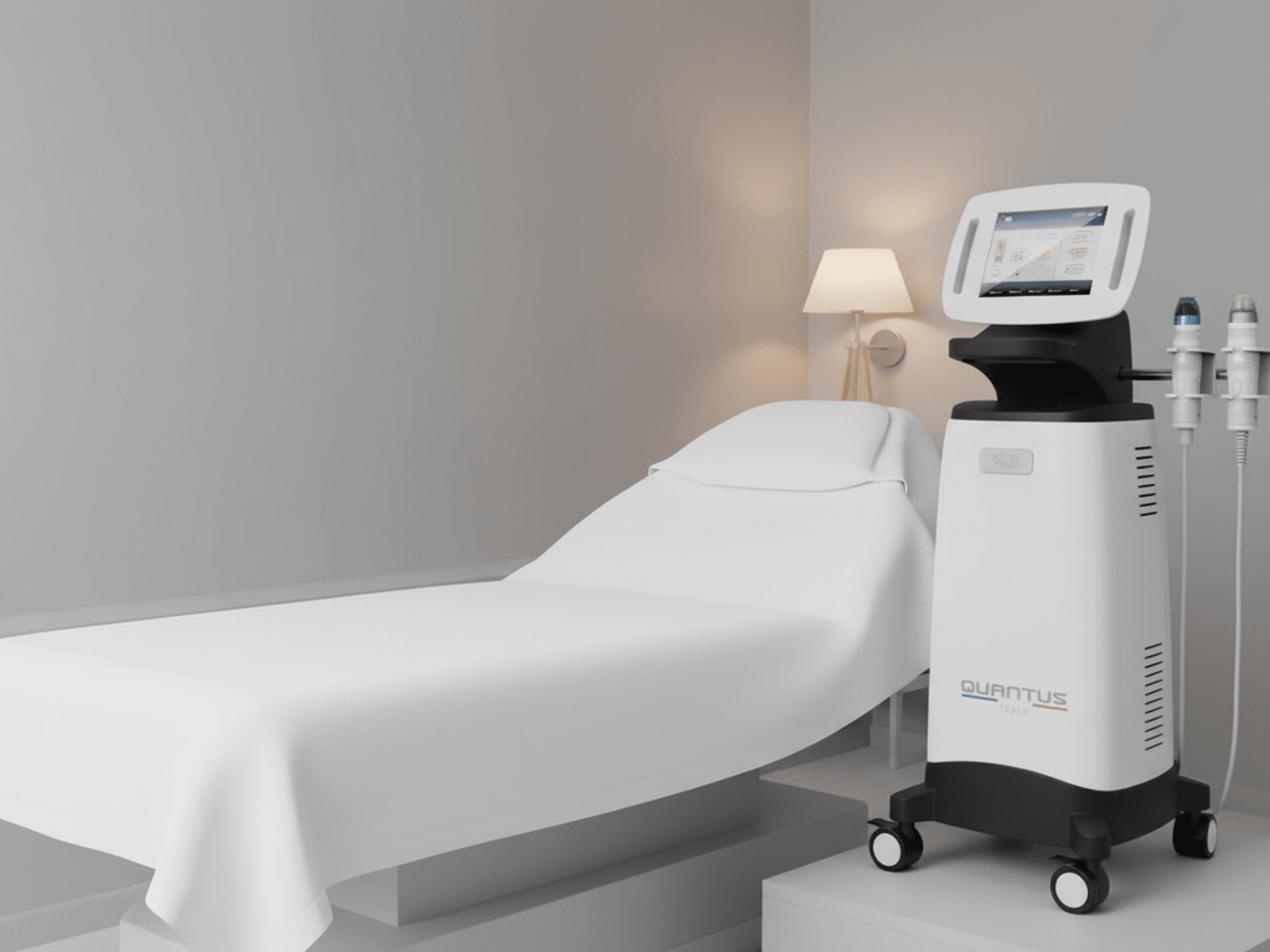
10 Best Radio Frequency Skin Tightening Devices for Professional Use in 2026
In a consultation with us, a medspa owner in Cairo mentioned how they bought a $15,000 "Thermage-style" monopolar RF system in 2023 to anchor a new anti-aging service line. The unit looked professional. The marketing language was specific: monopolar RF, jawline lifting, no-needle face contouring, SMAS-depth heating. Six months in, results on jowls and neck laxity were marginal at best — nothing like the case studies the supplier had shown. A third-party laser engineer confirmed the problem with a meter: the device was actually bipolar RF, penetrating only 1-3mm of dermis. It could not reach the deep subcutaneous tissue or SMAS depth required for jawline lifting. The clinic had been sold a bipolar machine labeled as monopolar. Patients had paid for results the device could not deliver. The lesson sounds simple but burns a lot of clinics: RF type — monopolar, bipolar, multipolar, or needle-based — determines what the device can actually do, and "RF" alone is not a specification.
This guide is for clinic owners, distributors, dermatology buyers, and medspa operators comparing skin tightening device options for professional use in 2026. The market includes premium Western brands (Thermage, Morpheus8, Profound), mid-tier RF microneedling platforms, and B2B value-tier options from manufacturers like LEFIS. The right device depends on your service menu, patient demographics, and operator skill — not on marketing brochures. Start at the LEFIS RF microneedling machines collection or visit lefislaser.com for the full product range.
Quick Answer: Which RF Skin Tightening Device Should Clinics Buy?
There is no universal answer. Match the device to your actual service menu:
-
Premium non-invasive face/body tightening: Thermage FLX. Strong brand recognition, monopolar RF, no needles, high price.
-
Deep RF microneedling for face and body remodeling: Morpheus8. Industry favorite, broad treatment range, requires trained operators.
-
Temperature-controlled dermal remodeling: Profound RF. Real-time temperature feedback for advanced anti-aging work.
-
Precision RF microneedling with tissue feedback: Genius RF, Potenza RF.
-
Body firming and contouring: Venus Legacy, Exilis Ultra.
-
B2B value option with OEM/ODM support: LEFIS H2-K6 Microneedle Fractional RF Machine — quote-based pricing, customization for distributors.
None of these devices delivers facelift-equivalent results. RF tightens mild-to-moderate laxity; severe sagging needs surgery. At-home consumer RF tools are not equivalent to professional clinic systems — period.
What Is a Skin Tightening Device?
A skin tightening device is professional aesthetic equipment that uses energy to heat or stimulate skin tissue, triggering collagen remodeling and surface firmness. The energy source defines the device category:
-
Radio frequency (RF): electromagnetic heat — the dominant non-surgical tightening category
-
RF microneedling: RF delivered through fine needles into the dermis
-
HIFU: focused ultrasound for deeper SMAS-layer lifting
-
Laser: ablative or non-ablative light energy for collagen stimulation
-
IPL: broad-spectrum light, primarily for tone and texture
-
EMS / HIFEM: muscle stimulation for tone, not skin tightening
This article focuses on the RF category — the most common professional skin tightening technology, with the deepest clinical evidence base and broadest range of platforms. For background, see how radiofrequency skin tightening works and the deeper overview of types of radio frequency beauty devices.
Ranking Methodology: What Features Did We Look Out For When Rating?

Devices were selected to the list on six clinical and business factors. The brief was to deliver an honest assessment for clinic buyers, not to push any particular brand to the top. The factors are:
-
Skin tightening strength: depth of energy delivery and collagen remodeling response
-
Treatment flexibility: supported areas — face, neck, jawline, body, acne scars, texture
-
Safety design: temperature monitoring, insulated needles, cooling, motion control
-
Patient comfort: pain level, downtime, numbing requirements, heat management
-
Business value: service pricing, consumable costs, training, maintenance, patient demand
-
Best clinic fit: premium dermatology, medspa, startup clinic, body contouring center, B2B distributor
At-a-Glance Comparison: 10 Best Professional RF Devices in 2026
|
#
|
DEVICE
|
RF TYPE
|
BEST FOR
|
TIER
|
|
1
|
Thermage FLX
|
Monopolar RF
|
Non-invasive face/body tightening
|
Premium
|
|
2
|
Morpheus8
|
Fractional RF microneedling
|
Face/body remodeling, laxity, texture
|
Premium
|
|
3
|
Profound RF
|
Temp-controlled RF microneedling
|
Dermal remodeling, laxity, wrinkles
|
Premium
|
|
4
|
Genius RF
|
Intelligent RF microneedling
|
Precision tightening, acne scars
|
Premium
|
|
5
|
Potenza RF
|
Multi-mode RF microneedling
|
Acne scars, texture, tightening
|
Mid-premium
|
|
6
|
Secret RF
|
Fractional RF microneedling
|
Texture, wrinkles, scars, mild laxity
|
Mid
|
|
7
|
Sylfirm X
|
Pulsed/continuous wave RF
|
Redness-prone skin, rejuvenation
|
Mid-premium
|
|
8
|
Venus Legacy
|
Multipolar RF + PEMF
|
Face/body firming, cellulite
|
Mid
|
|
9
|
Exilis Ultra
|
Monopolar RF + ultrasound
|
Face/body tightening, contouring
|
Mid
|
|
10
|
LEFIS H2-K6
|
Fractional RF microneedling
|
B2B clinics, distributors, face/body
|
Value
|
The 10 Best Professional RF Skin Tightening Devices for 2026

1. Thermage FLX (Solta Medical) — Premium Non-Invasive Standard
RF type: Monopolar RF, non-invasive · Best for: mild to moderate face/body laxity and eyelid tightening
Thermage FLX is the industry-standard non-invasive monopolar RF platform and the system most patients recognize by name. Single-session treatments penetrate to deep dermal layers without needles, with a smart-sensor tip that adjusts energy delivery based on patient response. Strong brand recognition drives premium consultation pricing, but treatment can be uncomfortable and results develop gradually over 2-6 months as collagen remodels.
-
Pros: no needles, single-session protocols, strong consumer awareness, low downtime, broad treatment area coverage
-
Cons: high capital cost ($80,000+), uncomfortable during treatment, not for severe sagging, treatment tips have shot-life limits and cost $400-700 each
2. Morpheus8 (InMode) — RF Microneedling Industry Favorite
RF type: Fractional RF microneedling · Best for: Face/body remodeling, laxity, texture, acne scars
Morpheus8 is the most-marketed RF microneedling system globally. Adjustable depth (up to 8mm for body work), broad treatment range across face, neck, abdomen, arms, and thighs, and strong celebrity endorsement build heavy patient demand. The Morpheus8 Body handpiece extends the platform's reach into post-pregnancy laxity and body contouring. Operator skill is critical — aggressive depth settings can cause permanent fat atrophy in thin-faced patients, which is the most common Morpheus8 complaint in published case reports.
-
Pros: strong brand demand, deep energy delivery, face and body flexibility, scar revision, premium consultation pricing supported by name recognition
-
Cons: requires topical anesthesia, 2-5 days downtime, fat atrophy risk if mis-set, expensive consumables ($120-200 per tip)
3. Profound RF (Candela) — Temperature-Controlled Dermal Remodeling
RF type: microneedling with real-time temperature control · Best for: Dermal remodeling, laxity, wrinkles
Profound RF keeps targeted tissue temperature in real time to facilitate controlled remodeling of collagen and elastin. As opposed to typical single-session RF, treatment is more intensive, typically involving local anesthesia, and resulting in measurable dermal thickness changes in published studies.
-
Pros: temperature-controlled, structured treatment plans, deep dermal effect, clinical evidence base
-
Cons: intensive workflow, requires anesthesia, longer appointments, higher treatment cost
4. Genius RF (Lutronic) — Intelligent RF Microneedling
RF type: Intelligent RF microneedling with tissue feedback · Best for: Precision tightening, acne scars, fine lines
This type of RF microneedling uses a feedback system to target the tissue with intelligent RF energy, it is best for precision tightening, acne scars and fine lines.
Genius RF is a real-time tissue impedance measurement system that adapts energy delivery. Good safety characteristics on all skin types when used properly. Good reputation among doctors' offices.
-
Pros: real-time tissue feedback, controlled energy delivery, good across Fitzpatrick I-VI
-
Cons: expensive consumables, requires trained providers, higher device investment, variable comfort
5. Potenza RF (Cynosure) — Multi-Mode Flexibility
RF type: Multi-mode RF microneedling (monopolar + bipolar) · Best for: Acne scars, texture, wrinkles, mild laxity
Potenza has several modes of RF delivery, including monopolar 1-MHz and 2-MHz, and bipolar, as well as interchangeable tip configurations. The flexibility provides for a multi-service treatment menu, although protocol complexity is greater than for single mode systems.
-
Pros: broad customization, multiple needle tips, face and body use, multi-service medspa fit
-
Cons: protocol complexity, consumable tip costs, training-intensive, not one-size-fits-all
6. Secret RF (Cutera) — Practical Mid-Tier Workhorse
RF type: Fractional RF microneedling · Best for: Wrinkles, acne scars, texture, mild laxity, pores
Secret RF is a practical mid-tier system that supports adjustable depth and energy across a broad range of indications. Good fit for small-to-mid medspas building a texture-focused service. Less premium brand recognition than Morpheus8 but lower capital cost.
-
Pros: flexible depth/energy, practical for many clinics, good for texture work, mid-tier pricing
-
Cons: requires numbing, consumable costs, results need a series, less brand recognition
7. Sylfirm X (Viol) — Dual-Wave RF for Complex Skin
RF type: Pulsed wave + continuous wave RF microneedling · Best for: Sensitive skin, redness-prone clients, rejuvenation
Pulsed wave + continuous wave RF microneedling is best for sensitive skin and redness prone clients, rejuvenation.Indication: Pulsed wave + continuous wave RF microneedling is indicated for sensitive skin, redness prone clients and rejuvenation.
For clinics dealing with complex skin concerns, such as vascular issues, sensitive skin, and even plans to support the condition of melasma (with caution), Syfirm X employs both pulsed-wave and continuous-wave RF. Reliance on training; marketing claims should be kept to a minimum.
-
Pros: dual-wave technology, supports multiple concerns, good for sensitive/complex skin
-
Cons: training-heavy, marketing claims need care, not every patient is a candidate
8. Venus Legacy (Venus Concept) — Multipolar RF Body Workhorse
RF type: Multipolar RF + pulsed electromagnetic field (PEMF) · Best for: Body firming, cellulite-style smoothing, face/neck
Venus Legacy combines multipolar RF with PEMF for larger-area treatments. Comfortable, non-invasive, no needles — patients tolerate sessions well. Strong fit for body-contouring clinics building package-based menus. Results are gradual.
-
Pros: face and body coverage, non-invasive, comfortable, body-contouring menu fit
-
Cons: less dramatic than needle-based RF for scars, requires multiple sessions, not for severe laxity
9. Exilis Ultra (BTL) — RF + Ultrasound Body Platform
RF type: Monopolar RF + ultrasound (depending on configuration) · Best for: Body tightening, mild contouring, face/neck firmness
Exilis Ultra pairs monopolar RF with ultrasound for face and body tightening. Often part of a non-invasive body service menu. Configurations vary by region — verify local distributor support before purchase.
-
Pros: face and body capable, non-invasive, pairs with body sculpting menus, no needles
-
Cons: results may be subtle, multiple sessions needed, configuration varies by market
10. LEFIS H2-K6 Microneedle Fractional RF Machine — B2B Value Tier
RF type: Fractional RF microneedling, adjustable depth · Best for: B2B clinics, distributors, face/neck/body texture
The LEFIS H2-K6 Microneedle Fractional RF Machine is a B2B fractional RF microneedling platform positioned for clinics and distributors seeking value-tier pricing with OEM/ODM customization support. Lower global brand recognition than premium Western systems, but practical clinical capability for skin tightening, acne scars, stretch marks, pores, and texture work across face and body. Manufactured by LEFIS — a Beijing-based aesthetic device company operating since 2005 — the platform is commonly specified by distributors building private-label product lines and by smaller clinics that cannot justify $50,000+ capital outlay for premium systems.
-
Pros: B2B/OEM-friendly with private-label options, quote-based pricing, customization support, adjustable depth for face and body work, broad treatment range
-
Cons: lower brand recognition than premium Western systems, buyers should verify local regulatory needs and request 510(k)/CE specifics, training scope varies by distributor
RF vs Other Skin Tightening Technologies
|
TECHNOLOGY
|
ENERGY TYPE
|
BEST FOR
|
MAIN LIMITATION
|
|
RF (non-invasive)
|
Electromagnetic heat
|
Firmness, mild laxity, wrinkles
|
Gradual results, multiple sessions
|
|
RF Microneedling
|
Needles + RF heat
|
Scars, texture, pores, laxity
|
More downtime, needs numbing
|
|
HIFU
|
Focused ultrasound
|
Deep SMAS lifting
|
Can be uncomfortable, not for all faces
|
|
Laser (ablative/non)
|
Light energy
|
Resurfacing, pigment, collagen
|
Downtime or pigment risk on dark skin
|
|
Microcurrent (at-home)
|
Low-level current
|
Temporary toning
|
Results subtle and short-term
|
Professional Devices vs At-Home Consumer Tools
The Wirecutter editorial team flagged this directly in their 2026 microcurrent guide: at-home RF devices use energy levels that are safe for home use but "not strong enough to be effective" for true skin tightening. Premium publications like Harper's Bazaar and Elle review consumer RF devices (Medicube, CurrentBody, NuFace, Therabody) — useful as maintenance tools between professional sessions, but no substitute for clinic-grade RF systems.
Key differences between professional and at-home RF:
-
Energy output: professional devices deliver 50W-300W; at-home tools deliver under 10W
-
Treatment depth: professional monopolar RF reaches 5-20mm; at-home bipolar reaches 1-3mm
-
Safety features: professional units have temperature monitoring, vacuum control, cooling, emergency stop
-
Liability: professional treatments are performed under licensed scope; at-home tools shift risk to consumer
-
Results: professional treatments deliver measurable collagen response; at-home tools deliver mild glow
At-home devices can support maintenance after professional treatments. They cannot replace them.
RF Device Types Explained
The single biggest source of buyer confusion — and the cause of the Cairo clinic problem in our opening — is failing to distinguish between RF types. Each type has a specific clinical indication and depth profile.
Monopolar RF
Energy travels deep through tissue using a return electrode. Penetration depth: 5-20mm. Best for: non-invasive face/body tightening, jawline lifting, eyelid work. Examples: Thermage FLX, Exilis Ultra.
Bipolar RF
Energy flows between two electrodes on the handpiece. Penetration depth: 1-5mm (dermis only). Best for: face and delicate zones, controlled superficial heating. Examples: many handheld at-home RF devices.
Multipolar RF
Uses multiple electrodes for distributed energy delivery. Penetration depth: 0-20mm depending on electrode configuration. Best for: body contouring, larger-area treatments, cellulite-style protocols. Examples: Venus Legacy.
RF Microneedling (Fractional)
Combines insulated microneedles with RF energy. Penetration depth: 0.5-8mm adjustable. Best for: acne scars, texture, pores, wrinkles, mild laxity. Examples: Morpheus8, Profound RF, Genius RF, Potenza, Secret RF, LEFIS H2-K6.
Treatment Areas: What Professional RF Can Address

-
Face — jowls, jawline, fine lines, mid-face laxity
-
Neck and décolletage — crepey texture, mild laxity
-
Eye area — peri-orbital tightening (only with eye-rated devices)
-
Abdomen — post-pregnancy laxity, mild loose skin
-
Arms — upper-arm laxity, mild texture
-
Thighs and knees — laxity, cellulite appearance
-
Buttocks — mild firming, texture
-
Acne scars and stretch marks — RF microneedling specifically
Results and Longevity
Cleveland Clinic notes that RF skin tightening results typically take 2-6 months to fully appear and can last 1-3 years with proper skincare. Some patients see early firmness from immediate collagen contraction in the first 48 hours post-treatment, but the larger improvement comes from neocollagenesis (new collagen formation) over weeks. Multiple sessions (3-5) are typical for non-invasive RF; RF microneedling often delivers more dramatic improvement in fewer sessions because energy is delivered directly into the dermis.
Results vary by age, baseline skin quality, device type, lifestyle factors (smoking, sun exposure, hydration), and maintenance plan. Maintenance sessions every 6-12 months extend results substantially. RF does not stop aging — it slows the visible timeline by accelerating collagen turnover, which naturally declines about 1% per year after age 25.
Risks and Disadvantages of RF Skin Tightening
Professional RF is safer than most aesthetic energy treatments, but risks exist, and they include:
-
Common: redness, swelling, mild tenderness — resolves within 24-72 hours
-
RF microneedling: pinpoint bleeding, scabbing, brief downtime (2-5 days)
-
Uncommon: temporary hypo- or hyperpigmentation, particularly in Fitzpatrick IV-VI without proper wavelength matching
-
Rare but serious: burns from incorrect fluence, scarring, paradoxical fat loss with aggressive RF microneedling on thin faces
-
Operator-dependent: poor technique drives most adverse events; trained operators on FDA-cleared devices have very low complication rates
Buying Guide: 6 Actions to Carry Out Before You Purchase
-
Verify the RF type with independent data. The Cairo lesson. "RF" alone is not a spec. Demand documentation of monopolar/bipolar/multipolar designation and measured penetration depth. If the supplier cannot produce engineering data, assume the cheaper bipolar specification regardless of marketing.
-
Match the device to your service menu. Face lifting and anti-aging: Thermage FLX, Genius RF, Potenza, Secret RF, LEFIS H2-K6. Acne scars and texture: Morpheus8, Potenza, Secret RF, LEFIS H2-K6. Body firming: Venus Legacy, Exilis Ultra. Premium no-needle: Thermage FLX.
-
Audit consumable costs over 3 years. RF microneedling tips cost $30-150 per single-use tip. A clinic running 200 sessions/year on a $50 tip burns $10,000/year on consumables. Build this into your ROI model before purchase.
-
Verify training and protocol support. Premium manufacturers provide 2-5 days of in-person training plus ongoing protocol guidance. Cheap imports include a PDF manual. Operator skill drives outcomes more than the device itself.
-
Confirm FDA clearance / CE marking with specific numbers. Ask for the 510(k) K-number for FDA-cleared devices. Verify on the FDA 510(k) database directly. CE marks should be specific to the device model, not a generic certificate.
-
Calculate realistic ROI. Average treatment pricing: $300-$800/session (non-invasive RF), $600-$1,500/session (RF microneedling). Clinics typically need 12-24 months to recover capital cost on a $30,000-$80,000 device, depending on local market saturation and patient demand.
Where LEFIS Fits in the Professional RF Device Market

LEFIS is a Beijing-based aesthetic device manufacturer producing RF microneedling and RF skin tightening equipment for B2B buyers, distributors, and clinics seeking value-tier pricing with OEM/ODM customization support. The flagship RF microneedling product is the H2-K6 Microneedle Fractional RF Machine; the broader range is available at the LEFIS RF microneedling machines collection. For background on RF technology fundamentals before contacting any manufacturer, see the LEFIS guide on professional skin rejuvenation treatments.
LEFIS does not claim to outperform premium Western brands. It positions as a practical option for clinics building service lines without premium capital outlay, and for distributors building private-label product portfolios. Buyers should request current technical specifications, FDA/CE documentation, warranty terms, training scope, and after-sales support details before purchase. Visit lefislaser.com for B2B quotes.
Conclusion
Professional RF skin tightening devices work — when matched correctly to clinical indication, patient demographic, and operator skill. There is no universal best device. Thermage FLX, Morpheus8, Profound RF, Genius RF, Potenza, Secret RF, Sylfirm X, Venus Legacy, Exilis Ultra, and the LEFIS H2-K6 all serve different clinic profiles at different price points.
The Cairo clinic in our opening lost 18 months because no one verified RF type before purchase. Don't make that mistake. Verify specifications, demand calibration data, audit consumable costs, and build a realistic 36-month TCO model before any device enters your clinic.
FAQs
Do any skin tightening devices work?
Yes. Professional RF, RF microneedling, HIFU, and laser systems deliver measurable collagen remodeling and skin firmness improvement, particularly for mild-to-moderate laxity. At-home consumer devices deliver subtle, temporary glow effects.
Which is the best skin tightening device?
No universal best. Thermage FLX leads non-invasive premium; Morpheus8 leads RF microneedling; Venus Legacy leads body contouring; LEFIS H2-K6 leads B2B value-tier. The right device depends on your service menu and budget.
What is the most effective skin tightening method?
For mild-to-moderate laxity: RF microneedling delivers the most consistent results. For deep SMAS lifting: HIFU. For severe sagging: surgical facelift. Most clinics combine modalities for best outcomes.
Is there a home device that tightens skin?
Consumer RF devices (CurrentBody, Medicube, NuFace, Therabody) provide mild maintenance effects but do not match professional clinic results. They work best as adjuncts to in-office treatment, not replacements.
How long does a skin tightener last?
Professional RF results typically last 1-3 years with proper skincare and maintenance. RF microneedling results often persist longer than non-invasive RF due to deeper dermal remodeling.
How to take 20 years off your face?
No single device delivers 20 years of reversal non-surgically. Realistic outcomes from RF combined with topical retinoids, sunscreen, and occasional injectables: 5-10 years of perceived rejuvenation. Severe aging changes require surgical correction.
What are the disadvantages of skin tightening?
Gradual results, multiple sessions, consumable costs, burn risk with poor technique, paradoxical fat loss risk with aggressive RF microneedling, training requirements, and the inability to address severe sagging without surgery.
Can saggy skin tighten back up?
Mild to moderate laxity responds well to professional RF over a 3-5 session series. Severe sagging — particularly in older patients or after significant weight loss — usually requires surgical correction.
Can you tighten your skin naturally?
Strength training, weight stabilization, hydration, retinoid use, vitamin C supplementation, and consistent sun protection support skin firmness. Natural methods cannot reverse moderate-to-severe laxity but slow progression.
What vitamins help tighten skin?
Vitamin C supports collagen synthesis. Vitamin A (retinol/retinoids) accelerates cell turnover. Vitamin E provides antioxidant protection. Collagen peptide supplementation may help; evidence is moderate.
Can exercise tighten skin?
Strength training improves underlying muscle tone, which visually firms areas like arms and legs. Exercise does not directly tighten skin laxity, but reducing body fat and building muscle improves overall appearance.
Is RF skin tightening better than HIFU?
RF excels at dermal collagen remodeling for mild-to-moderate laxity. HIFU excels at deeper SMAS-layer lifting. Many premium clinics offer both — they target different tissue depths and complement rather than replace each other.
Is RF microneedling better than regular RF?
RF microneedling delivers RF directly into the dermis, producing more dramatic results for scars, texture, and laxity in fewer sessions. Non-invasive RF is more comfortable and has zero downtime. The right choice depends on the patient goal.
How many RF skin tightening sessions do clinics usually recommend?
Non-invasive RF: typically 3-5 sessions spaced 4 weeks apart, plus maintenance. RF microneedling: typically 3-4 sessions spaced 4-6 weeks apart. Results build over 3-6 months post-treatment.
Is radio frequency skin tightening safe for darker skin tones?
Yes. RF is one of the safest energy-based modalities for Fitzpatrick IV-VI because it bypasses melanin in the surface layers. Unlike some lasers, RF does not preferentially target pigment and has very low PIH risk.
What should clinics check before buying a professional RF device?
Verified RF type (monopolar/bipolar/multipolar), FDA 510(k) or CE marking with specific numbers, consumable costs over 3 years, training scope, warranty terms, after-sales support response time, and realistic clinical case-study photos with metadata.
Sources
- Radio Frequency (RF) Skin Tightening · Cleveland Clinic ·
- Devices: Radiofrequency · American Society for Laser Medicine & Surgery (ASLMS) ·
- Noninvasive Radio Frequency for Skin Tightening and Body Contouring · PubMed ·
- Radiofrequency Facial Rejuvenation: Evidence-Based Effect · NIH / PubMed Central ·
- Radiofrequency Therapy in Esthetic Dermatology: A Review of Clinical Evidences · PubMed ·
- Evaluating the Effectiveness and Safety of Radiofrequency for Face and Neck Rejuvenation · PubMed ·
- Radio Frequency Energy for Non-Invasive and Minimally Invasive Skin Tightening · PubMed ·
- Radiofrequency Radiation Definition · National Cancer Institute ·
- Medical Devices Overview · U.S. Food & Drug Administration ·
- 510(k) Premarket Notification Database · U.S. Food & Drug Administration ·
- Lasers in Dermatology · DermNet ·
- PubMed Search: Radiofrequency Skin Tightening · National Library of Medicine ·
- Best Microcurrent Facial Device · NYT Wirecutter ·
- RF Skin Tightening: Mayo Clinic Health Library · Mayo Clinic ·


Looking for something else?

Do Men Get Cellulite? Causes Differences & What to Know
LEARN MORE
Does Radio Frequency Skin Tightening Work? Results & How It Works
LEARN MORE
Do You Shave Before Laser Hair Removal? Prep Tips & Why It Matters
LEARN MORE
How to Get Rid of Age Spots: Treatments. Natural Remedies & Prevention
LEARN MORELooking for something else?
How to Heal Ingrown Hair: Causes. Treatments & Healing Time
LEARN MORE
How to Get Rid of Freckles: Effective Treatments & Natural Tips
LEARN MORE
Top 10 Picosecond Laser Machine Manufacturers for Clinics in 2026
LEARN MOREYou may also like


Further reading

Tattoo Removal Laser Machine Cost and Ownership Guide
The purchase price is only one part of a tattoo removal laser machine’s cost. A clinic also needs the correct wavelength configuration, cooling, eyewear, room controls, staff training, documentati...

CO2 Laser Treatment Room Setup Checklist
A CO2 laser purchase is not complete until the treatment room can support safe, repeatable operation. Room planning should happen before shipment so the clinic can address smoke evacuation, access...

Aesthetic Machine Factory Acceptance Test Before Shipment
LEFISA factory acceptance test, or FAT, gives the buyer a defined point to confirm that the machine matches the order and completes agreed checks before shipment. It does not replace regulatory re...

Aesthetic Machine Warranty and Spare Parts Guide
A warranty is useful only when it explains what happens after a fault is reported. The number of warranty months matters, but the coverage, exclusions, evidence requirements, parts location, labor...


