

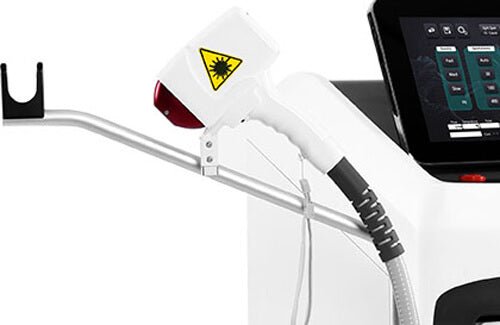
How to Choice OPT Whitening and Rejuvenating Devices | Lefis
The purpose of this article is to help beauty salons and clinics choose a suitable hair-removal device, as there are many advertisements and it can be hard to identify the best option. Therefore, LEFIS explains how to choose an appropriate laser hair removal device.

This article is divided into two parts: Principle of hair-removal devices &How to choose a hair-removal device
1. Principle of hair-removal devices
Before discussing the principle, we need to understand why many earlier hair-removal methods cannot permanently remove hair. As shown in the figure, this is a side view of a normal hair follicle. For hair to grow normally, the follicle must maintain its physiological structure; the dermal papilla plays a key role in nutrient delivery. To address rapid regrowth at the source, the target is the dermal papilla, which must be thermally damaged.
This is the crux: traditional methods do not damage the dermal papilla. Device-based hair removal works via selective photothermolysis: emitted light energy is converted to heat, passes through the epidermis to the follicle, and selectively acts on the dermal papilla, coagulating follicular tissue and inhibiting growth.
This process is intended to provide long-lasting reduction. After one or several well-planned treatment sessions, hair generally does not regrow vigorously, achieving a durable hair-reduction effect.
2.How to choose a hair-removal device
A. Safety first
- Standards & certifications: Verify compliance with national standards and relevant regulatory certifications. Products with valid certifications are generally more reliable in quality.
B. Functionality checklist
- Cooling performance (contact/“ICE” sensation): Effective, stable cooling greatly improves comfort and tolerance. Don’t rely on “ice-feeling” claims—assess contact sapphire tips, real-time temperature monitoring, and overall heat management.
- Treatment modes: You don’t need many modes. Ensure clear coverage of hair removal, pigmentation/whitening, and skin rejuvenation, with distinct indications and parameters.
- Power-level (gear) granularity: Look for ≥ 3 levels (preferably more) so sensitive users can fine-tune settings.
- Auxiliary features: Options that enhance epidermal protection and efficacy (e.g., spot-size options, skin-type presets, temperature safeguards).
C. Match device to skin tone & wavelength
- General rule: Longer wavelengths usually improve epidermal safety on darker skin due to lower melanin absorption.
- Laser: 808 nm diode is widely recognized for hair removal.
- For intense pulsed light hair removal devices (photon hair removal devices), common effective filter range is ~650–1200 nm.
- Darker skin: Prefer ~700–1200 nm to reduce melanin-related epidermal risk.
- Fair skin: ~650–1200 nm can be used, start at the lowest power and titrate upward as tolerated.
D. Energy density (fluence)
Set fluence by follicle depth, skin tone, skin thickness, and sensitivity.
- Darker/more sensitive skin → lower initial fluence.
- Start low, then increase ~1–2 J/cm² per session as tolerated (most devices offer multiple levels).
E. Pulse parameters (TRT, pulse width, pulse delay)
- Thermal Relaxation Time (TRT): Time for a heated target to cool to ~50% of peak temperature.
- Pulse width: Select with respect to TRT—longer than epidermal TRT (~0–10 ms) but shorter than follicle TRT (~40–100 ms for follicles ~200–300 µm).
- Pulse delay (interpulse delay): Allows epidermal cooling between pulses and prevents heat stacking. For epidermis (~100 µm), delay >10 ms aids heat dissipation; darker skin generally requires longer delays.
If you’d like tailored recommendations based on your clients’ skin types, hair characteristics, and budget, contact LEFIS for professional guidance.


Looking for something else?

Do Men Get Cellulite? Causes Differences & What to Know
LEARN MORE
Does Radio Frequency Skin Tightening Work? Results & How It Works
LEARN MORE
Do You Shave Before Laser Hair Removal? Prep Tips & Why It Matters
LEARN MORE
How to Get Rid of Age Spots: Treatments. Natural Remedies & Prevention
LEARN MORELooking for something else?
How to Heal Ingrown Hair: Causes. Treatments & Healing Time
LEARN MORE
How to Get Rid of Freckles: Effective Treatments & Natural Tips
LEARN MORE
Top 10 Picosecond Laser Machine Manufacturers for Clinics in 2026
LEARN MOREYou may also like
Further reading

Tattoo Removal Laser Machine Cost and Ownership Guide

CO2 Laser Treatment Room Setup Checklist

Aesthetic Machine Factory Acceptance Test Before Shipment


