

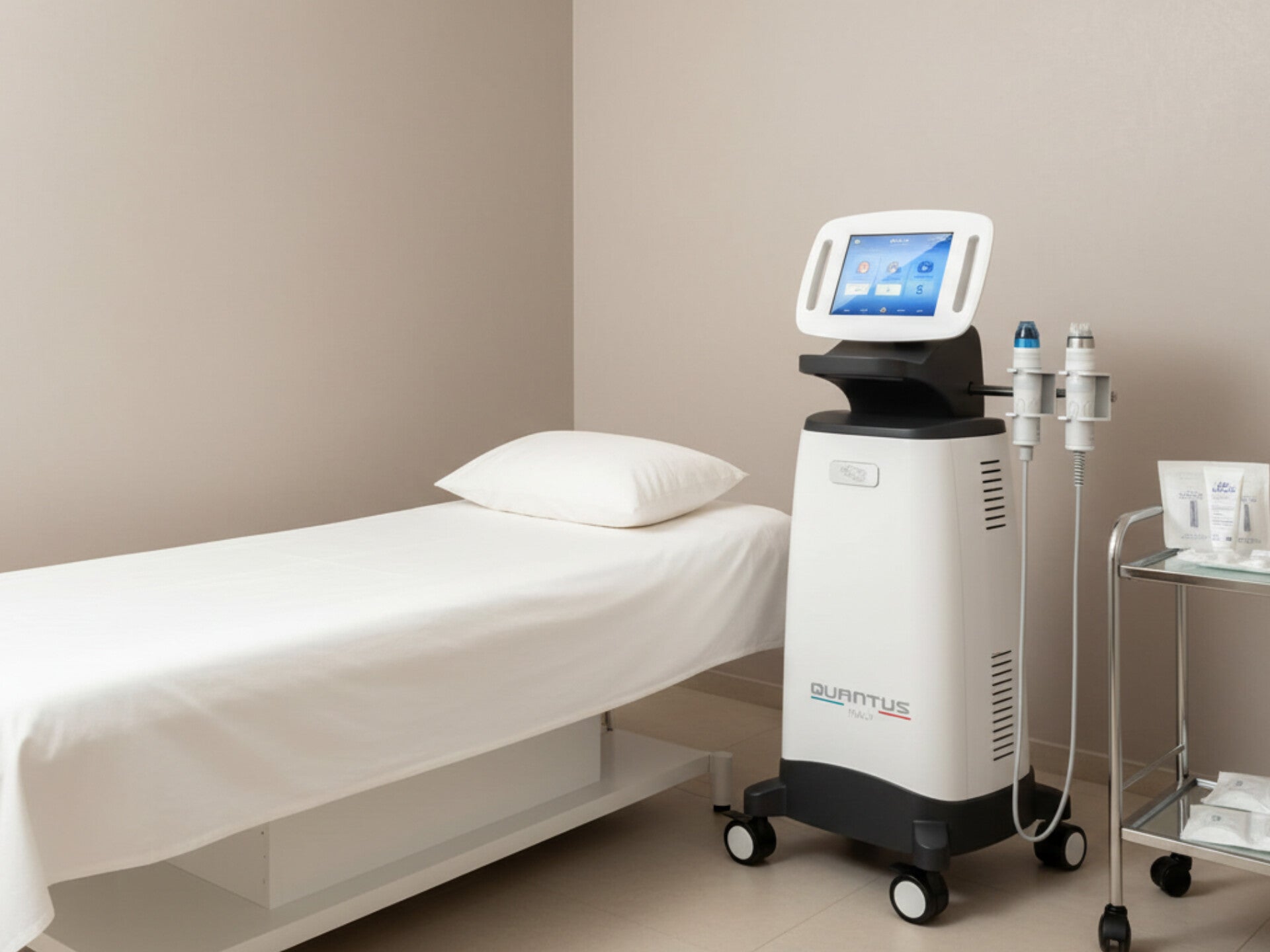
RF Microneedling Machine Guide: Benefits, Treatment Areas & Professional Buying Tips
A now satisfied client shared with us how they purchased a $4,200 RF microneedling unit from an Alibaba supplier in early 2024. The machine performed well for nine months. Then the supplier stopped responding to emails. The disposable needle tips — proprietary to that exact platform — became impossible to source. The unit went from active revenue generator to $4,200 paperweight in three weeks. The machine itself was fine; the consumable supply chain killed the business.
This guide is for clinic owners, medspas, and distributors evaluating RF microneedling machine purchases in 2026. We cover what RF microneedling does, how it compares to other modalities, patient candidacy, downtime expectations, the FDA's 2025 safety communication context, and the buyer checklist that prevents stories like Lima.
Quick Answer: What Is an RF Microneedling Machine?

An RF microneedling machine for aesthetic clinics and medspas combines fine needles with radiofrequency energy. The needles form controlled microchannels and the RF provides heat at specific layers in the dermis. This synergistic effect promotes skin tightening, texture correction, pore refinement, scar softening and mild laxity correction. This sets RF microneedling apart from traditional microneedling (no RF), surface RF skin tightening (no needles), fractional CO2 lasers (ablative resurfacing), and HIFU (focused ultrasound at deeper layers). It also has nothing in common with consumer derma rollers.
The most costly machine is the least appropriate machine for any clinic; it is the machine that most closely fits the menu of treatments, operator skill, client base, consumable economics and after sales support.
The Science Behind RF Microneedling: How it Works
Step 1 — Controlled Microneedling
Fine needles cause a large number of small controlled cuts which activate the body's natural wound healing process and collagen response.
Step 2 — Radiofrequency Energy Delivery
The RF energy is delivered through or around the needles and to the dermis at a specific depth without damaging the epidermis. Controlled thermal effect drives stronger collagen remodeling than mechanical needling alone.
Step 3 — Collagen Remodeling Over Time
Initial redness fades within 24–72 hours, but collagen response takes weeks to months. Most plans are series-based — 3–4 sessions spaced 4–6 weeks apart with maintenance every 12–18 months.
RF Microneedling vs Traditional Microneedling
Traditional microneedling relies on mechanical skin injury alone. RF microneedling adds controlled heat to deeper skin layers, producing measurably stronger collagen response, deeper dermal remodeling, and better outcomes on scars and laxity. The tradeoff is higher device cost, longer training, and slightly more downtime in some protocols.
|
FACTOR |
RF MICRONEEDLING |
TRADITIONAL MICRONEEDLING |
|
Main technology |
Needles + radiofrequency heat |
Needles only |
|
Treatment depth |
Adjustable, deeper dermal layers |
Depends on needle depth only |
|
Main use |
Tightening, scars, pores, wrinkles |
Texture, mild scars, product absorption |
|
Device cost |
Higher capital investment |
Lower |
|
Training need |
Higher |
Moderate |
|
Downtime |
Mild to moderate |
Usually mild |
|
Clinic positioning |
Premium skin remodeling |
Entry to mid-level rejuvenation |
RF Microneedling vs RF Skin Tightening

Surface RF tightening (Thermage, Exilis, Venus Legacy) heats tissue through the skin surface without needles. RF microneedling places energy more directly into targeted dermal depths. Both support skin firmness, but they're not interchangeable — surface RF excels at maintenance and mild laxity; RF microneedling excels at corrective work for scars, pores, and stronger tightening.
|
FACTOR |
RF MICRONEEDLING |
SURFACE RF SKIN TIGHTENING |
|
Uses needles |
Yes |
No |
|
Energy delivery |
Through/around needle tips |
Through skin surface |
|
Best for |
Scars, texture, pores, tightening |
Mild laxity and maintenance |
|
Downtime |
More visible redness possible |
Usually less visible downtime |
|
Comfort |
Topical numbing in most cases |
Usually more comfortable |
|
Treatment value |
Higher-ticket corrective service |
Good maintenance or entry service |
Key Benefits of RF Microneedling
Key benefits include:
- Dermal contraction
- Improvement of atrophic acne scars
- Softening of fine lines and wrinkles
- Reduction of enlarged pores
- Refining the texture
- Improving stretch marks
- Supporting mild laxity
- Improving post-acne marks
- Firmness of the body skin.
When settings and training are done right, RF microneedling is more accessible than ablative CO2 resurfacing across various Fitzpatrick skin types, due to the lack of surface injury.
Treatment Areas RF Microneedling Can Address
The face is the highest-volume RF microneedling indication globally. Common zones include the cheeks, forehead, temples, around the mouth, jawline, and chin, plus acne-scarred areas and enlarged pores.
The neck and jawline respond well to conservative settings. Target concerns here are mild laxity, crepey texture, and early lines.
Body indications include the abdomen, arms, thighs, and knees, along with stretch marks, loose skin after weight change, and selected scars. Body work uses larger handpieces and longer session times.
Delicate areas — under-eye, around the lips, and thin skin zones — require conservative depth and energy settings with experienced operators only. These are not training-day indications..
Common RF Microneedling Clinical Indications
One of the most effective non-ablative treatments for atrophic acne scars is RF microneedling; rolling, boxcar and mixed texture scars benefit from RF; combination therapy is effective for ice-pick scars; deep scars may require subcision or fractional CO2 skin resurfacing in addition to RF. Collagen remodeling will work for mild to moderate skin laxity, while severe sagging will need a surgical consultation or more vigorous lifting measures. Fine lines and wrinkles fade gradually over a series (improvement, not removal). Enlarged pores and texture concerns improve with series treatment plus annual maintenance. Stretch marks are somewhat responsive and the effects vary according to depth, colour and age. Modest improvement in post acne marks and hyperpigmentation – use frame RF microneedling for texture support (not a primary pigment laser). Melasma patients need conservative protocols and combination topical pigment control.
What Skin Looks Like 2 Days After RF Microneedling
Day 0: redness, warmth, tight feeling, and mild swelling — most severe during first 4-8 hours.
Day 1: : calm redness; skin is dry or sensitive to touch.
Day 2: mild pink tone may remain; pinpoint marks visible on close inspection but generally not casually. Deeper settings and body areas extend recovery — provide written aftercare covering 5–7 days.
How Many RF Microneedling Sessions Are Needed?

Session count depends on concern severity. Mild texture: 2–3 sessions. Acne scars: 4–6+ sessions, often with combination therapy. Stretch marks and body protocols: 4–8 sessions. Most clinics structure standard packages at 3–4 sessions spaced 4–6 weeks apart with annual or 18-month maintenance.
|
CONCERN |
TYPICAL PLANNING |
CLINIC NOTE |
|
Fine lines |
3–4 sessions, 4–6 wk intervals |
Results build gradually |
|
Acne scars |
4–6+ sessions |
May need combination therapy |
|
Enlarged pores |
3–4 session series |
Annual maintenance helps |
|
Mild laxity |
3–4 sessions + maintenance |
Not a substitute for surgical lift |
|
Stretch marks |
4–8 sessions |
Results vary by age and depth |
|
Body tightening |
4–6 sessions, longer appointments |
Larger areas extend room time |
Treatment Frequency and Collagen Safety
Standard intervals are 4–6 weeks between sessions. This allows skin healing and the initial collagen response. Aggressive scar or texture work may need 6–8 weeks. The right frequency depends on treatment area, needle depth, RF energy level, skin tone, and individual recovery. More frequent treatment is not better.
RF microneedling safety comes down to two things: the operator and the device. Wrong energy settings, poor technique, or a poorly selected patient can cause thermal damage — injury that leads to scarring or fat loss. In 2025, the FDA released a safety communication alerting the public to these risks. Choose a platform with stable energy output and train your team before the first paid session.
Risks and Contraindications
Burns, prolonged redness, swelling, infection, scarring, uneven texture, hypopigmentation, fat loss (under-eye), and nerve injury are possible complications. As conditions become more aggressive, training less proficient, and needle depth less optimal, as well as if the patient is less suited to the treatment, or if the patient is not given post-care instructions, risks increase.
Contraindications include: active skin infection in treatment area, open wound, active inflammatory acne in treatment zone, history of poor wound healing, keloid/ hypertrophic scar tendency, medical history of uncontrolled medical conditions (per medical guidance), patients with unrealistic expectations, and patients who have recently used isotretinoin for 6 months or less (per local protocol) and patients who are pregnant or breastfeeding.
Professional RF Microneedling vs At-Home RF Devices
Professional machines are designed for trained operators, sterile disposable tips and for clinic level energy output. At-home devices are lower energy, lack true microneedling depth, and don't provide equivalent sterility. The FDA has explicitly warned consumers about safety risks with at-home RF microneedling devices.
|
FACTOR |
PROFESSIONAL RF MICRONEEDLING |
AT-HOME RF / MICRONEEDLING |
|
User |
Trained professional |
Consumer |
|
Needle depth |
Adjustable, professional range |
Limited or no true microneedling depth |
|
RF power |
Higher and controlled |
Lower |
|
Sterility |
Clinical protocol required |
User-dependent |
|
Risk management |
Provider-led with aftercare |
Higher risk if misused |
|
Best use |
Corrective aesthetic treatments |
Basic maintenance, if appropriate |
What Qualifications Are Needed to Do RF Microneedling?
There are a number of different rules for each country, state or region. Confirm state scope of practice requirements (esthetician, nurse, physician), medical supervision requirements, device classification, training documentation and scope of professional indemnity insurance. When buying equipment, be sure that your team is legally able to use the equipment in your jurisdiction — it has become a priority of enforcement since the FDA safety communication in 2025.
How Much Is an RF Microneedling Machine?
Patient treatment cost runs $500–$1,500 per session, with packages $1,500–$5,000+. Clinic device cost: premium branded platforms (Morpheus8, Genius RF, Potenza, Virtue RF, Sylfirm X) $80,000–$200,000+; mid-tier $30,000–$80,000; value-tier clinical-grade platforms $8,000–$30,000.
Cost drivers: brand reputation, RF technology type, needle depth range, included handpieces, insulated vs non-insulated tip options, consumable tip cost, regulatory certifications, warranty, and after-sales support. Consumable tip cost over five years often exceeds the original machine purchase — this is what the Lima clinic did not calculate.
Why Is RF Microneedling So Expensive?
Advanced device engineering for stable RF output, sterile disposable tips ($40–$120 per treatment), professional training, longer appointment times with numbing, ongoing maintenance contracts, and the clinical value RF microneedling delivers for scars and tightening compared to less effective alternatives.
How RF Microneedling Compares With Other Clinic Devices
|
COMPARISON |
RF MICRONEEDLING POSITION |
OTHER DEVICE POSITION |
|
vs Fractional CO2 Laser |
Deeper dermal heating, less surface ablation, broader skin tone safety |
Stronger resurfacing, more downtime, strong for texture and scars |
|
vs HIFU |
Texture, scars, pores, mild tightening at dermis level |
Deeper structural lifting via focused ultrasound at SMAS depth |
|
vs Non-Ablative Fractional Laser |
Controlled dermal remodeling via energy + mechanical |
Pigment and surface texture via fractional light energy |
|
vs PRP |
Energy-based device treatment |
Injectable or topical biologic — often combined with RF microneedling |
Clinics building broader rejuvenation menus often combine RF microneedling with other modalities — see LEFIS CO2 fractional laser machines for ablative resurfacing or LEFIS HIFU machines for structural lifting.
RF Microneedling Machine Types
Different platforms use different needle and energy configurations. Understanding the categories prevents buying the wrong type for your intended indications.
|
MACHINE TYPE |
HOW IT WORKS AND BEST USE |
|
Insulated needle RF |
Energy concentrates at needle tip, protecting epidermis. Useful for deeper dermal heating with reduced surface injury — preferred for darker skin types and deeper scar work. LEFIS H2-K6 and HC3-F platforms use insulated needles. |
|
Non-insulated needle RF |
Energy distributes along needle shaft, creating broader tissue heating. Requires careful protocols and operator skill. Used in selected platforms for specific indications. |
|
Monopolar RF |
Delivers deeper, broader energy patterns through a grounding pad. Effective for selected tightening protocols but requires careful patient positioning. |
|
Bipolar RF |
Energy passes between electrodes in a controlled zone. Common in most professional devices for precise dermal work with predictable depth control. |
|
Fractional RF (no needles) |
Non-needle RF option for superficial rejuvenation. Some platforms (including LEFIS HC3-F and H2-K6) combine fractional RF capability alongside microneedle RF for menu flexibility. |
RF Microneedling Machine Buying Checklist
Walk through this checklist with each manufacturer before signing. The Lima clinic in the opening would have caught the consumable risk with this checklist.
|
CHECKLIST ITEM |
WHY IT MATTERS |
|
Adjustable needle depth across face and body protocols? |
Face areas (0.5–1.5mm), tightening (1.5–2.5mm), scars (2.0–3.0mm) |
|
Sterile disposable tips with documented sourcing? |
Hygiene safety and ongoing supply chain reliability |
|
Tip cost per treatment in writing? |
Most common hidden cost — affects profit margin per session |
|
Insulated needle option available? |
Critical for darker skin types and PIH risk reduction |
|
RF energy output stability across full session? |
Helps standardize results and reduce burn risk |
|
Monopolar or bipolar modes (or both)? |
Affects treatment depth and case versatility |
|
Training included with platform? |
Reduces operator error — single largest complication cause |
|
Written treatment protocols supplied? |
Helps staff standardize service across operators |
|
Warranty period and scope? |
Protects capital investment over 5+ year device life |
|
Spare parts and consumable tips stocked with delivery times? |
Prevents Lima-style supplier abandonment |
|
Local compliance documentation available? |
Required for legal import and clinic operation |
|
After-sales support with documented response times? |
Critical for long-term clinic operations |
ROI Planning for Clinics
Make an estimate, but don't have an unrealistic expectation. Work out the cost of the machine (purchase, shipping, training), cost of consumables per session, average cost of treatment in local market, realistic monthly bookings, staff time, and maintenance per year. Acne scar packages, skin tightening packages, body stretch mark packages and post-procedure skin care packages are all high-demand packages. On mid-tier platforms, consistency in demand is more likely to bring clinics to a break-even point in 12–24 months.
How LEFIS RF Microneedling Machines Fit This Topic

LEFIS produces two RF microneedling platforms — the H2-K6 Microneedle Fractional RF Machine and the HC3-F Portable Microneedle Fractional RF Machine. Both use insulated microneedles that concentrate RF energy at the tip while protecting the epidermis, supporting Fitzpatrick IV–VI treatment with conservative protocols. Both include fractional RF capability alongside the microneedle handpiece. LEFIS positions in the value-tier of the segment for clinics wanting clinical-grade capability at lower capital cost than premium branded platforms. Browse at the LEFIS RF microneedling machines collection or visit lefislaser.com for OEM/ODM partnerships.
Conclusion
An RF microneedling machine helps clinics offer high-demand treatments for scars, texture, pores, fine lines, and mild laxity. Outcomes depend on proper device selection, operator training, patient selection, and aftercare. The main buying factors: adjustable needle depth, RF energy stability, consumable tip cost and supply, insulated needle options, safety features, training, warranty, and after-sales support. Clinics comparing RF microneedling machine options can explore the LEFIS RF microneedling machines collection or browse our aesthetic laser buying guides for related modality coverage.
FAQs
What is the best machine for RF microneedling?
There is no universal best. Premium branded options include Morpheus8, Genius RF, Potenza, Virtue RF, and Sylfirm X. Value-tier clinical-grade platforms from established manufacturers including LEFIS deliver comparable performance at lower capital cost. The right choice depends on your treatment menu, patient demographics, and budget.
How much is an RF microneedling machine?
Premium branded platforms cost $80,000–$200,000+. Mid-tier $30,000–$80,000. Value-tier clinical-grade $8,000–$30,000. Consumable tips run $40–$120 per treatment — over five years, consumables often exceed the original machine purchase price.
Can I do RF skin tightening at home?
At-home RF devices exist but are significantly lower energy than professional platforms. The FDA has explicitly warned about safety risks with at-home RF microneedling. True RF microneedling requires sterile professional equipment, trained operators, and clinical protocols.
Is RF better than microneedling?
RF microneedling delivers stronger results than traditional microneedling for scars, laxity, and dermal tightening because the added thermal energy drives deeper collagen remodeling. Traditional microneedling remains useful for surface texture and product absorption.
Why is RF microneedling so expensive?
Advanced device engineering, sterile disposable tips ($40–$120 per session), professional training, longer appointment times, topical anesthetic supplies, ongoing maintenance contracts, and the genuine clinical value the modality provides for scars and tightening.
What qualifications do I need to do microneedling?
Rules vary by country, state, or region. Most jurisdictions require licensed esthetician, registered nurse, or physician credentials depending on device classification. Verify local scope-of-practice laws and professional indemnity insurance scope before purchasing.
How many times can I do RF on my face?
Standard courses involve 3–4 sessions spaced 4–6 weeks apart, with annual maintenance afterward. Intervals shorter than 4 weeks increase complication risk without accelerating outcomes.
How to take 20 years off your face?
No single treatment delivers that effect. Comprehensive programs combining RF microneedling with HIFU for structural lifting, fractional resurfacing for pigment and texture, injectables for volume, and disciplined daily SPF deliver the strongest non-surgical outcomes.
Does radiofrequency destroy collagen?
Controlled RF energy stimulates collagen remodeling. Excessive energy or poor technique can cause thermal injury producing scarring or fat loss. The FDA's 2025 safety communication on RF microneedling specifically addresses these risks.
How many minutes do I do RF on my face?
Active RF delivery typically runs 15–30 minutes per facial treatment. Total appointment time including consultation, topical numbing, treatment, and post-treatment cooling runs 90–120 minutes.
How to take 10 years off your face?
Combine RF microneedling, HIFU or fractional resurfacing, injectables for volume restoration, and disciplined topical regimens with daily SPF 50+. Most patients see meaningful improvement over 6–12 months of combined treatment.
How will I look 2 days after microneedling?
Day 2: mild pink tone may remain; skin can feel rough or tight; pinpoint marks may be visible to close inspection but generally not casual observation. Most patients return to normal activities within 48–72 hours.
Sources
- Potential Risks with Certain Uses of Radiofrequency Microneedling · U.S. Food and Drug Administration ·
- Statement on FDA RF Microneedling Risks · American Academy of Dermatology ·
- FDA Safety Communication on RF Microneedling · American Society for Laser Medicine and Surgery ·
- Radio Frequency Skin Tightening · Cleveland Clinic ·
- Microneedling · Cleveland Clinic ·
- Radio Frequency Microneedling · Cleveland Clinic ·
- Radiofrequency Microneedling: Technology, Devices, and Indications · NIH / PMC ·
- Efficacy and Safety of Microneedling Radiofrequency in Acne Scars · NIH / PMC ·
- Microneedling in the Treatment of Atrophic Scars · NIH / PMC ·
- The Role of Fractional Radiofrequency in Long-term Acne Scar Treatment · NIH / PMC ·
- Microneedling Monotherapy for Acne Scar · PubMed ·
- Analysis of FDA Data on RF Microneedling Complications · PubMed ·
- Radiofrequency Microneedling: Procedure, Aftercare, Side Effects · Healthline ·
- How Safe Is Radiofrequency Microneedling, Really? · Vogue ·


Looking for something else?

Do Men Get Cellulite? Causes Differences & What to Know
LEARN MORE
Does Radio Frequency Skin Tightening Work? Results & How It Works
LEARN MORE
Do You Shave Before Laser Hair Removal? Prep Tips & Why It Matters
LEARN MORE
How to Get Rid of Age Spots: Treatments. Natural Remedies & Prevention
LEARN MORELooking for something else?
How to Heal Ingrown Hair: Causes. Treatments & Healing Time
LEARN MORE
How to Get Rid of Freckles: Effective Treatments & Natural Tips
LEARN MORE
Top 10 Picosecond Laser Machine Manufacturers for Clinics in 2026
LEARN MOREYou may also like


Further reading

Tattoo Removal Laser Machine Cost and Ownership Guide

CO2 Laser Treatment Room Setup Checklist

Aesthetic Machine Factory Acceptance Test Before Shipment


