

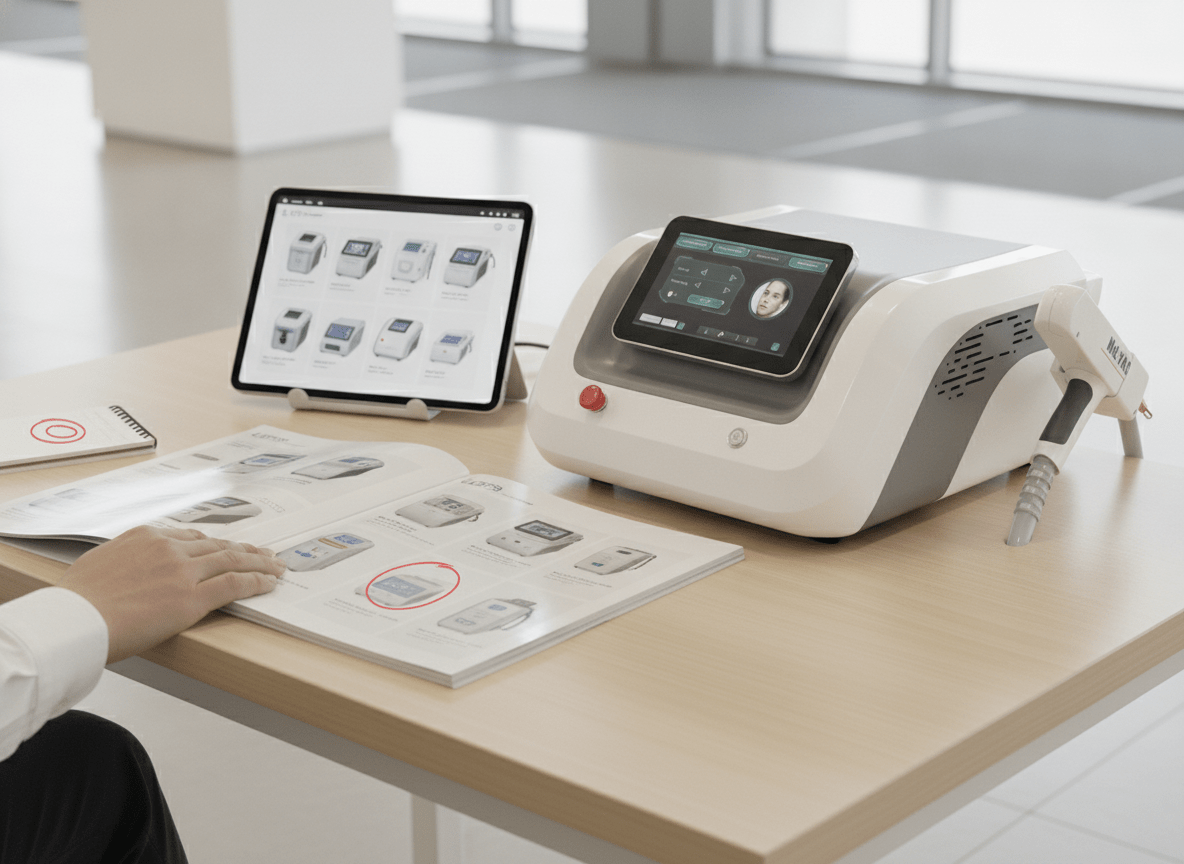
OEM vs ODM Beauty Equipment: Which Model Is Better for Aesthetic Device Businesses?
14 min read · Updated May 2026
Here's the short version. Most distributors who walk into a manufacturing conversation telling us they need full OEM should actually start with ODM. And most established brand owners who default to ODM to save money end up leaving the most valuable differentiator they had on the table. The choice between OEM and ODM beauty equipment is not about skill level. It is a strategic question about what your brand actually sells. Choosing ODM beauty equipment is the right call when your business sells a market position; choosing OEM is the right call when your business sells a product. It is a strategic question about what your brand actually sells — a product, or a market position.
This guide covers what each model actually means for aesthetic device businesses, where the real cost differences sit, and which type of buyer should pick which path. Four tables map the technical, business, and timing decisions. Read all of it before signing any manufacturing agreement, because switching costs are real and most of them are not on the price list.
What OEM and ODM Actually Mean in Beauty Equipment

The terms get used loosely, and that looseness causes expensive misunderstandings. In the aesthetic device industry specifically, the definitions sharpen as follows.
OEM (Original Equipment Manufacturer)
OEM means the brand owner brings the design, the engineering specs, and the intellectual property. The manufacturer builds to those specifications. The brand sets the laser source, the pulse parameters, the user interface logic, the shell design, the cooling architecture, the certification target markets. The manufacturer contributes facility, expertise, and execution.
In practice for beauty equipment, true full-OEM is rare. It is the path of an established brand with internal R&D capability that has already prototyped a device and wants high-volume contract manufacturing. Most clients who say OEM mean a hybrid: they bring some specs and rely on the manufacturer to fill in the rest.
ODM (Original Design Manufacturer)
ODM means the manufacturer designed and engineered the platform. The brand owner selects from existing models and customizes the surface elements: logo, color scheme, user interface language, packaging, sometimes the housing material. The core technology, the laser source, the cooling system, the firmware — those stay as the manufacturer designed them.
ODM is the path most aesthetic device businesses actually need, and sourcing ODM beauty equipment as a first step is usually the smarter move even when the founder's first instinct is to push for full OEM. The reason: the technology cost curve in laser and energy-based devices has flattened. The differentiator for most clinic-facing brands is now training, service, marketing, and clinical results — not whether their picosecond laser has a proprietary pulse architecture.
OEM vs ODM Fundamental Differences
Direct comparison of the two models across the dimensions that actually affect business decisions.
|
DIMENSION
|
OEM
|
ODM
|
|
Design source
|
Brand owner
|
Manufacturer
|
|
IP ownership
|
Brand owns formula and design
|
Manufacturer typically retains core IP
|
|
Customization depth
|
Full — every spec
|
Surface — logo, color, UI, language
|
|
Time to market
|
6–18 months
|
4–12 weeks
|
|
Minimum order quantity
|
Higher (5–20 units typical)
|
Lower (1–5 units typical)
|
|
Upfront investment
|
$15,000–$80,000 in tooling and engineering
|
Standard unit pricing only
|
|
R&D burden
|
Brand carries cost and risk
|
Manufacturer absorbs cost
|
|
Differentiation
|
High — product is unique
|
Moderate — brand and service are the differentiators
|
|
Best for
|
Established brands with R&D capability
|
Startups, distributors, regional brands
|
|
Common mistake
|
Underestimating engineering timeline
|
Overestimating how much customization is available
|
The OEM Process for Beauty Equipment
True OEM is a project, not a transaction. The standard five-step process at most established manufacturers runs as follows.
First, requirements collection and feasibility evaluation. The brand owner presents the device concept, target indications, performance parameters, target markets, and certification requirements. The manufacturer assesses whether the spec is buildable, what components are available, and what the engineering investment looks like.
Second, design and engineering. The appearance is designed, the internal architecture is laid out, the user interface and firmware are specified, and the manufacturing bill of materials is built. This phase usually takes 8 to 16 weeks for a moderately complex platform.
Third, prototype build and clinical validation. The first unit comes off the bench. It gets tested against the original spec on output power, pulse stability, cooling performance, user safety, and clinical outcomes if applicable. Revisions follow. Some platforms cycle through three or four prototype iterations before they pass validation.
Fourth, certification preparation. CE, FDA, ISO 13485, and country-specific certifications take 4 to 12 months on top of the engineering timeline. This phase is non-negotiable for medical-grade devices and is the part most first-time OEM clients underestimate.
Fifth, production and quality management. The platform enters production, the brand orders volume, and the manufacturer maintains the QA system through serial production. Post-launch revisions are common and are usually billed separately.
The ODM Process for Beauty Equipment

ODM is structured for speed. The standard process compresses dramatically.
Step one is platform selection. The buyer reviews the manufacturer's existing catalog and identifies a model that matches the target indications, energy specifications, and budget. Most LEFIS ODM clients pick from roughly 30 active platforms across categories like diode hair removal, picosecond pigmentation, RF microneedling, HIFU, EMS body contouring, and CO2 fractional resurfacing.
Step two is branding customization. The buyer provides logo files, brand colors, user interface language preferences, and packaging specifications. The manufacturer integrates these into the standard build.
Step three is production and shipping. The branded unit moves through the manufacturer's standard QA process and ships once approved. For most ODM orders, this takes 1 to 3 weeks from confirmed order to dispatch.
The whole sequence runs 4 to 12 weeks depending on configuration complexity and shipping mode. Compared to a 12-month OEM project, this is the speed advantage that matters for distributors trying to capture market timing.
Which Model When — The Real Decision Framework
Match the business signal to the recommended model. This is the practitioner version of the question, not the spec-sheet version.
|
BUSINESS SIGNAL
|
RECOMMENDED MODEL
|
WHY
|
|
First device launch for a new distributor
|
ODM
|
Cash flow protection and time to market
|
|
Established clinic chain wanting a signature platform
|
OEM
|
Differentiation justifies investment
|
|
Brand with patented technology to commercialize
|
OEM
|
IP protection requires owned design
|
|
Regional importer testing market demand
|
ODM
|
Low risk on unproven volume
|
|
Established brand with private-label catalog
|
ODM with deeper customization
|
Brand equity already strong
|
|
Aesthetics group operating in multiple countries
|
ODM with multi-language UI
|
Regional adaptation, not invention
|
|
Startup with $200K total budget
|
ODM only
|
OEM tooling alone would exhaust budget
|
|
Distributor competing on price
|
ODM with simple branding
|
Margin protection over uniqueness
|
|
Brand with strong marketing engine but no engineering
|
ODM with premium positioning
|
Lean on brand, not device claims
|
|
Manufacturer of consumables wanting hardware tie-in
|
OEM
|
Ecosystem lock-in justifies investment
|
The most common mistake we see is distributors picking OEM because it sounds more professional. OEM is not a status signal. It is a tooling investment that pays back only when the differentiation it buys translates into real margin per unit sold.
Cost, Timeline, and Risk Comparison

The numbers below are typical ranges for medical-grade aesthetic devices. Actual figures vary with technology category, certification scope, and manufacturer.
|
METRIC
|
OEM
|
ODM
|
|
Engineering and tooling cost
|
$15,000–$80,000 upfront
|
$0–$3,000 (logo/branding setup only)
|
|
Unit cost premium over standard ODM
|
10–40 percent higher
|
Baseline
|
|
MOQ for first production run
|
5–20 units typical
|
1–5 units typical
|
|
Time from contract to first shipment
|
6–18 months
|
4–12 weeks
|
|
Certification responsibility
|
Brand owner (manufacturer assists)
|
Manufacturer (already done)
|
|
Inventory risk if market shifts
|
High
|
Moderate
|
|
Capital tied up in tooling
|
Significant
|
None
|
|
Switching manufacturer mid-project
|
Painful and expensive
|
Possible with limited friction
|
|
Profit margin per unit
|
Higher (if volume sustains)
|
Lower per unit, higher volume
|
Pros and Cons of Each Model
OEM Strengths
Real product differentiation, owned intellectual property that can be defended or licensed, full control over the user experience and clinical outcomes, the ability to build a technology moat that competitors cannot replicate by buying off the same catalog. For brands building a long-term position in a specific clinical category, these advantages compound over years.
OEM Weaknesses
High upfront capital required, long development timelines that can miss market windows, certification burden carried by the brand, exposure to engineering risk if the design does not work as specified, switching costs if the partner relationship breaks down. The OEM client who burns through $60,000 in tooling and then discovers their manufacturer cannot deliver on the original spec is in a much worse position than the ODM client who simply moved to a different platform.
ODM Strengths
Fast time to market, low capital outlay, certification already handled by the manufacturer, ability to test market demand before committing to volume, flexibility to switch platforms if a model underperforms. For most new market entrants, ODM removes the biggest sources of risk in launching an aesthetic device business.
ODM Weaknesses
Limited differentiation if competitors can buy the same chassis, no defensible IP on the core technology, dependence on the manufacturer's design choices, harder to negotiate exclusive market territories. A brand whose only differentiator is a different sticker on the same housing has thin defenses against price competition.
Process Side-by-Side
Step-by-step comparison of what actually happens during each program.
|
PHASE
|
OEM PATH
|
ODM PATH
|
|
Initial inquiry
|
Concept discussion, feasibility review
|
Catalog review, model selection
|
|
Specification
|
Full technical spec from brand
|
Standard spec from manufacturer
|
|
Design phase
|
8–16 weeks engineering and design
|
1–3 days logo and UI customization
|
|
Prototype
|
Multiple iterations, 2–6 months
|
Not required (standard platform)
|
|
Certification
|
4–12 months, brand-funded
|
Already complete
|
|
Production setup
|
Tooling fabrication, line setup
|
Standard production line
|
|
First shipment
|
After all above complete
|
Within weeks of order
|
|
Ongoing revisions
|
Engineering change orders, billable
|
Catalog refreshes, included
|
Common Mistakes Brands Make
-
Choosing OEM because it sounds more credible to investors, then discovering the timeline kills the launch window
-
Choosing ODM and assuming the manufacturer's certifications cover your target export markets without verification
-
Negotiating ODM contracts without exclusivity clauses, then watching competitors buy the same chassis next quarter
-
Pushing for OEM-level customization on an ODM agreement and expecting ODM pricing
-
Skipping factory visits before signing OEM contracts — the photos are never the whole story
-
Underestimating training and clinical support costs, which run the same regardless of OEM or ODM
-
Picking a manufacturer based purely on quote price without checking warranty service depth in the buyer's region
-
Treating ODM as permanently lower-status — some of the most successful aesthetic brands run pure ODM portfolios
-
Switching manufacturer mid-OEM project to chase a lower quote and losing the engineering work already done
The Hybrid Model: When OEM-Plus-ODM Beats Either Alone
Most distributors and brand owners are presented OEM and ODM as a binary. They are not. For ODM beauty equipment buyers and aesthetic device brands ready to graduate beyond a pure catalog model, the hybrid approach often delivers better economics and faster differentiation than either pure path. The most sophisticated aesthetic device brands run hybrid programs that combine elements of both.
A hybrid program typically works like this. The brand picks a proven ODM platform as the chassis — say, a diode laser hair removal device with the standard 808nm wavelength configuration. They then commission OEM-level customization on three specific elements: a proprietary handpiece grip designed for their target therapist demographic, a custom user interface featuring their treatment protocol library, and a signature housing color and finish. The internal architecture stays standard. The differentiating elements are owned.
The math works because the engineering investment is concentrated on what actually differentiates the brand in the market. Total tooling cost might run $8,000 to $20,000 instead of the $40,000 to $80,000 for full OEM. Time to market drops from 12 months to 4 to 6 months. Certification is partially reusable. The brand walks away with owned IP on the elements that matter most to its market position.
When Hybrid Programs Make Strategic Sense
Hybrid is the right answer for established brands wanting to graduate from pure ODM without committing to full OEM capital. It works for distributors with strong clinical training programs who want signature protocols embedded in the UI. It fits regional brands needing handpiece geometry adapted for local therapist anatomy or treatment style preferences. And it makes sense for brands building a differentiated marketing story around a specific feature — “the only platform with built-in treatment progress tracking,” for instance.
Where Hybrid Programs Break Down
Hybrid breaks down when the brand cannot articulate exactly which two or three elements need differentiation. Trying to hybrid everything is just OEM with extra steps and worse cost discipline. The capability to scope hybrid programs tightly is what separates them from scope creep that destroys timelines and budgets. The conversation a manufacturing partner needs to have before quoting hybrid work is which elements of the device touch the customer most directly — because those are the elements worth owning. The rest is just a chassis.
How to Read an OEM/ODM Quote: Line Items That Matter

Quotes from aesthetic device manufacturers are not directly comparable. Two quotes for the same picosecond laser platform from two different suppliers can vary by 40 to 60 percent on the headline unit price and still represent equivalent total cost — or wildly different total cost — once the line items are normalized.
The quote items most brand owners check are unit price, MOQ, and shipping terms. The line items that actually determine total cost of ownership require explicit clarification in writing before signing.
OEM/ODM Quote Line Items — What to Verify
|
LINE ITEM
|
WHAT TO VERIFY IN WRITING
|
WHY IT MATTERS
|
|
Unit price
|
Whether tooling and NRE are included or billed separately
|
OEM quotes routinely exclude $10K–$40K in engineering charges
|
|
NRE (non-recurring engineering)
|
Itemized breakdown of design, prototyping, testing
|
Surprise change orders mid-project are common otherwise
|
|
Tooling and mold costs
|
Ownership of tooling after production
|
Tooling left at the manufacturer locks future production
|
|
Component sourcing
|
Specific laser source, chip set, cooling module by brand
|
Substitutions degrade performance and resale value
|
|
Certification scope
|
Which markets the existing 510(k)/CE covers
|
ODM platform may not be cleared for your target market
|
|
Warranty coverage
|
Parts vs labor, shipping, response time
|
Five-year warranty cost can equal 15–20 percent of unit price
|
|
Training and clinical support
|
Hours included, format, location
|
Training is the largest hidden cost after acquisition
|
|
Spare parts pricing
|
Cost of common consumables and replacement parts
|
Parts profit drives long-term margin or kills it
|
|
Lead time per reorder
|
Standard production cycle, not first order
|
Replenishment cycles affect inventory carrying cost
|
|
Exclusivity terms
|
Territory exclusivity, duration, enforcement
|
Without exclusivity, competitors buy the same chassis
|
|
Service network
|
Authorized service centers in your region
|
Cross-border service logistics destroy margins
|
|
End-of-life policy
|
How long parts remain available after model discontinuation
|
Determines real device useful life
|
The Two Most Expensive Quote Mistakes
The most expensive mistake we see is brand owners signing OEM quotes that exclude NRE charges, then receiving change-order invoices when minor design tweaks are requested mid-project. NRE on a beauty equipment OEM project routinely runs $10,000 to $40,000 separately from tooling, and good manufacturers itemize this upfront. Suppliers who do not break out NRE either bundle it into a high unit price or plan to bill it later. Either way, the brand owner ends up paying for it.
The second most expensive mistake is ignoring component-level sourcing terms. A quote that does not specify which laser source, which chip set, and which cooling module the device will use leaves the manufacturer free to substitute lower-cost components in later production runs. Six months in, when a service issue surfaces, the brand owner discovers the device has a different laser source than the demo unit. This is one of the most common causes of post-purchase regret in the aesthetic device industry, and it traces back to a quote that did not name components specifically.
Geographic and Regulatory Decision Layers
The OEM versus ODM choice changes based on target export markets. A platform cleared for European CE marking cannot be sold in the United States until FDA clearance is obtained on that specific model. A device with CFDA clearance for the Chinese market may require additional country-specific certifications for export to Brazil, Australia, Korea, or the Middle East.
For ODM clients, this means the manufacturer's existing certification scope acts as a critical filter. If the target market is the US, the platform needs FDA 510(k) clearance specifically on the model being purchased — not on a similar model in the same product family. If the target is Brazil, ANVISA clearance is required. If the target is multiple markets, the platform's certification breadth determines launch geography without additional investment.
For OEM clients, certification scope becomes your responsibility. A standard FDA 510(k) submission for an aesthetic device runs $15,000 to $50,000 in fees and consulting plus 6 to 12 months of timeline. CE clearance through a Notified Body runs €10,000 to €40,000 with similar timelines. Country-specific certifications for emerging markets vary widely — some markets accept CE as a basis, others require full local clinical data.
Regulatory Scope and OEM/ODM Implications by Market
|
TARGET MARKET
|
REQUIRED CERTIFICATION
|
STRATEGIC IMPLICATION
|
|
United States
|
FDA 510(k) on the exact model
|
ODM with existing FDA clearance is fastest path
|
|
European Union
|
CE Mark via Notified Body (MDR compliance)
|
MDR transition has tightened ODM platform availability
|
|
United Kingdom
|
UKCA marking (post-Brexit)
|
Many ODM platforms still in transition; verify scope
|
|
China
|
CFDA (NMPA) registration
|
OEM and ODM both require local registration
|
|
Brazil
|
ANVISA registration
|
Limited ODM platforms available; OEM common
|
|
Korea
|
MFDS approval
|
Strict; many ODM platforms not yet cleared
|
|
Australia
|
TGA inclusion
|
CE often accepted as foundation
|
|
Japan
|
PMDA approval
|
Highest barrier; OEM with local partner usually required
|
|
UAE / GCC
|
MOH registration, varies by emirate
|
CE often accepted; ODM viable
|
|
Southeast Asia
|
Country-specific (FDA Philippines, MOH Thailand, etc.)
|
ODM dominant; CE typically accepted
|
The Strategic Implication
The OEM/ODM choice cannot be made in isolation from go-to-market geography. A brand planning to launch in three countries within the first 18 months is almost always better served by ODM on a platform already certified for those three markets, even if differentiation suffers, simply because the certification timeline math of OEM does not work for that launch plan. We have watched ambitious OEM projects miss their planned launch windows by 9 to 14 months because the brand underestimated the certification work required for their target markets.
The reverse is also true. A brand focused on a single high-value market — say, a US-only premium clinic chain — has the time and capital to pursue OEM with a single FDA clearance. The geography of the launch determines whether the certification investment of OEM is worth what it buys.
A Final Word
OEM and ODM are not better and worse. They are different tools for different business positions. The brand with patented technology and a five-year runway picks OEM because the differentiation pays back. The distributor opening a third country with $250,000 in working capital picks ODM because the time-to-revenue is shorter and the risk profile is survivable.
Most aesthetic device businesses overestimate how much their customers care about proprietary engineering and underestimate how much customers care about service, training, and clinical results. For most of the market, ODM done well — right platform, right branding, right service infrastructure — outperforms OEM done thinly.
Match the model to the position. Establish the volume floor before tooling. Audit the certification scope before signing. And before any of that, pick a manufacturer with both programs running so the path can shift as the business grows. The LEFIS OEM/ODM beauty machine solutions program is built for buyers who need that flexibility from day one.
FAQs
What's the difference between OEM and ODM in beauty equipment?
Under OEM, the brand owner designs the device and the manufacturer builds to that design. Under ODM, the manufacturer designs the device and the brand owner customizes the branding, language, color, and packaging. When you buy ODM beauty equipment, you are selecting a ready-made platform from the manufacturer's catalog and adding your label on top, which means lower upfront cost and faster time to market with less product-level differentiation. OEM costs more and takes longer, but gives you full IP ownership and a defensible product.
Which model offers better product uniqueness?
OEM. With it being the brand's design, no other company will be able to purchase the same chassis from a catalog and run against the same hardware. ODM provides uniqueness (branding, language, colour) but the device underneath is shared with other ODM customers of a particular manufacturer.
Would it be appropriate for startups to use ODM?
For most startups, ODM is the only feasible option. The total investment needed for OEM is $20,000 to $80,000 depending on the amount of tools required, not including certifications or production.
Can I switch from ODM to OEM later?
Yes, and there are plenty of successful aesthetic device brands that have gone on that path. Start with ODM, create the brand, customers, clinical information and feedback data, and then order an OEM platform for the second generation. The ODM phase runs the risk reduction activity that OEM cannot afford to miss out on the market validation.
Does an OEM model retain all product IP?
Which model is faster to market for new devices?
ODM, by a wide margin. A standard ODM project ships within 4 to 12 weeks of confirmed order. A standard OEM project takes 6 to 18 months from concept to first shipment, with certification work often pushing the timeline further. For market timing decisions, the difference is significant.
How do cost structures differ between OEM and ODM?
OEM is expensive in both the up-front investment ($15,000-$80,000 for the engineering and tooling costs) and the unit price, which is typically 10-40 percent higher than the price of similar ODM products. There are minimal start-up and unit costs for ODM products and it does not generate a uniquely owned product.
Does ODM limit customization?
As far as ODM is concerned, surface customization such as logo, brand name, color scheme, UI language, packaging design is possible but the change in core technology, energy parameters, internal layout, major housing geometry is not possible. For brands seeking greater customization, a hybrid ODM-plus option (higher cost, longer lead time) can be negotiated, or full OEM can be achieved.
What is a typical timeline for OEM vs ODM product development?
ODM: 4-12 wks from order to first shipment, depending on configuration complexity and shipping mode. OEM: 6-18 months from contract to first shipment plus 4-12 months for regulatory certification after engineering. Make plans for capital and marketing accordingly.
Is branding easier with OEM or ODM?
Branding is similar on both paths once production begins. The core branding elements — logo placement, color scheme, package design, user interface design — happen at the surface level in both models. The deeper question is whether the brand controls the underlying device, which only OEM provides.
What MOQ should I expect for OEM vs ODM beauty equipment?
ODM platforms commonly accept orders from 1 to 5 units, sometimes single-unit orders for established models. OEM projects typically require 5 to 20 units in the first production run to amortize tooling and engineering costs. Some manufacturers will negotiate lower OEM MOQs for established clients.
Do I own the design files in an ODM agreement?
No. In the traditional ODM type arrangement, the manufacturer has all copyrights to the platform design, the firmware and the engineering files. The logo, brand name, color scheme are the assets of the brand owner, and the marketing materials are also owned by the brand owner. If it's a requirement of your business to have total design control, then you must seek an OEM or a hybrid that has IP transfer clauses.
How do I assess an OEM/ODM partner's qualifications?
Make sure that the certifications are backed up by certificate number, not just by claim; see a factory visit, accept a virtual visit is fine, but in person is better if an OEM; confirm component sourcing partnerships; ask about clinical reference clients in your region; validate warranty service infrastructure; check business history. 10+ years' experience in aesthetic devices gives some manufacturers the experience that new companies may lack.
Can I have the same partner for the OEM and ODM projects?
Yes, and this is often the better option . A manufacturer running both programs allows a brand to start with ODM, validate the market, then graduate selected products to OEM as volume justifies it. Switching manufacturers between programs creates friction, lost institutional knowledge, and integration risk.
Sources
- OEM vs ODM Manufacturing — Definitions and Differences SEACOMP
- What is ODM (Original Design Manufacturer)? TechTarget
- OEM vs ODM — Industry Comparison and Decision Criteria OEM JAPAN
- ODM vs OEM Manufacturing Explained FreightAmigo
- OEM & ODM Manufacturing Guide Freightos
- OEM vs ODM Explained: What's Best for Manufacturers Unleashed Software
- Original Design Manufacturer Wikipedia
- What is the Difference Between OEM & ODM? Cosmetics Business


Looking for something else?
Does Intense Pulsed Light (IPL) Work? Benefits & Results Explained
LEARN MORE
Is Intense Pulsed Light (IPL) Safe? Risks. Side Effects & Expert Precautions
LEARN MORE
Microneedling Aftercare: The Expert Guide to Healing & Lasting Results
LEARN MORE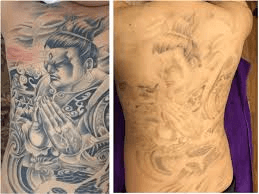
How Does Tattoo Removal Work? The Science of Shedding Your Past
LEARN MORELooking for something else?
How Many Sessions to Remove a Tattoo? The Ultimate Timeline Guide
LEARN MORE
Does Tattoo Removal Leave Scars? Truth, Risks & Recovery
LEARN MORE
Is Tattoo Removal Safe? A Complete Medical & Technology Guide
LEARN MORE


Further reading
How to Calculate Laser Hair Removal Machine Throughput: Spot Size, Hertz and Session Time
Laser hair removal machine throughput is the number of treatments — and the revenue — one machine can produce in a working day. A machine's maximum hertz is not clinic throughput. Real throughput d...

Diode Laser Cooling Systems Compared: Sapphire, TEC, Water and Air Cooling
Sapphire, TEC, water and air are normally different stages in one cooling chain, not four interchangeable choices. Sapphire forms the skin-contact window; a TEC pumps heat from its cold side to its...
HIFU Machine Maintenance Checklist: Handpieces, Cartridges, Cooling and Error Prevention
HIFU maintenance has three layers: operator checks before and after use, clinic review of logs and consumables, and model-specific preventive service by an authorized provider. The manual or IFU an...
HIFU Cartridge Inventory Guide: Cost per Treatment, Shot Life and Reorder Planning
A HIFU cartridge should be reordered before the clinic's inventory position reaches lead-time demand plus safety stock. Track each cartridge by exact part number, device model, depth, serial number...


