

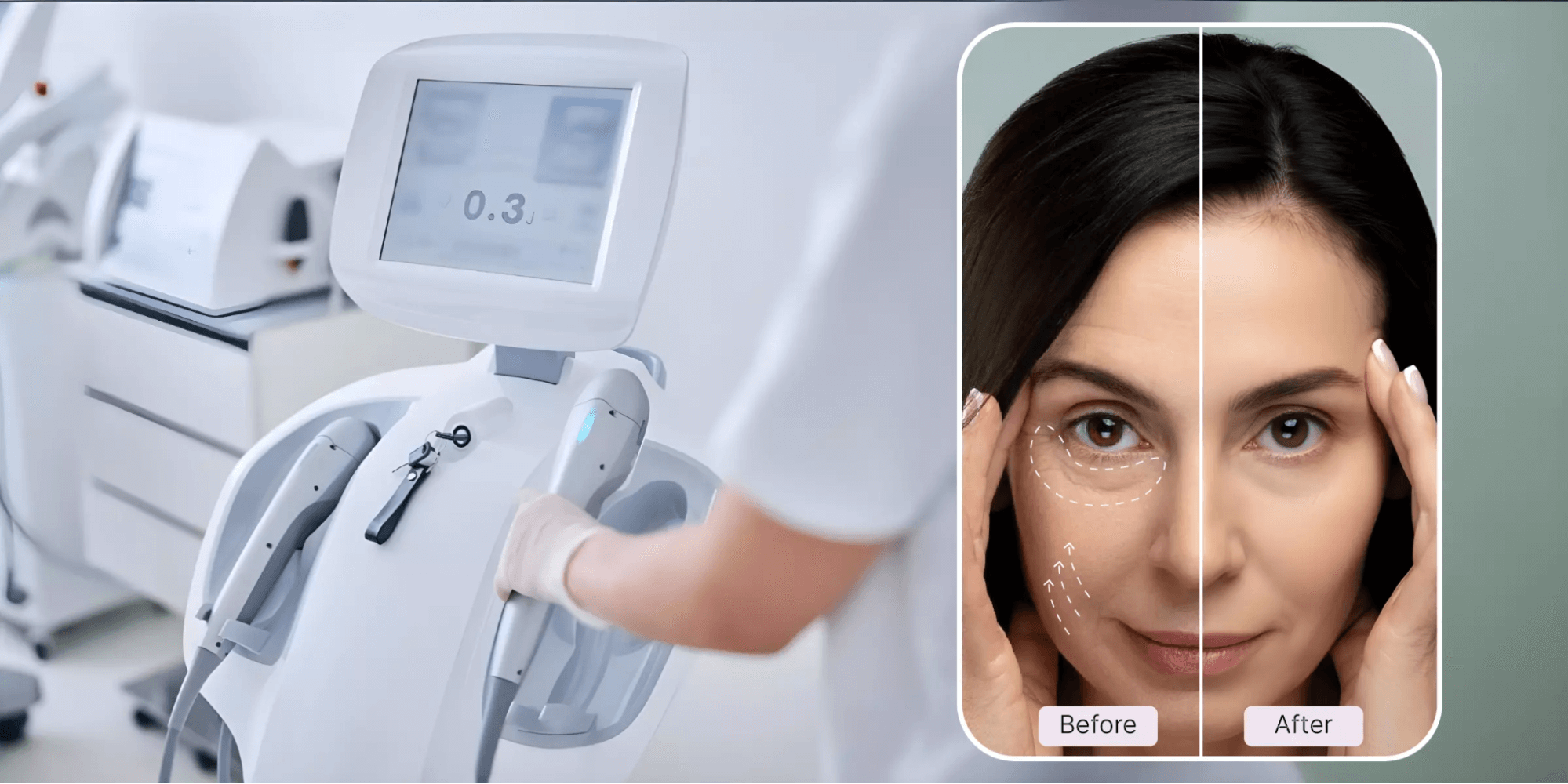
HIFU Machine Cost & ROI for Clinics
With the global rise of non-surgical facial rejuvenation, HIFU (High-Intensity Focused Ultrasound) technology has become a must-have for aesthetic clinics. Offering deep tissue tightening without downtime, it’s one of the highest-value procedures in modern aesthetics.
But before adding this service, most business owners ask two crucial questions:
- What does a HIFU machine cost?
- What is the ROI (return on investment) potential?
This article breaks down device pricing, consumable costs, training expenses, and sample revenue projections—so clinics can plan purchases confidently and profitably.
What Is a HIFU Machine?
A HIFU machine uses focused ultrasound energy to create precise heat zones within the skin’s deeper layers (1.5 mm, 3.0 mm, 4.5 mm, and beyond). These microthermal points stimulate collagen remodeling and contraction of the SMAS (Superficial Musculo-Aponeurotic System) layer—the same layer tightened in surgical facelifts.
Clinically, it’s used for:
- Face lifting and wrinkle reduction
- Jawline contouring and double chin tightening
- Neck, brow, and eye area rejuvenation
- Body sculpting and cellulite reduction (using deeper cartridges)
The technology delivers visible lift and skin firmness without incisions or anesthesia, making it a top choice for non-invasive facial treatments.
HIFU Machine Price Overview (2025)

The cost of a HIFU machine for sale depends on multiple factors: technology generation (3D, 4D, 7D), energy output, cartridge configuration, and warranty.
Average Price Ranges:
|
Type |
Typical Price (USD) |
Best Use |
|
Entry-level HIFU device |
$4,000 – $8,000 |
Small salons, beginners |
|
Mid-range professional HIFU |
$9,000 – $18,000 |
Aesthetic clinics, dermatology centers |
|
4D/7D advanced HIFU systems |
$18,000 – $35,000 |
High-volume clinics, multi-area treatments |
|
Combined face & body HIFU units |
$20,000 – $40,000 |
Face lift + slimming applications |
Price Drivers:
- Cartridge count: More cartridges = wider treatment range (1.5–13 mm).
- Shot capacity: 100,000+ shots per cartridge ensures durability.
- Software intelligence: Smart presets, safety recognition, and real-time temperature control.
- Certifications: FDA, CE, and ISO standards increase value and compliance.
A well-built professional HIFU platform may last 5–7 years with regular maintenance.
Consumables and Maintenance Costs
Although HIFU is considered a low-consumable treatment, a few recurring costs exist.
Cartridges
Each cartridge is rated for 8,000–20,000 shots depending on model. Replacement cost: $300–$800 per cartridge.
Most clinics use two face-depth cartridges (3.0 mm & 4.5 mm) and optionally one for body areas.
Conductive Gel
Every session requires coupling gel to transmit ultrasound efficiently. Cost: ~$1–$2 per client.
Maintenance
Routine calibration and cleaning cost approximately $500–$1,000 annually.
Training
Most suppliers include free online or on-site training, though advanced certification may add $200–$500.
Revenue Potential and ROI Calculation

Let’s explore realistic profit scenarios using industry averages.
Assumptions:
- Machine cost: $15,000 (mid-range HIFU system).
- Cartridges: 2 included, $600 each to replace.
- Average treatment price: $300 per session.
- Session time: 45–60 minutes.
- Capacity: 10–15 clients per week.
Example ROI Model:
|
Metric |
Value |
|
Clients/week |
12 |
|
Treatment fee |
$300 |
|
Weekly revenue |
$3,600 |
|
Monthly revenue |
$14,400 |
|
Consumable cost |
~$200/month |
|
Gross margin |
95 % |
|
Payback period |
≈ 1–2 months |
Even with conservative estimates (6–8 clients weekly), the machine typically pays for itself within 3–5 months.
Long-Term ROI:
Over 12 months, a busy clinic performing 40 sessions/month can generate $120,000+ annual revenue from a single HIFU system.
Why HIFU Delivers High ROI
- Low Consumable Cost: Unlike injectables or laser consumables, HIFU uses only cartridges and gel.
- Quick Turnaround: One session = 45 minutes, minimal operator fatigue.
- High Patient Satisfaction: Results appear gradually yet naturally, ensuring repeat clients.
- Premium Pricing: Non-invasive face lift perceived as high-value; most clients accept $300–$600/session pricing.
- Cross-Marketing Potential: Pairs well with RF, LED, or microneedling services.
This combination of low operating cost and premium pricing makes HIFU one of the most profitable technologies for beauty businesses.
What Makes a Good HIFU Machine?
When evaluating a HIFU machine for sale, look for these professional specifications:
Energy Stability
Consistent energy output ensures even collagen stimulation without hot spots.
Multiple Depth Cartridges
For face and body versatility: 1.5 mm (surface), 3.0 mm (dermis), 4.5 mm (SMAS), and deeper body options (8–13 mm).
Shot Life and Safety
Check for smart shot counters and automatic cartridge recognition to prevent misuse.
Interface Design
Touchscreen control, preloaded protocols, and dual operation modes (Smart & Professional) reduce training time.
Ergonomic Handpiece
Lightweight handle design with adjustable line settings (1–12 lines) ensures efficient workflow.
Warranty & Service
Choose suppliers offering 2-year warranty, spare parts availability, and technical support.
Estimating Profit per Treatment
|
Cost Component |
Per Treatment (USD) |
|
Gel & supplies |
$1–2 |
|
Cartridge depreciation |
$5–8 |
|
Staff time |
$25 |
|
Total cost |
$30–35 |
|
Average treatment price |
$300–500 |
|
Profit per client |
$270–470 |
With 10 clients per week, monthly profit ranges between $10,000–$15,000. The more consistent your bookings, the higher your ROI curve.
Market Trends Driving HIFU Adoption
- Growing demand for non-surgical face lifts: Consumers seek natural tightening with no downtime.
- Combination protocols: Clinics bundle HIFU with radiofrequency or LED for enhanced results.
- Men’s market expansion: Male clients increasingly request jawline contouring and neck firming.
- Device miniaturization: Portable, 4D and 7D compact HIFU units reduce capital barriers.
The global HIFU facial market is projected to exceed USD 600 million by 2028, making now the right time for clinics to invest.
Setting Your Service Pricing
Pricing should reflect local competition, operator expertise, and machine generation.
Recommended Ranges:
|
Treatment Area |
Average Price (USD) |
|
Full Face + Neck |
$400–$800 |
|
Lower Face / Jawline |
$250–$400 |
|
Forehead / Eye Lift |
$150–$250 |
|
Body (per zone) |
$500–$900 |
Offer packages or annual memberships (e.g., 2 sessions + add-on LED facial) to encourage repeat bookings.
Staff Training & Patient Education
Investing in proper training ensures both safety and patient satisfaction.
Operators should understand:
- Anatomy of facial layers and nerve pathways.
- Energy calibration for different skin types.
- Gel application and cartridge contact technique.
- Contraindications: open wounds, metal implants, pregnancy, severe acne.
Educating clients is equally crucial. Explain that HIFU results are gradual (best seen after 8–12 weeks) and continue improving for up to 6 months.
Maintenance & Equipment Longevity
Routine Care
- Keep handpiece clean and store cartridges properly.
- Change cooling water every 1–2 months if applicable.
- Perform manufacturer’s calibration checks annually.
Lifespan
A durable HIFU unit typically operates for 5 years or more, with cartridge replacements being the only significant ongoing expense.
Conclusion
Adding a HIFU machine for sale to your clinic lineup isn’t just an upgrade—it’s a strategic business move. With low consumables, strong patient demand, and fast ROI, it’s one of the smartest investments in medical aesthetics today.
Whether you specialize in facial rejuvenation or full-body contouring, a well-chosen system with proper training and marketing can deliver reliable profits, consistent results, and loyal clientele for years to come.


Looking for something else?

Do Men Get Cellulite? Causes Differences & What to Know
LEARN MORE
Does Radio Frequency Skin Tightening Work? Results & How It Works
LEARN MORE
Do You Shave Before Laser Hair Removal? Prep Tips & Why It Matters
LEARN MORE
How to Get Rid of Age Spots: Treatments. Natural Remedies & Prevention
LEARN MORELooking for something else?
How to Heal Ingrown Hair: Causes. Treatments & Healing Time
LEARN MORE
How to Get Rid of Freckles: Effective Treatments & Natural Tips
LEARN MORE
Top 10 Picosecond Laser Machine Manufacturers for Clinics in 2026
LEARN MOREYou may also like


Further reading

Tattoo Removal Laser Machine Cost and Ownership Guide

CO2 Laser Treatment Room Setup Checklist

Aesthetic Machine Factory Acceptance Test Before Shipment


