


PicoSure Machine Cost and Alternatives for Clinics
Price trackers peg a new PicoSure Pro somewhere between $165,000 and $220,000, before tax, shipping or any service plan. Three-year-old 2022 Pros have been offered for roughly half that, around $100,000. A 2013 original turned up on DotMed for $24,900. That's the spread behind any search for picosure laser machine cost.
This guide sticks to the machine itself: what you pay to own one, what the quote leaves out and which alternatives clinics weigh against it.
How Much Does a PicoSure Laser Machine Cost?

Exact figures depend on country, dealer, bundle and timing. Manufacturers rarely publish list prices. Most numbers come from trackers, dealers and resale listings.
|
Option
|
Price signal
|
Where the number comes from
|
|
New PicoSure Pro
|
$165,000 to $220,000
|
Industry price tracker estimate
|
|
Used PicoSure Pro, 2022 build
|
About $100,000 to $105,000 asking
|
Resale listings in 2025 and 2026
|
|
Used PicoSure Pro, tracker range
|
$70,000 to $130,000
|
Same tracker, secondary market
|
|
Original PicoSure, 2013 build
|
$24,900 to $39,000 asking
|
DotMed resale listings
|
|
New picosecond lasers, all brands
|
$80,000 to $200,000
|
Tracker category overview
|
Two of those resale figures are worth a closer look. A 2022 PicoSure Pro on DotMed carried an asking price of $99,899 in May 2025. Another 2022 unit on Bimedis was listed at $105,000, with a warranty of just two months.
Asking prices aren't sale prices. Haggling moves the number. So do freight and whatever the dealer did on the refurb bench.
What the Money Buys
The heart of it is a 755 nm alexandrite rod. Price trackers list 532 nm and 1064 nm options alongside it on the Pro. The Pro upgrade itself was announced with a 50 percent increase in energy, new handpieces and adjustable fluence.
Clinics pay a premium for three things here. Brand recognition with patients is the first. A long trail of published studies is the second. The third is a large service network, which matters more than people expect once a machine stops working on a Friday afternoon.
Why PicoSure Prices Vary So Much
Ask three dealers for a PicoSure quote and the totals won't match. Most of the gap is the bundle, not the box.
Handpieces are the first variable. A quote with the full set of wavelength handpieces and a fractional lens accessory sits well above a bare 755 nm configuration. Region is the second. A distributor's cut, VAT or sales tax and import duty all end up on one invoice. Then there's timing. Demo units and end-of-quarter deals knock a bit off new systems. Refurbished units go the other way; the dealer's bench time is in the price.
A 2022 Pro with current software and a few months of cover is a different purchase from a 2013 original with an old rod and no paperwork, even before anyone switches it on.
None of that changes the physics. Every properly built picosecond laser cracks pigment with a pressure wave. Where machines part company is in the spec sheet and the service contract.
Costs That Don't Appear on the Quote

The purchase price is one line in a long budget. Below it sits this lot:
|
Cost item
|
Typical signal
|
Notes
|
|
Annual service contract
|
$7k to $13k per year
|
Tracker estimate for PicoSure Pro
|
|
Consumables
|
$1.5k to $4k per year
|
Tracker estimate
|
|
Replacement 755 nm alexandrite rod
|
$7,995 listed new
|
Seen on a used-equipment store on eBay
|
|
Training
|
Often bundled with new units
|
Rarely included with private resales
|
|
Freight, crating and installation
|
Quote-based
|
Heavy item; insured freight adds up
|
|
Import duty and taxes
|
Country-specific
|
Check before you sign anything
|
|
Room, power and eyewear
|
Varies
|
Wavelength-rated eyewear for every person in the room
|
Financing deserves its own line too. Take a $192,500 purchase spread over 60 months at a 9 percent rate, a figure used purely for illustration. The monthly payment works out to roughly $3,996. Total interest comes to about $47,000. Your real rate depends on credit, lender and country.
Eyewear is easy to underestimate. Everyone in the room, patient included, needs glasses rated for each wavelength in use. A three-wavelength system may need more than one set per person.
The rod listing is a useful reality check. A gain medium is a wear part on many solid-state lasers. On a used machine, ask for the rod or shot count in writing. One DotMed seller of a 2013 PicoSure advertised "very low shot count" and "low rod count" for exactly that reason.
New, Used or Refurbished?

Used units commonly sell for 30 to 50 percent less than new, according to the same tracker. The saving is real. So is the risk.
|
|
New
|
Refurbished by a dealer
|
Private resale
|
|
Price
|
Highest
|
Middle
|
Lowest
|
|
Warranty
|
12 to 24 months, typically
|
Short, often weeks or a few months
|
Often none
|
|
Software
|
Current
|
Depends on the dealer
|
Whatever is installed
|
|
Training
|
Usually included
|
Sometimes
|
Rarely
|
|
Handpieces
|
Full set
|
Check the inventory list
|
Check the inventory list
|
|
Service access
|
Straightforward
|
Ask before buying
|
Ask before buying
|
For a first laser, new tends to make sense. For a clinic that already runs lasers and has a reliable engineer, a well-documented used unit can be a sensible way to save capital.
A used-machine checklist worth printing:
-
Shot count and rod count, in writing
-
Full service history, with dates
-
Software version and whether it can be updated
-
Every handpiece listed by name, with its condition
-
Warranty terms and whether they transfer
-
Whether the manufacturer will service it (and any recertification fee)
-
A filmed power-on test, with the screen and aiming beam visible
Red flags in a used listing:
-
No serial number shown, or a serial that doesn't match the paperwork
-
Photos of the cart only, never the screen powered on
-
"Rod recently replaced" with no invoice
-
A seller who won't send a power-on video
-
Missing foot pedal, key or handpieces
-
A price far below every comparable listing
A Five-Year Ownership Example
Midpoint figures from the tracker, run over five years. Treat it as rough arithmetic. It isn't a quote. It leaves out financing, tax and local costs.
|
Five-year cost item
|
New PicoSure Pro
|
Used PicoSure Pro
|
|
Purchase
|
$192,500
|
$100,000
|
|
Service plan
|
$40,000 (years 2 to 5)
|
$50,000 (years 1 to 5)
|
|
Consumables
|
$13,750
|
$13,750
|
|
One alexandrite rod replacement
|
Often covered early on
|
$7,995
|
|
Illustrative five-year total
|
About $246,000
|
About $172,000
|
The gap narrows once service enters the picture, though it doesn't disappear. Resale value cuts both ways too. A 2022 Pro listed near $100,000 three years later suggests a new unit keeps around half its value over that stretch, if it's been looked after. Older originals fall much further. Whether either figure pays off depends on local patient volume and pricing, which is a different calculation. The LEFIS breakdown of pico laser cost and session economics covers that side.
Ordering From a Factory Abroad

Going for an alternative frequently means ordering from a factory abroad. That changes the cost list. Crated lasers go by air or by sea. Each option has its own price and transit time. Insurance on the freight is worth paying for. Your customs broker will know the tariff code. The duty rate follows from it.
DDP on the quote? Then the seller pays freight and duty right up to your door. Under other terms, some of that lands on you.
|
Incoterm
|
Freight to your country
|
Import duty
|
|
EXW
|
Buyer
|
Buyer
|
|
FOB
|
Buyer, from the loading port
|
Buyer
|
|
CIF
|
Seller, to your port
|
Buyer
|
|
DDP
|
Seller
|
Seller
|
On its OEM and ODM page, LEFIS lists air, sea and DDP shipping and takes T/T or a letter of credit.
110 V or 220 V? Find out before the crate is sealed. Stepping voltage up for a high-power laser isn't a casual fix. Some units are built for one mains standard only.
Build those weeks into your launch plan. A machine sitting in a port isn't earning anything.
PicoSure Alternatives for Clinics

There isn't one alternative. There are three broad routes. Each one trades something for the lower price.
|
Route
|
Price signal
|
Strengths
|
Trade-offs
|
|
Other premium picosecond brands
|
Roughly $120,000 to $210,000 new in tracker data
|
Strong evidence base, wide service networks
|
Similar capital outlay to PicoSure
|
|
Nanosecond Q-switched Nd:YAG
|
Usually well below picosecond systems
|
Proven on black ink; lower cost of entry
|
Longer pulses lean more on heat; often more sessions on stubborn ink
|
|
Factory-direct picosecond or Nd:YAG systems
|
Quote-based
|
Lower capital, OEM branding options, direct factory support
|
Paperwork, registration and service model need careful checking
|
Wavelength matters when comparing. Trackers rate PicoSure's 755 nm alexandrite core best on green and blue ink. On an Nd:YAG platform, black ink and darker skin go to 1064 nm while reds and warm tones go to 532 nm. So an Nd:YAG system isn't a drop-in copy of PicoSure. It's a different tool with a different color profile.
For a deeper look at that trade-off, see picosecond vs Q-switched Nd:YAG for tattoo removal.
When PicoSure Still Makes Sense
Picture a busy tattoo clinic with green and blue sleeve work coming through the door every week. An alexandrite system earns its keep there. Same goes for a practice whose patients walk in asking for PicoSure by name. Spend the premium on purpose rather than by default.
Check Registration Before You Compare Prices

A cheaper machine that can't be used legally isn't cheaper. In the US, aesthetic lasers mostly fall in the moderate-risk class. Importing or marketing one usually takes a 510(k) clearance from the FDA. Laser products must also meet the federal laser performance standard. Search the maker on the FDA import alerts page before paying.
Other markets run their own systems: CE marking in the EU, UKCA in Great Britain, national registrations elsewhere. Ask every supplier, branded or factory-direct, for the registration document that covers your intended use in your country. LEFIS posts what it holds on a certifications and compliance page.
Questions to Ask Any Supplier
Put these in an email so the answers come back in writing.
|
Question
|
Why it matters
|
|
What is the measured pulse width at each wavelength?
|
"Pico" gets used loosely in listings
|
|
Which handpieces are in the quoted price?
|
Add-ons can raise the total sharply
|
|
Is the device registered for my intended indications here?
|
Customs and insurers will ask
|
|
Warranty: what's covered, for how many months?
|
Optics and gain media are sometimes excluded
|
|
How fast do spare parts arrive and from where?
|
Downtime costs more than parts
|
|
Is training included and in what language?
|
Staff skill drives outcomes
|
|
Who services the machine locally?
|
Remote support has limits
|
Where LEFIS Fits

LEFIS Laser builds its own machines and sells to clinics, med spas and distributors in more than 100 countries, factory-direct. Its picosecond range currently lists the C16 dual-wavelength Nd:YAG laser, with a center wavelength of 1064 nm and a 532 nm line for tattoo and pigment work.
To be clear, the C16 is not a PicoSure clone: it's an Nd:YAG machine running 1064 and 532 nm. Different colors respond. Cheaper bracket, too. Before comparing totals, get three things from LEFIS in writing: the C16's measured pulse width, the handpieces in your configuration and its registration status in your market. Cosmoprof Asia, Hong Kong, booth 3E-J6A, November 11 to 13, 2026: that's where to see the hardware. Brands wanting their own label can go the OEM route on these published terms:
|
Term
|
Listed value
|
|
Minimum order
|
1 to 5 units
|
|
OEM lead time
|
15 to 30 days
|
|
ODM lead time
|
30 to 60 days
|
|
Payment
|
T/T or letter of credit
|
|
Shipping
|
Air, sea or DDP
|
|
Warranty support
|
1 to 2 years
|
Warranty and parts terms are set out on the training, warranty and after-sales support page.
Frequently Asked Questions
How much does a PicoSure laser machine cost?
New PicoSure Pro units are commonly estimated at $165,000 to $220,000. Second-hand 2022 units have been advertised at about $100,000. Original 2013 machines have appeared as low as about $25,000. Add freight, tax, service and training to that. Expect the five-year total to land well above the sticker once a service plan is included.
Is a used PicoSure machine worth buying?
It can be, if the paperwork holds up. Before paying:
-
Get the shot count and rod count in writing.
-
Confirm the manufacturer will still service it.
-
Check which handpieces come with it.
-
Ask how long any warranty lasts.
What does a PicoSure cost to maintain each year?
|
Item
|
Estimate
|
|
Service contract
|
$7,000 to $13,000
|
|
Consumables
|
$1,500 to $4,000
|
|
Alexandrite rod, when needed
|
About $8,000 listed new
|
Can a cheaper picosecond laser match PicoSure?
Not like for like. Tally last year's cases by ink color first. Mostly black ink and pigment? Nd:YAG at 1064 and 532 nm may handle that for far less money. Lots of green and blue? That's alexandrite territory.
Does the PicoSure price include training and shipping?
-
New from the manufacturer? Training normally comes with it.
-
Private resales rarely include it.
-
Freight, crating and installation are often quoted separately.
-
Import duty depends on your country.
Can I import a picosecond laser from overseas into the United States?
It's possible. The device needs FDA clearance for the use you plan. The laser itself must also meet the federal performance standard. Many aesthetic lasers need 510(k) clearance. Search the maker's name on the FDA import alert list too. Customs can hold a machine that's missing them.
Is financing common for picosecond lasers?
Yes. Equipment financing and leasing are widely used for lasers in this price band. US buyers often hear about Section 179. One price tracker notes it can apply to used equipment that's new to the buyer. Run it past an accountant. A longer term shrinks the monthly figure and grows the interest bill.
What's the cheapest way into picosecond tattoo removal?
Usually one of these:
-
A documented used unit with a service plan
-
A factory-direct system with clear registration in your market
-
A nanosecond Q-switched Nd:YAG platform now, with picosecond later
Conclusion
PicoSure prices run from about $25,000 for an old resale unit to $220,000 for a new Pro. The bigger story is ownership: service, consumables, rods, freight and paperwork can add tens of thousands over five years. Compare alternatives on wavelength, documentation and support as carefully as on price. The right machine is the one your patients need, your staff can run well and your market allows you to use.
PicoSure is a trademark of its owner. LEFIS Laser is not affiliated with it.
Weighing a picosecond purchase? Look through the LEFIS range and ask the team for an itemized, factory-direct quote with registration documents for your market.


Looking for something else?
How to Get Rid of Freckles: Effective Treatments & Natural Tips
LEARN MORE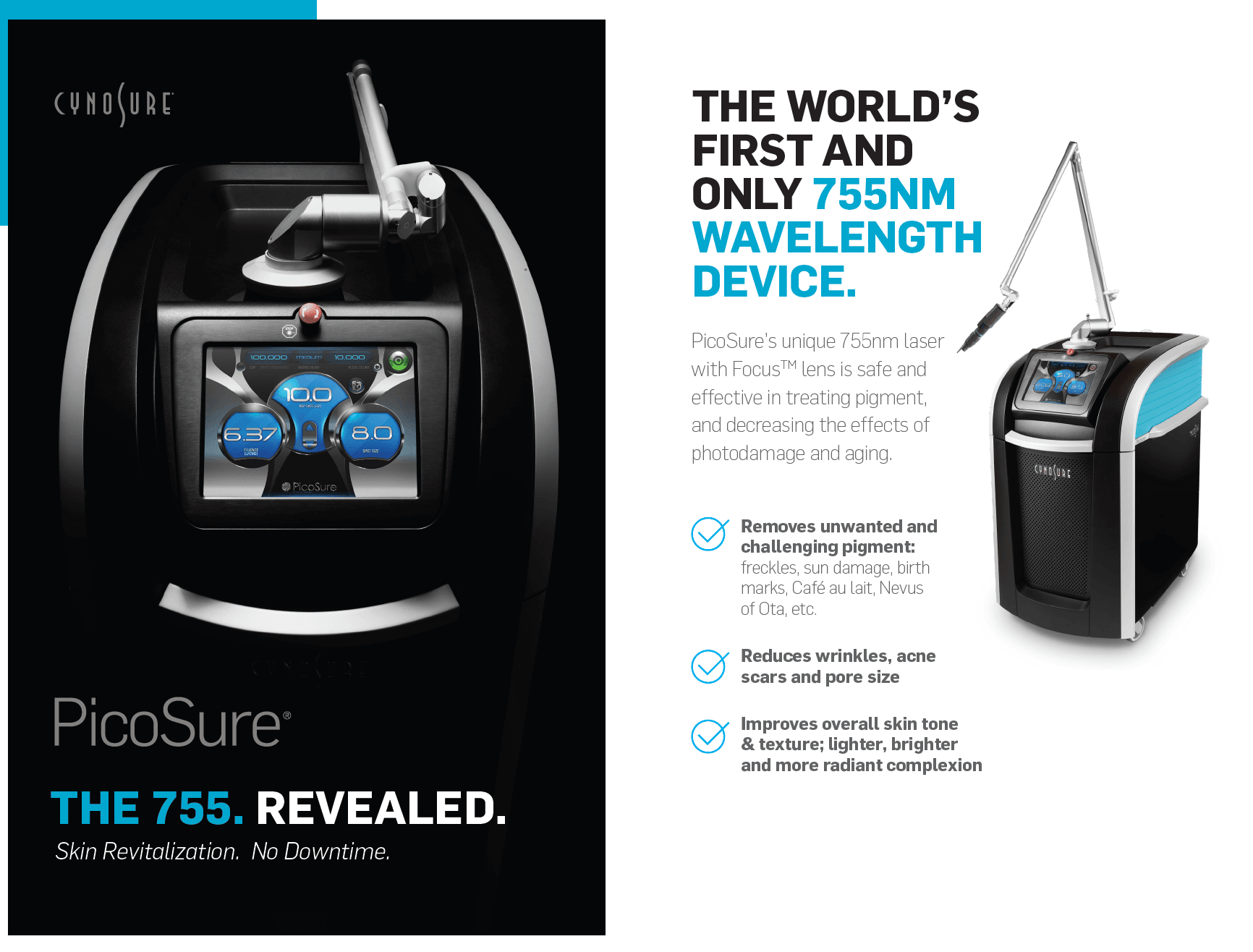
Top 10 Picosecond Laser Machine Manufacturers for Clinics in 2026
LEARN MORE
IPL vs Diode Laser Hair Removal: Which Technology Is Better for Clinics?
LEARN MORE
Diode Laser Machine Buying Guide for Clinics: Specs, Lifespan & ROI
LEARN MORELooking for something else?
RF Microneedling Devices Guide: How to Choose a Professional Machine?
LEARN MORE
Non-Surgical Skin Tightening Machines: RF vs HIFU vs Laser Explained
LEARN MORE
OEM vs ODM Beauty Equipment: Which Model Is Better for Aesthetic Device Businesses?
LEARN MOREYou may also like


Further reading

Ablative vs Non-Ablative Fractional Lasers Explained for Clinics
One test sums up the ablative vs non ablative laser question. If the treated skin oozes, the laser was ablative. If it doesn't, it wasn't. That rule of thumb comes from laser dermatologist E. Vic...

Pico Laser for Acne Scars: Fractional Handpieces, Sessions and Results
The idea started by accident. During a tattoo trial in New York, researchers noticed that one patient's scars and stretch marks had softened along with her ink. That hunch became a 20-patient stud...
PicoSure Machine Cost and Alternatives for Clinics
Price trackers peg a new PicoSure Pro somewhere between $165,000 and $220,000, before tax, shipping or any service plan. Three-year-old 2022 Pros have been offered for roughly half that, around $...

Laser Tattoo Removal Healing Stages_ Week by Week
The tattoo removal healing process opens with a strange first act. For about twenty minutes the ink hides under a white crust that looks like frost on a car windscreen. Then the swelling arrives. ...


