

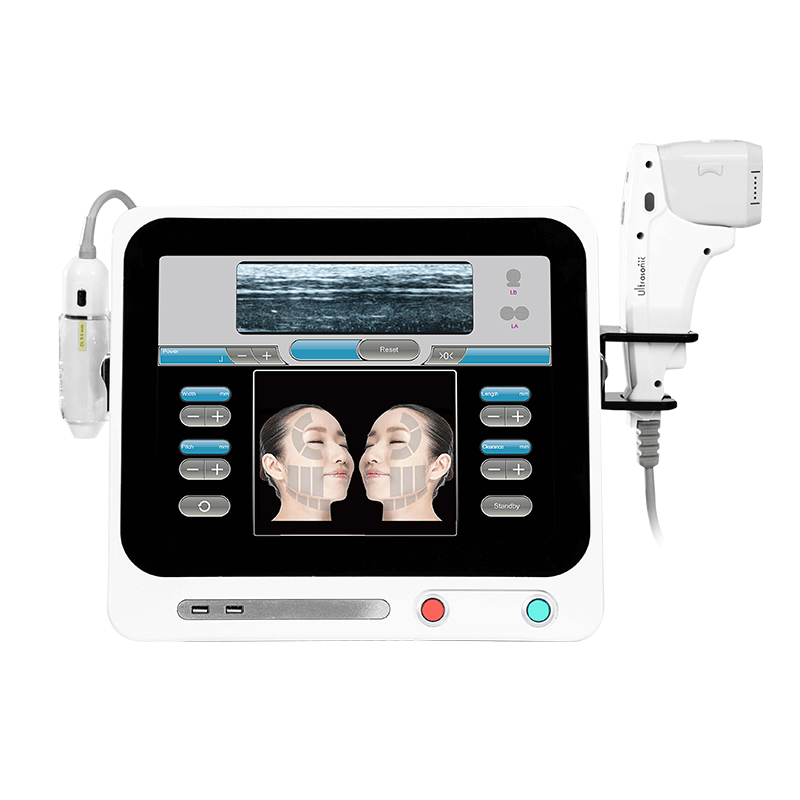
HIFU Facial: Results, Protocols & Downtime
Aging, gravity, and lifestyle stress gradually cause skin to sag and lose its youthful elasticity. Many people want lifting and tightening but prefer to avoid injections or surgery.
This is why the HIFU facial treatment—short for High-Intensity Focused Ultrasound—has become one of the most trusted non-surgical facelift options worldwide.
Below, we explain what HIFU treatment for the face is, how it works, what results to expect, and what the recovery looks like.
What Is a HIFU Facial Treatment?
HIFU stands for High-Intensity Focused Ultrasound, a medical-aesthetic technology that uses precisely focused ultrasound waves to generate controlled heat inside the skin’s deeper layers.
Rather than treating only the surface, HIFU reaches the SMAS layer (Superficial Musculo-Aponeurotic System) — the same layer tightened in surgical facelifts. The energy causes tiny thermal coagulation points that trigger a natural healing response, resulting in new collagen and elastin production.
In short
HIFU lifts and firms the face from the inside out, improving contours, tightening loose skin, and softening fine lines—all without needles, downtime, or scars.
How HIFU Technology Works

Each ultrasound pulse focuses energy at a specific depth (1.5 mm, 3.0 mm, 4.5 mm, and deeper for body treatments). At those depths, the temperature briefly reaches 60–70 °C, enough to contract collagen fibers and stimulate long-term regeneration—without burning the surface.
This is called layered heating:
- 1.5 mm depth → targets the epidermal-dermal junction, improving texture and pores.
- 3.0 mm depth → stimulates dermal collagen for firmness.
- 4.5 mm depth (SMAS) → creates a lifting effect similar to surgical tightening.
Over the following weeks, the body’s repair process strengthens collagen fibers, producing visible lift and smoothness.
Who Is a Good Candidate?
HIFU facial treatment is suitable for people experiencing:
- Mild to moderate facial laxity.
- Drooping jawline or double chin.
- Fine lines around eyes, mouth, and neck.
- Uneven texture or dullness.
- Post-weight-loss skin slackness.
It’s also ideal for patients in their 30s – 60s who want preventive tightening before surgical intervention is needed.
HIFU Treatment Protocols

The number of passes and energy levels depend on the device, skin type, and treatment area. Still, most professional clinics follow these general steps:
Step 1: Consultation & Mapping
A full skin assessment identifies problem areas and suitable energy levels. The operator marks lifting zones and anatomical boundaries (especially near bone or nerve pathways).
Step 2: Cleansing & Coupling Gel
The face is cleaned, and a thin layer of ultrasound gel is applied. The gel ensures sound waves penetrate evenly and protects the surface from heat.
Step 3: Energy Delivery — Layer by Layer
- For facial lifting: cartridges of 1.5 mm, 3.0 mm, 4.5 mm are used sequentially.
- For neck or body: 8–13 mm cartridges may be added for deeper tightening.
- Each shot delivers focused heat dots in precise lines; some practitioners perform two or three passes for optimal stimulation.
Step 4: Finishing Care
After wiping off the gel, a soothing serum or sheet mask is applied. Mild redness subsides within minutes.
Step 5: Treatment Plan
Most people need one primary session per year; others repeat every 6–9 months depending on age, lifestyle, and collagen quality.
Expected Results
Immediate Effects
- Subtle tightening right after treatment due to instant collagen contraction.
- Slight lifting along jawline or cheekbone area.
Progressive Improvement
- 2–4 weeks: skin feels firmer, pores smaller.
- 6–12 weeks: peak collagen remodeling; contours appear more defined.
- Up to 12 months: lifted effect and smoother fine lines remain visible.
With good skincare and sun protection, results may last 12–18 months before a maintenance session is advised.
Downtime and Aftercare
One major advantage of HIFU facial treatment is minimal downtime.
Typical Reactions
- Mild redness or swelling (few hours).
- Slight tenderness or tingling along treated zones for 1–3 days.
- Rarely, temporary numbness that resolves naturally.
Post-Care Tips
- Avoid high-heat activities (sauna, hot yoga) for 48 hours.
- Keep skin hydrated; use soothing serums or aloe gel.
- Avoid strong exfoliants for one week.
- Always apply SPF 50+ sunscreen to preserve new collagen.
Normal makeup can be resumed the next day.
HIFU Facial Results vs Other Treatments
|
Feature |
HIFU Facial Treatment |
Radio Frequency (RF) |
Thread Lift / Fillers |
|
Mechanism |
Focused ultrasound heating SMAS |
Surface heat stimulating dermis |
Physical lift using threads or gel |
|
Depth of Action |
1.5 – 4.5 mm and beyond |
Up to 3 mm |
Variable, mechanical |
|
Results Speed |
Gradual, natural |
Moderate |
Instant but temporary |
|
Downtime |
None |
None – mild redness |
2–5 days (swell) |
|
Longevity |
12–18 months |
6–9 months |
6–12 months |
|
Comfort |
Moderate heat sensation |
Warmth |
Mild discomfort |
HIFU is preferred for patients seeking natural-looking, progressive tightening without injections or recovery time.
Purpose of HIFU Treatment for Face
The purpose of HIFU is to stimulate the body’s own collagen renewal mechanism for long-term lifting and rejuvenation.
Treatment goals:
- Lift sagging cheeks and jawline.
- Tighten neck and under-chin areas.
- Smooth forehead and periorbital fine lines.
- Refine texture and restore elasticity.
- Provide non-invasive facelift results for both women and men.
Clinically, HIFU fits perfectly between surface treatments (like facials or peels) and invasive surgery, filling the gap for those wanting visible lift without downtime.
Device Technology and Material Overview
Professional HIFU facial machines are built for accuracy, comfort, and safety through advanced engineering.
Core Design Elements
- Transducers / Cartridges: multiple depths (1.5–13 mm) for face and body.
- Energy Control: 0.1 – 1.5 J adjustable in fine steps for personalized protocols.
- Cooling Mechanism: prevents overheating and maintains stable output.
- Display Interface: 15″ touch screen with pre-set smart modes for each region.
- Durability: cartridges rated for ~100,000 shots for consistent performance.
- Safety Sensors: automatic cartridge recognition and shot tracking.
This ensures precise energy delivery to the right depth every time, maximizing patient safety and reproducibility.
Typical Clinic Protocol Summary
|
Parameter |
Face & Neck Protocol (Example) |
|
Depth Cartridges |
1.5 mm + 3.0 mm + 4.5 mm |
|
Lines per Area |
250 – 500 (depends on coverage) |
|
Energy Range |
0.2 – 1.2 J (adjusted by tolerance) |
|
Duration |
45 – 75 minutes |
|
Sessions per Year |
1 main + optional booster after 12 months |
|
Maintenance |
Top-up every 12–18 months |
Individual results vary based on skin quality, age, and collagen response.
What to Expect After Your Session
|
Timeline |
What Happens |
|
Immediately |
Mild tightening and glow; slight redness possible |
|
Week 1–2 |
Skin feels firmer; tightness along jaw and neck visible |
|
Month 1–3 |
Peak collagen remodeling; lift becomes obvious |
|
Month 6–12 |
Results maintained with steady skin quality improvement |
Patients report smoother contours, lifted brows, and rejuvenated skin tone—without any scars or long recovery.
Frequently Asked Questions
What is HIFU treatment for face?
It’s a non-surgical facelift using focused ultrasound to tighten skin, reduce wrinkles, and lift sagging areas naturally.
How many sessions do I need?
Most patients need one full session per year, with a maintenance touch-up at 12 months.
When will I see results?
Initial firmness appears right away, but optimal lift develops gradually within 8–12 weeks.
Does it hurt?
You’ll feel a warm tingling sensation as ultrasound reaches deep layers. Pain is minimal and temporary.
Is there downtime after HIFU?
No. You can return to normal activities immediately; redness fades within hours.
Can HIFU be combined with other treatments?
Yes — microcurrent, LED, or RF can complement HIFU for enhanced rejuvenation.
Is HIFU safe for all skin types?
Yes. Ultrasound energy bypasses the epidermis, so it’s safe for light and dark skin tones.
How long do results last?
Between 12 and 18 months, depending on age, skin care, and sun exposure.
Can men get HIFU facials?
Absolutely. Men benefit from jawline definition and tighter neck skin without surgery.
Are there any side effects?
Minor redness or tingling may occur, resolving in hours. No peeling or scarring.
Summary
The HIFU facial treatment is one of today’s most advanced, non-surgical solutions for facial tightening and contouring. Using focused ultrasound energy, it remodels collagen deep under the skin for a lifted, youthful appearance—without incisions or recovery time.
With just one session per year and minimal aftercare, patients enjoy smooth, firm, and naturally refreshed skin. For clinics, this technology offers reliable outcomes, high patient satisfaction, and versatile treatment potential.


Looking for something else?

Do Men Get Cellulite? Causes Differences & What to Know
LEARN MORE
Does Radio Frequency Skin Tightening Work? Results & How It Works
LEARN MORE
Do You Shave Before Laser Hair Removal? Prep Tips & Why It Matters
LEARN MORE
How to Get Rid of Age Spots: Treatments. Natural Remedies & Prevention
LEARN MORELooking for something else?
How to Heal Ingrown Hair: Causes. Treatments & Healing Time
LEARN MORE
How to Get Rid of Freckles: Effective Treatments & Natural Tips
LEARN MORE
Top 10 Picosecond Laser Machine Manufacturers for Clinics in 2026
LEARN MOREYou may also like


Further reading

Tattoo Removal Laser Machine Cost and Ownership Guide

CO2 Laser Treatment Room Setup Checklist

Aesthetic Machine Factory Acceptance Test Before Shipment


