

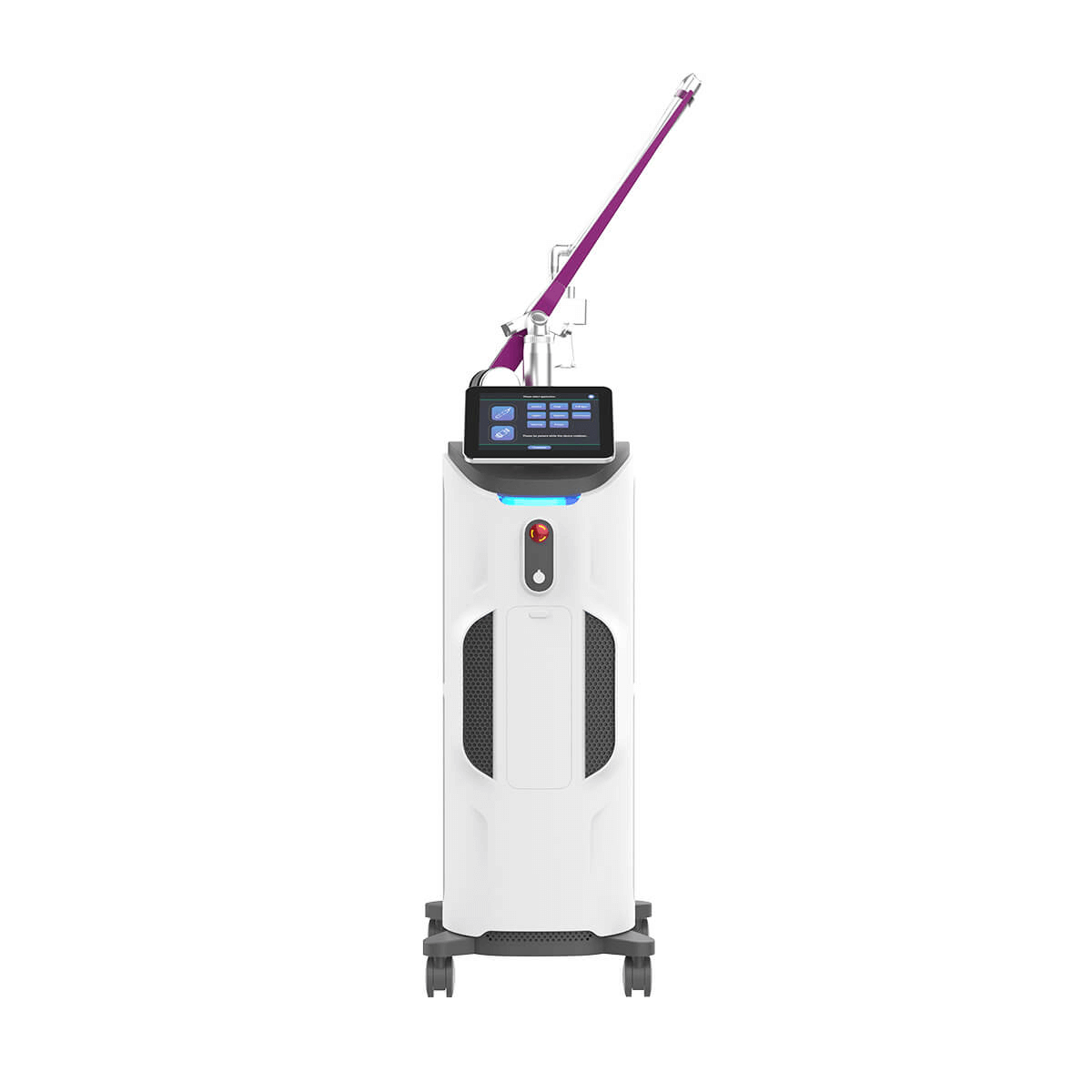
Fractional CO2 Before & After (Case Gallery)

If you’re researching fractional CO2 laser before and after results—either as a patient or a clinic—this calm, practical gallery shows what changes to expect, when they tend to appear, and the kinds of settings that can produce them. You’ll find clear, side‑by‑side case notes (energy, spot, passes, density), realistic downtime ranges, and answers to the questions people ask most about fractional CO2 results.
Good to know: Recovery and results vary with energy, density, passes, skin type, and the area treated. The protocol notes below are illustrative, not prescriptions. Always follow the parameters and aftercare from your treating clinician. For general timelines and outcome expectations, see guidance from Cleveland Clinic, DermNet, and ASDS.
Explore devices & scanners: If you’re a clinic comparing platforms, browse our CO₂ Fractional systems and request a spec sheet matched to your patient mix.
How to read “before & after” the right way
-
Timing matters: Many galleries show “after” photos at 6–12 weeks, but collagen remodeling keeps improving for months, with results often continuing to mature up to a year. That’s why good galleries label the interval (e.g., “12 weeks post 1 session”).
-
Lighting & angles: True comparisons use the same camera, angle, distance, and lighting—no makeup, no filters.
-
Signal vs. noise: Look at texture (fine lines, pores), scars (depth/edges), and color (blotchiness, redness) rather than just glow.
-
Downtime honesty: Fractional CO₂ commonly needs ~5–7 days of visible social downtime (darker skin types may need gentler settings and longer healing).
Case parameter key (used throughout)
-
Energy (mJ): microbeam energy per spot (e.g., 30–60 mJ seen in published acne‑scar protocols).
-
Density (%): coverage of microthermal zones across the treated area.
-
Spot / beam: typical fractional spot diameters are ~100–300 µm depending on scanner; listed here for context.
-
Passes: how many complete coverage sweeps (1–3 passes are common in literature; more isn’t always better).
-
Interval: time between sessions when doing a series (6–8 weeks is common for acne‑scar protocols).
Before & after case gallery (illustrative)
These are representative scenarios with realistic settings inspired by published studies and clinical practice patterns. Your provider will adjust energy, density, and passes to your skin type and goals. Published acne‑scar trials have used energies around 30–60 mJ, often single‑pass at monthly intervals, with average downtime near a week—we’ll reference that where relevant.
Case 1 — Textural rejuvenation (fine lines + tone)
-
Profile: Mid‑40s, Fitzpatrick III, photoaging with periorbital fine lines and cheek crepiness.
-
Protocol (illustrative): 30–40 mJ, 10–15% density, 1–2 passes, ~150–200 µm spot; full face.
-
Downtime: 5–7 days redness/peel; pinkness for 1–3+ weeks depending on settings.
-
Before → After (8 weeks): finer texture around eyes and cheeks; pores look softer; makeup sits more evenly.
-
Notes: Expect early “glow” after re‑epithelialization, then gradual collagen gains over months.
Case 2 — Atrophic acne scars (rolling + shallow boxcar)
-
Profile: Early‑30s, Fitzpatrick IV, rolling scars on cheeks.
-
Protocol (literature‑inspired): 30–60 mJ, single pass, square scan; 4 sessions at 4 weeks (split‑face study model).
-
Downtime: Mean ~7.6 days per session in split‑face data; PIH risk higher in darker skin—prep/aftercare matter.
-
Before → After (3 months from last session): shallower rolling scars, smoother cheek light‑reflection; ice‑pick scars still present (least responsive in studies).
-
Notes: Multiple trials show fractional CO₂ improves acne scars, often outperforming microneedling but with more downtime and higher PIH risk in higher Fitzpatrick types.
Case 3 — Perioral etched lines (smoker’s lines)
-
Profile: Late‑50s, Fitzpatrick II–III, etched vertical lip lines.
-
Protocol (illustrative): 40–60 mJ, 10–20% density, 2 passes localized around mouth, plus full‑face lighter pass.
-
Downtime: 6–8 days for perioral zone; pinkness can last weeks with stronger settings.
-
Before → After (12 weeks): softened barcode lines; improved lipstick bleed; better perioral firmness.
-
Notes: Stronger perioral passes can require stricter aftercare (cleanse then ointment; sunscreen after healing).
Case 4 — Acne scars with mixed types (rolling + boxcar + ice‑pick)
-
Profile: 28‑year‑old, Fitzpatrick III.
-
Protocol (series): 35–50 mJ, 10–15% density, 1–2 passes; 3–4 sessions every 6 weeks (monotherapy study model).
-
Downtime: ~5–7 days after each session.
-
Before → After (6 months from last session): rolling and boxcar shallower; ice‑pick scars minimally changed—sometimes need adjuncts.
-
Notes: A classic 60‑patient study reported excellent (>50%) improvement in ~43% at 6 months post‑series; best responses in rolling/boxcar.
Case 5 — Periocular crêpe texture
-
Profile: 52, Fitzpatrick II, eyelid laxity and fine lines.
-
Protocol (illustrative): conservative 20–35 mJ, low density, 1 pass periocular with ocular shields; lighter full‑face pass.
-
Downtime: ~5–6 days for lids; makeup only after healing and provider clearance; diligent sun avoidance for weeks.
-
Before → After (10–12 weeks): tighter lower‑lid skin, improved makeup “skip” lines.
-
Notes: Eyelids are sensitive; trained, experienced operators and strict eye protection are essential.
Case 6 — Cheek pores + tone
-
Profile: 35, Fitzpatrick III, visible pores and uneven tone.
-
Protocol (illustrative): 25–35 mJ, 10–12% density, 1–2 passes over cheeks; feather to nose/forehead.
-
Downtime: 4–6 days.
-
Before → After (8 weeks): pores scatter light more evenly; tone looks steadier; residual pinkness fades with time.
Case 7 — Surgical/traumatic line scar blending
-
Profile: Mature linear cheek scar.
-
Protocol (illustrative): 40–60 mJ focal stamping along scar edges, low‑density blending passes.
-
Downtime: 5–7 days; a series often needed.
-
Before → After (3–6 months): softened step‑offs and better color match. Collagen remodeling continues beyond three months.
Case 8 — Neck and lower face texture (cautious)
-
Profile: 60, Fitzpatrick II, necklace lines and laxity.
-
Protocol (illustrative): conservative neck settings (20–30 mJ, low density), 1 pass; moderate settings lower face.
-
Downtime: 5–7 days face; neck may heal slower—strict aftercare and sun avoidance are crucial.
-
Before → After (10–12 weeks): smoother necklace lines, subtler jawline texture improvement.
What “typical downtime” really looks like
-
First 24–72 hours: warmth, swelling, oozing; clinics commonly start gentle cleansing after 24 hours and then 4–5×/day, followed by an occlusive to prevent scabs (if instructed).
-
Days 4–7: peeling/sloughing; most fractional cases are largely re‑epithelialized by ~day 6–7; redness fades gradually.
-
Weeks to months: collagen remodeling drives progressive changes; improvements can continue up to a year, with results often described as lasting for years (aging continues, so maintenance may be desired later).
For aftercare specifics (e.g., cleansing solutions, ointment vs. dressing, makeup timing), follow your provider’s sheet; authoritative patient guides emphasize gentle cleansing and sun protection.
Fractional CO2 results: what to expect (and when)
-
Early: smoother “feel” once skin has closed, often within 1–2 weeks.
-
By 4–8 weeks: visible softening of fine lines and shallow scars in many cases.
-
By 3–6+ months: deeper fractional CO2 results as collagen remodels; in acne‑scar literature, series of 3–4 sessions at 4–6‑week intervals produce meaningful improvements, especially for rolling and boxcar scars.
Real‑world satisfaction is consistently high in community data (e.g., ~85% “Worth It” on RealSelf), but setting expectations and aftercare are key—over‑aggressive parameters can increase downtime and PIH risk in darker skin types.
Frequently Asked Questions
How long after fractional CO2 laser will I see results?
You’ll notice early changes as soon as the skin heals (about 1–2 weeks), but the big gains come gradually as collagen rebuilds over months. Authoritative sources note continued improvement up to a year, with results that can last for years before normal aging softens them.
Is 2 sessions of CO2 fractional enough?
It depends on your goals and the intensity per session. For acne scars, many studies use 3–4 sessions spaced 4–6 weeks apart. Mild texture concerns may need fewer; deeper scarring or etched lines may need more—or a stronger single session with longer recovery. Your provider will tailor this to your skin and schedule.
Does fractional CO2 laser really work?
Yes—controlled trials and reviews show significant improvements in texture and atrophic acne scars after fractional CO₂ treatments, often outperforming microneedling but with more downtime and a higher risk of PIH in darker skin types. Rolling and boxcar scars respond best; ice‑pick scars respond less and may need adjunct techniques.
How long do CO2 “lift” results last?
While “lift” isn’t a precise medical term here, resurfacing improvements in smoothness and lines commonly last for years, provided you protect your skin and avoid excessive sun. Collagen gains continue for months; aging continues too, so maintenance may be considered down the road.


Looking for something else?

Do Men Get Cellulite? Causes Differences & What to Know
LEARN MORE
Does Radio Frequency Skin Tightening Work? Results & How It Works
LEARN MORE
Do You Shave Before Laser Hair Removal? Prep Tips & Why It Matters
LEARN MORE
How to Get Rid of Age Spots: Treatments. Natural Remedies & Prevention
LEARN MORELooking for something else?
How to Heal Ingrown Hair: Causes. Treatments & Healing Time
LEARN MORE
How to Get Rid of Freckles: Effective Treatments & Natural Tips
LEARN MORE
Top 10 Picosecond Laser Machine Manufacturers for Clinics in 2026
LEARN MOREYou may also like


Further reading

Tattoo Removal Laser Machine Cost and Ownership Guide
The purchase price is only one part of a tattoo removal laser machine’s cost. A clinic also needs the correct wavelength configuration, cooling, eyewear, room controls, staff training, documentati...

CO2 Laser Treatment Room Setup Checklist
A CO2 laser purchase is not complete until the treatment room can support safe, repeatable operation. Room planning should happen before shipment so the clinic can address smoke evacuation, access...

Aesthetic Machine Factory Acceptance Test Before Shipment
LEFISA factory acceptance test, or FAT, gives the buyer a defined point to confirm that the machine matches the order and completes agreed checks before shipment. It does not replace regulatory re...

Aesthetic Machine Warranty and Spare Parts Guide
A warranty is useful only when it explains what happens after a fault is reported. The number of warranty months matters, but the coverage, exclusions, evidence requirements, parts location, labor...


