

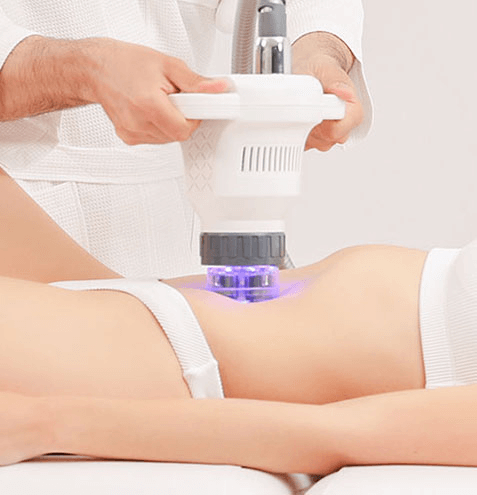
Diode Laser Epilation: Clinical Parameters for Facial, Body, and Bikini Areas
The diode laser epilation technique remains one of the safest and most efficient methods for long-term hair reduction across all skin types. Using precise wavelengths of light energy—most commonly 808 nm—the diode laser delivers targeted heating to destroy hair follicles without harming surrounding tissue.
In this article, we’ll explain how diode laser epilation hair removal works, the ideal parameters for facial, body, and bikini zones, and the protocols professionals should follow for consistent, comfortable, and lasting results.
How Diode Laser Epilation Works
Principle of Selective Photothermolysis
Diode laser hair removal works through selective photothermolysis. The laser emits a single wavelength (808 nm or triple wavelength systems combining 755 + 808 + 1064 nm) that is strongly absorbed by melanin, the pigment found in hair follicles.
When the melanin absorbs this light, it converts energy into heat, destroying the follicle’s ability to regrow hair while preserving surrounding skin.
Targeting the Hair Growth Cycle
Hair growth follows three main phases:
- Anagen (growth phase): The hair is actively growing and connected to the follicle—ideal for laser targeting.
- Catagen (transition phase): The hair detaches from the follicle.
- Telogen (resting phase): The follicle is inactive and resistant to laser energy.
Since not all hairs are in anagen simultaneously, multiple sessions are necessary for full coverage and lasting reduction.
Key Laser Parameters
To achieve effective and safe results, operators must adjust fluence (J/cm²), pulse duration (ms), and repetition rate (Hz) according to the treatment area, hair density, and skin phototype.
|
Parameter |
Definition |
Typical Range |
|
Wavelength (nm) |
Determines depth and chromophore absorption |
808 nm (standard) / 755+808+1064 nm (triple) |
|
Fluence (J/cm²) |
Energy delivered per area |
10–60 J/cm² depending on hair thickness |
|
Pulse Duration (ms) |
Exposure time per pulse |
10–400 ms |
|
Repetition Rate (Hz) |
Shots per second |
1–10 Hz |
|
Spot Size (mm) |
Affects penetration and coverage |
10–35 mm² (facial) / 28–35 mm² (body) |
The goal is to heat the follicle to 70–80°C long enough to disable it while maintaining epidermal safety through contact or sapphire cooling.
Wavelength Options and Their Uses
Modern diode systems often combine multiple wavelengths to expand treatment capabilities.
|
Wavelength |
Depth |
Best For |
Clinical Note |
|
755 nm (Alexandrite) |
Superficial |
Light, fine hair; phototypes I–III |
High melanin absorption—avoid dark skin |
|
808 nm (Diode) |
Medium |
Most skin and hair types |
Gold standard for balanced performance |
|
1064 nm (Nd:YAG) |
Deep |
Darker skin tones; dense hair |
Lower melanin absorption; safest for VI |
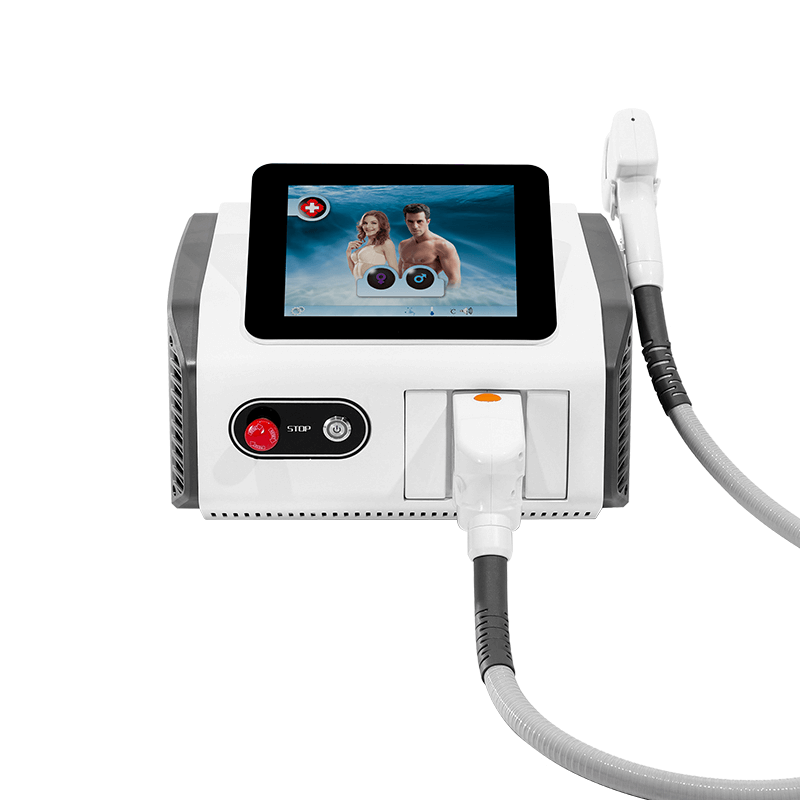
By blending these wavelengths, appareil épilation laser diode professionnel systems provide customized epilation for facial, body, and bikini treatments.
Parameters by Treatment Area

Facial Epilation (Upper Lip, Chin, Sideburns)
Facial zones contain thinner and more vascular hair follicles, requiring delicate balance between power and comfort.
Recommended Parameters:
- Wavelength: 808 nm (single) or 755 + 808 nm for light hair
- Fluence: 10–25 J/cm²
- Pulse Duration: 30–100 ms
- Repetition Rate: 5–8 Hz
- Spot Size: 10–12 mm
- Cooling: Strong sapphire tip contact
Tips:
- Use test pulses before full coverage to avoid PIH (post-inflammatory hyperpigmentation).
- Treat shaved skin—never wax or pluck pre-session.
- Apply cold compress or aloe gel post-procedure to minimize redness.
Body Epilation (Legs, Arms, Chest, Back)
These areas have dense hair follicles, allowing for higher fluence and faster scanning speeds.
Recommended Parameters:
- Wavelength: 808 nm or 808 + 1064 nm for mixed skin tones
- Fluence: 20–50 J/cm²
- Pulse Duration: 40–200 ms
- Repetition Rate: 8–10 Hz
- Spot Size: 20–35 mm
Technique:
- Use “in-motion” sweeping technique to evenly heat large surfaces.
- Keep applicator in continuous motion to prevent overlapping burns.
- Reapply cooling gel frequently for client comfort.
Expected Results:
After 6–8 sessions spaced 4–6 weeks apart, patients can achieve up to 90% permanent hair reduction.
Bikini and Intimate Areas
These zones require lower pulse durations due to sensitive skin and high nerve density.
Recommended Parameters:
- Wavelength: 808 nm (standard) or 1064 nm for darker tones
- Fluence: 15–35 J/cm²
- Pulse Duration: 20–60 ms
- Repetition Rate: 5–8 Hz
- Spot Size: 12–18 mm
Safety Guidelines:
- Ensure the client’s skin is clean, shaved, and dry.
- Avoid contact with mucosal tissue.
- Always confirm comfort level during initial passes.
The bikini zone often requires 6–10 sessions for optimal long-term clearance due to hormonal influence.
Cooling and Epidermal Protection

Diode lasers use advanced cooling methods to maintain patient comfort and prevent burns:
- Contact Cooling: Sapphire or crystal tip keeps skin below 10°C during pulses.
- Air Cooling: Blows cold air on treatment site for surface protection.
- Semiconductor (TEC) Cooling: Provides continuous refrigeration-level temperature control.
For laser diode épilation définitive, contact cooling is critical to maintain epidermal safety while enabling higher fluence for resistant follicles.
Skin Type and Fluence Adjustments
Correct parameter selection must consider Fitzpatrick skin type, which predicts melanin concentration and burn risk.
|
Skin Type |
Description |
Suggested Settings |
|
I–II |
Very fair / light hair |
755–808 nm, low fluence, longer pulse |
|
III–IV |
Olive / tan |
808 nm, medium fluence, medium pulse |
|
V–VI |
Dark / deep tone |
808–1064 nm, lower fluence, longer pulse, maximum cooling |
Perform test shots on hidden areas for new clients, observing skin reaction after 15 minutes before proceeding.
Treatment Intervals and Expected Results
Hair grows in cycles, so spacing sessions correctly is essential for full coverage:
|
Body Area |
Interval Between Sessions |
Total Sessions |
|
Face |
4–6 weeks |
6–8 |
|
Body |
6–8 weeks |
6–8 |
|
Bikini |
6 weeks |
8–10 |
Visible reduction begins after 2–3 sessions. After the final course, clients enjoy smooth, hair-free skin for months or years, depending on hormonal balance.
Safety and Contraindications
Perform test shots on hidden areas for new clients, observing skin reaction after 15 minutes
before proceeding.
Treatment Intervals and Expected Results
Hair grows in cycles, so spacing sessions correctly is essential for full coverage:
|
Body |
Interval Between |
Total |
|
Face |
4–6 weeks |
6–8 |
|
Body |
6–8 weeks |
6–8 |
|
Bikini |
6 weeks |
8–10 |
Visible reduction begins after 2–3 sessions. After the final course, clients enjoy smooth,
hair-free skin for months or years, depending on hormonal balance.
Safety and Contraindications
Although diode laser epilation is safe when performed by trained professionals, the following
contraindications apply:
- Pregnancy or breastfeeding.
- Active skin infections or open wounds.
- Recent tanning or sunburn.
- Use of photosensitizing medications (isotretinoin, antibiotics).
- History of keloids or poor wound healing.
- Epilepsy or uncontrolled diabetes.
A comprehensive consultation and signed consent form ensure safe operation and realistic
expectations.
Clinical Technique Tips
- Pre-Treatment:
- Shave area 24 hours before session.
Although diode laser epilation is safe when performed by trained professionals, the following contraindications apply:
- Pregnancy or breastfeeding.
- Active skin infections or open wounds.
- Recent tanning or sunburn.
- Use of photosensitizing medications (isotretinoin, antibiotics).
- History of keloids or poor wound healing.
- Epilepsy or uncontrolled diabetes.
A comprehensive consultation and signed consent form ensure safe operation and realistic expectations.
Clinical Technique Tips
- Pre-Treatment:
- Shave area 24 hours before session.
- Avoid moisturizers, deodorant, or makeup.
- During Treatment:
- Maintain firm skin contact and even speed.
- Use cross-hatch technique for high-density areas.
- Monitor endpoint: slight perifollicular redness indicates proper follicle heating.
- Post-Treatment:
- Apply cold compress or hydrating serum.
- Avoid direct sunlight for 48 hours.
- Recommend SPF 50+ sunscreen daily.
Training and Certification
For formation épilation laser diode, technicians should complete accredited courses covering:
- Laser physics and light-tissue interaction.
- Skin typing and contraindication assessment.
- Practical safety and calibration.
- Maintenance of diode modules and cooling systems.
Proper training ensures both operator confidence and patient trust, while adhering to regulatory standards.
Maintenance and Calibration
Professional diode laser systems require periodic checks for energy consistency and optical clarity.
Maintenance Schedule:
- Daily: Clean handpiece window and refill water tank (if applicable).
- Weekly: Verify fluence output with built-in energy meter.
- Quarterly: Service cooling system and replace filters.
- Annually: Full calibration and certification by authorized technician.
Following this schedule preserves laser performance and patient safety, ensuring the system maintains medical-grade precision.
Advantages of Diode Laser Epilation
- Works effectively on all skin tones (I–VI) when parameters are tailored.
- Fast coverage with large spot size and high repetition rate.
- Low pain level due to advanced cooling.
- Minimal downtime: clients return to normal activities immediately.
- Clinically proven durability: results last long with maintenance.
As the technology evolves, triple-wavelength and AI-assisted diode systems now allow even more accurate parameter control and greater comfort.
Expected ROI for Clinics
Professional diode laser devices deliver high ROI due to low consumable cost and high treatment demand.
- Average treatment fee per zone: $100–$400.
- Consumable cost: <$2 per session.
- Full payback often achieved within 3–5 months.
A reliable diode platform thus enhances both patient satisfaction and business profitability.
Purpose and Material Overview
The purpose of epilation laser diode systems is to provide precise, safe, and durable hair reduction using selective light absorption.
Core Materials and Design:
- Laser Bars: Gallium-Aluminum-Arsenide (GaAlAs) semiconductor for stable wavelength emission.
- Cooling Plates: Sapphire crystal for contact temperature control.
- Optical Lenses: Anti-reflective coated glass to maintain beam uniformity.
- Housing: Medical-grade aluminum alloy for durability and heat dissipation.
These engineering features ensure high reliability and consistent performance across thousands of shots.
Key Takeaways
- Epilation diode laser systems remain the gold standard for hair removal on face, body, and bikini areas.
- The 808 nm wavelength delivers optimal penetration and melanin absorption for effective follicle destruction.
- Clinical results depend on correct parameter settings, session intervals, and patient care.
- Regular calibration and professional formation maintain both safety and effectiveness.
By mastering these parameters, clinics can deliver smoother results, faster sessions, and long-lasting satisfaction to every client.


Looking for something else?

Do Men Get Cellulite? Causes Differences & What to Know
LEARN MORE
Does Radio Frequency Skin Tightening Work? Results & How It Works
LEARN MORE
Do You Shave Before Laser Hair Removal? Prep Tips & Why It Matters
LEARN MORE
How to Get Rid of Age Spots: Treatments. Natural Remedies & Prevention
LEARN MORELooking for something else?
How to Heal Ingrown Hair: Causes. Treatments & Healing Time
LEARN MORE
How to Get Rid of Freckles: Effective Treatments & Natural Tips
LEARN MORE
Top 10 Picosecond Laser Machine Manufacturers for Clinics in 2026
LEARN MOREYou may also like


Further reading

Tattoo Removal Laser Machine Cost and Ownership Guide

CO2 Laser Treatment Room Setup Checklist

Aesthetic Machine Factory Acceptance Test Before Shipment


