

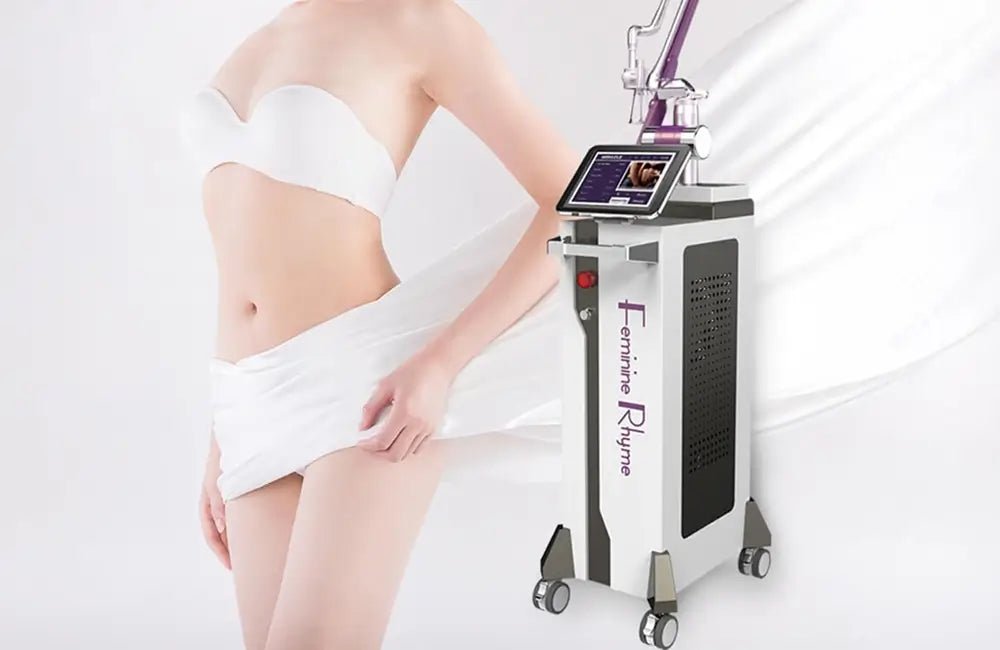
CO2 vs Fractional vs ProFractional (Explained)
 If you’re comparing CO2 laser vs fractional approaches—and where ProFractional fits—this calm, practical guide lays it out in plain language. You’ll learn what each modality actually does, who it’s for, typical downtime, and how providers select parameters for scars, wrinkles, and texture. We’ll end with a quick decision table, a buyer/clinic checklist, and concise answers to the questions people ask most.
First, define the terms (so we’re speaking the same language)
-
CO2 laser (10,600 nm)
A classic ablative laser that vaporizes tissue and creates a thermal coagulation zone that tightens collagen. It’s excellent for etched lines (eyes/lips), acne scars, and significant photoaging—but with more downtime than gentler options. -
Fractional (the delivery style, not a wavelength)
“Fractional” means the laser treats microscopic columns (microthermal zones) and leaves surrounding skin intact to speed re‑epithelialization. You can fractionate CO2 or Er:YAG (2940 nm), and even non‑ablative wavelengths. Fractional = usually faster healing than full‑field passes. -
ProFractional
A branded name commonly used for fractional Er:YAG (2940 nm). Er:YAG is absorbed by water more strongly than CO2, so it ablates with less collateral heat and typically less downtime, though it tends to give less tissue contraction/tightening per pass than CO2.
CO2 vs Fractional vs ProFractional: how they differ in practice
Wavelength & tissue effect
- CO2 (10,600 nm) penetrates water‑rich tissue with more thermal coagulation, yielding stronger collagen contraction/tightening and hemostasis (less pinpoint bleeding), which is why it excels for deep lines and etched wrinkles.
- Er:YAG (2940 nm)—used in ProFractional—has higher water absorption and ablates with minimal thermal damage, so healing is typically faster and the risk of prolonged redness is lower, but immediate tightening per pass is less than CO2.
- Fractional delivery creates columns of injury instead of full sheets; this preserves bridges of healthy skin for faster closure and reduces risk compared with non‑fractionated ablative passes.
Downtime (typical ranges)
- Full‑field CO2: ~14–21 days to return to work/social comfort (erythema may persist longer).
- Fractional CO2: about 4–10 days visible downtime depending on density/energy.
- Fractional Er:YAG (e.g., ProFractional): about 1–3 days off work after lighter passes; deeper passes can take longer.
- Consumer‑facing medical sources similarly note CO2 recovery up to ~2 weeks and Er:YAG faster with fewer side effects.
Efficacy and where each shines
- CO2 (ablative, full‑field or fractional): generally greater tightening and textural change, and strong data for acne scars; higher risk of dyspigmentation in darker skin types, so parameter selection and aftercare are crucial.
- Er:YAG fractional (ProFractional): efficient ablation with minimal heat, good for faster healing and precision (e.g., conservative periocular/perioral work, lighter rejuvenation, selected scars), but often less immediate tightening than CO2.
The quick comparison table (save/print)
|
Dimension |
Full‑Field CO2 (Ablative) |
Fractional CO2 (Ablative) |
ProFractional = Fractional Er:YAG (2940 nm) |
|
What it is |
Continuous/super‑/ultrapulsed CO2 ablates broad sheets |
CO2 delivered as micro‑columns |
Er:YAG delivered as micro‑columns |
|
Collateral heat |
Higher (more coagulation & contraction) |
Moderate |
Lower (precise ablation, minimal heat) |
|
Tightening potential |
Strongest per pass |
Strong (tunable by density/energy) |
Lower per pass than CO2 |
|
Typical social downtime |
14–21 days |
4–10 days |
1–3 days (light), longer if deeper |
|
Discomfort/anesthesia |
Often local + sedation |
Topical ± local |
Often topical only |
|
Best for |
Deep etched lines (eyes/lips), significant photoaging; selected scars |
Wrinkles + acne scars with balance of efficacy & downtime |
Texture/pores/fine lines, conservative work, faster recovery |
|
PIH risk (skin of color) |
Highest; often not recommended full‑field in IV–VI |
Lower than full‑field but still present |
Lower than CO2, but still requires caution |
|
Sessions |
Often 1 (aggressive) |
1–3 (varies by intensity) |
1–3+ (lighter per session) |
|
Notes |
Max results, max downtime |
Workhorse for many clinics |
“Quick‑heal” fractional ablation |
Evidence pointers for the table: downtime and thermal effect differences, tightening/contraction with CO2, and faster re‑epithelialization with Er:YAG are well‑described in peer‑reviewed overviews and reputable patient resources.
“CO2 laser vs fractional” (the question behind the question)
Strictly speaking, fractional describes how the energy is delivered. You can have fractional CO2 (ablative) and fractional Er:YAG (ablative). So when people search “co2 laser vs fractional laser,” they’re usually comparing:
- Full‑field CO2 vs fractional CO2 → similar results, but fractional has faster recovery and lower risk because only a fraction of skin is treated in each pass.
- Fractional CO2 vs fractional Er:YAG (ProFractional) → CO2 generally gives more thermal tightening and can be more effective for deeper textural change and some scars; Er:YAG tends to heal faster with less heat but may require more sessions to reach the same endpoint.
“ProFractional vs fractional CO2”: what’s the real‑world difference?
ProFractional refers to a fractional Er:YAG (2940 nm) system. Its claim to fame is high water absorption → precise ablation with less thermal spread and typically shorter downtime. Fractional CO2 creates more coagulation around each micro‑column, leading to more tightening and hemostasis, which is why many clinicians choose it for acne scars and etched lines. Manufacturers and clinics describe this split consistently; peer‑reviewed summaries back the physics and downtime trends.
Recent reviews of acne‑scar management also note that fractional CO2 tends to produce greater scar improvement (with a trade‑off of longer downtime and higher PIH risk) compared with Er:YAG in several cohorts.
Downtime & aftercare snapshots you can rely on
- CO2, full‑field: expect ~2 weeks of visible healing before social comfort; redness may persist longer.
- Fractional CO2: plan 4–10 days depending on density/energy and area treated.
- ProFractional / fractional Er:YAG: 1–3 days after lighter passes (deeper passes can extend downtime).
- Standard aftercare across reputable sources includes cleansing/soaks, ointment/occlusion as directed, strict photoprotection, and HSV prophylaxis where indicated.
Safety notes for darker skin tones (and anyone PIH‑prone)
- CO2 full‑field is typically avoided in Fitzpatrick IV–VI because of higher dyspigmentation risk. Fractional approaches reduce but do not eliminate this risk.
- Er:YAG fractional (ProFractional) is often preferred when risk of dyspigmentation is high, but parameters and aftercare still matter.
Selection guide (clinics & savvy patients)
Use this quick rubric when choosing between co2 laser vs fractional paths and ProFractional vs fractional CO2:
-
Depth & severity
- Deep etched lines / stubborn acne scars → Fractional CO2 or full‑field CO2 for maximal change (with longer downtime).
- Mild–moderate texture/pores / faster return to work → ProFractional (Er:YAG) or light fractional CO2.
-
Skin type & PIH risk
- Higher Fitzpatrick types or strong PIH history → fractional Er:YAG favored; conservative parameters, impeccable sun avoidance.
- Anatomic site
-
Downtime tolerance
- If 3–10 days is acceptable → fractional CO2 is a powerful middle path.
- If 1–3 days is the limit → consider ProFractional (light Er:YAG).
-
Number of sessions vs intensity
- Willing to do a series → fractional Er:YAG or light fractional CO2.
- Prefer one heavy hit → aggressive fractional CO2 or full‑field CO2 (in experienced hands).
Buyer/clinic corner: device & protocol essentials
- Spec before you shop: Decide on fractional CO2 vs Er:YAG (or both), scanner options, beam profiles, and whether you need surgical/oculoplastic accessories.
- Downtime levers: Density, energy (mJ), number of passes—they drive depth, heat, and days off work. Lower density/energy = faster recovery; higher values = stronger change + longer healing.
- Service & safety: Train staff on soaks, ointments, sun strategy, HSV prophylaxis, and plume evacuation. Good protocols reduce complications and support consistent outcomes.
Frequently Asked Questions
Is CO2 better than fractional laser?
It depends what you mean by “fractional.” If you’re comparing full‑field CO2 to fractional CO2, the fractional approach gives similar categories of improvement with faster healing (thanks to micro‑columns) but often requires more than one session. If you’re comparing fractional CO2 to fractional Er:YAG (ProFractional), CO2 generally yields more thermal tightening and can be more effective for deeper textural change, while Er:YAG typically heals faster with less heat.
Is there anything better than a CO2 laser?
“Better” depends on goals and downtime. For maximal wrinkle/texture change, ablative CO2 remains a top option. For quicker social recovery, Er:YAG fractional may be “better.” For minimal downtime and mild issues, non‑ablative fractional lasers are commonly used. Choice hinges on skin type, target (wrinkles vs scars vs pigment), and your recovery window.
Which laser is best for skin tightening?
Within resurfacing, CO2 tends to create greater collagen contraction/tightening because of its coagulative heat profile. Er:YAG is more precise with less heat (and less tightening) per pass. Device selection plus parameters (energy, density, passes) ultimately determine tightening.
What are the disadvantages of fractional CO2 laser?
Primarily downtime (4–10 days), erythema, and higher dyspigmentation risk than Er:YAG—especially in darker skin—though risk is dose‑dependent and mitigated by experienced operators and strict sun avoidance. Infection, scarring, and HSV reactivation are uncommon but recognized risks.


Looking for something else?

Do Men Get Cellulite? Causes Differences & What to Know
LEARN MORE
Does Radio Frequency Skin Tightening Work? Results & How It Works
LEARN MORE
Do You Shave Before Laser Hair Removal? Prep Tips & Why It Matters
LEARN MORE
How to Get Rid of Age Spots: Treatments. Natural Remedies & Prevention
LEARN MORELooking for something else?
How to Heal Ingrown Hair: Causes. Treatments & Healing Time
LEARN MORE
How to Get Rid of Freckles: Effective Treatments & Natural Tips
LEARN MORE
Top 10 Picosecond Laser Machine Manufacturers for Clinics in 2026
LEARN MOREYou may also like


Further reading

Tattoo Removal Laser Machine Cost and Ownership Guide

CO2 Laser Treatment Room Setup Checklist

Aesthetic Machine Factory Acceptance Test Before Shipment


