

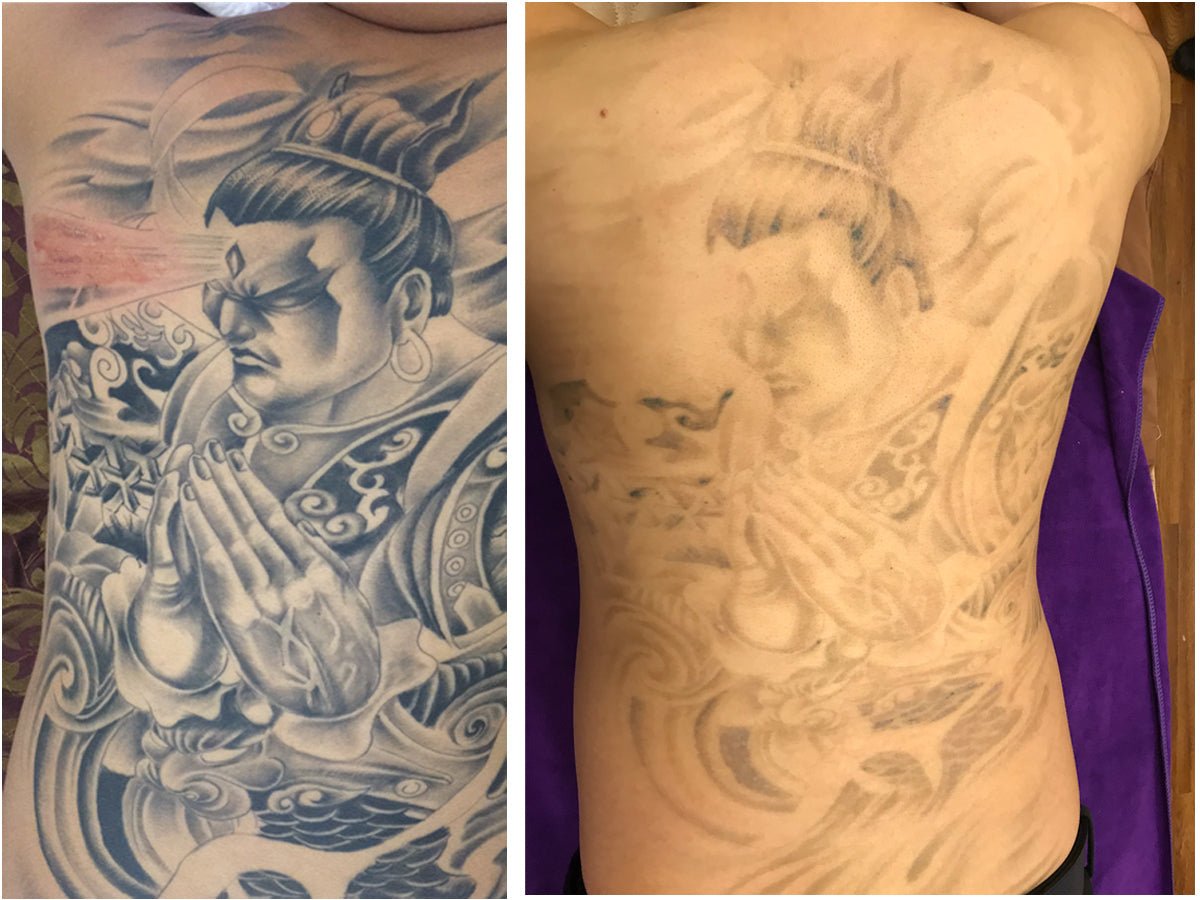
Pico vs Q-Switched: Which Fits Tattoo & Pigment Work?
If you're weighing picosecond laser tattoo removal against traditional Q‑switched Nd:YAG , you're really deciding between two pulse‑width philosophies for pulverizing pigment. Both break up ink and unwanted melanin via selective photothermolysis, but they deliver their energy on very different timescales— picoseconds (10⁻¹² s) versus nanoseconds (10⁻⁹ s) —leading to different treatment endpoints, color strengths, and downtime expectations. This guide explains pico vs Q‑switched , maps tattoo ink colors to wavelengths, and answers the most‑asked questions so clinics and patients can choose with confidence.
Quick note: This page is educational—not medical advice. Always follow your treating clinician's protocol.
TL;DR (1‑minute cheat sheet)
- Core idea: Both platforms shatter pigment; pico pulses are shorter and more “photoacoustic,” often yielding finer fragmentation and, in select problems, fewer treatments and less downtime than nanosecond Q‑switched. Evidence and real‑world results vary by ink color, depth, skin type, and operator experience.
-
Color playbook:
- 1064 nm (Q‑switched Nd:YAG): best starting point for black/dark blue —and safest on darker skin .
- 532 nm (frequency‑doubled Nd:YAG): hits red/orange/yellow ; use cautiously in darker skin.
- 755 nm (Alexandrite, often pico): excels at green/blue and some recalcitrant colors.
- 694 nm (Ruby, Q‑switched): strong for blue/black , variable on green; poor on red/yellow.
- Sessions: Expect multiple sessions with either platform. Reviews commonly cite ~7–10 for classic Q‑switched; pico may trim counts for certain colors or resistant tattoos, but not always. Plan for 4–15 depending on case complexity.
- Pigment work (non‑tattoo): Both treat benign pigment disorders; device choice hinges on target depth, color, skin type, and risk tolerance.
How both lasers work (and why pulse width matters)
Selective photothermolysis says: choose a wavelength the target absorbs and deliver energy in a pulse shorter than the target’s thermal relaxation time so you injure pigment more than surrounding skin. Q‑switched systems deliver nanosecond pulses—about the time scale of tattoo particle relaxation—producing a mix of photothermal and photomechanical effects. Picosecond systems deliver even shorter pulses, biasing toward photoacoustic shock that can fragment ink into smaller debris for immune clearance—one reason why many clinics report crisper clearing on recalcitrant inks or stubborn macules.
Pico vs Q‑Switched at a glance
|
Dimension |
Picosecond |
Q‑switched (nanosecond) |
|
Pulse width |
~300–900 ps (10⁻¹² s) |
~5–100 ns (10⁻⁹ s) |
|
Primary effect |
More photoacoustic (shock) |
Mix of photothermal + photomechanical |
|
Stand‑out uses |
Recalcitrant tattoos; green/blue inks (e.g., 755 nm); selected dyspigmentation; fractional picosecond handpieces for texture |
Workhorse for black (1064 nm) and red/orange (532 nm); safest first‑line for darker skin using 1064 nm |
|
Sessions |
Often fewer for specific colors/patterns, but not guaranteed |
Widely reported multi‑session protocols (often 7–10+) |
|
Availability/cost |
Fewer systems, higher capex |
More common and cost‑effective |
Color logic: match wavelength to tattoo ink colors

Why color matters: A wavelength must be absorbed by the ink to shatter it. Here’s a practical map, with common first‑line choices:
- Black / dark blue: 1064 nm Q‑switched Nd:YAG (deep, melanin‑sparing; safest on Fitzpatrick IV–VI).
- Red / orange / some yellow: 532 nm (frequency‑doubled Nd:YAG).
- Green / blue: 755 nm (Alexandrite; often picosecond) and 694 nm (Ruby, Q‑switched). Pico 755 has strong support for rapid clearance of blue/green pigments.
- Cosmetic inks (iron oxide / titanium dioxide): risk paradoxical darkening; require test spots and alternate strategies.
DermNet notes that picosecond devices are especially useful for blue and green tattoos and refractory cases, often with fewer treatments and less downtime than nanosecond systems—though access and cost limit widespread use.
What the evidence says (in plain language)
- Foundational review (clinical update): Classic Q‑switched platforms (ruby 694, alexandrite 755, Nd:YAG 1064/532) remain the tattoo‑removal workhorses; newer strategies include multi‑pass (R20/R0) and picosecond lasers, with color and skin type guiding selection.
- StatPearls (2025): Modern short‑pulse lasers—Q‑switched and picosecond—improve efficacy and safety; wavelength selection is key; patients should expect ~4–15 sessions depending on age, color, depth, layering, and location.
- DermNet (pico): Picosecond lasers “require fewer treatments, cause fewer side effects, and reduce downtime” than nanosecond Q‑switched in tattoo removal; especially useful for blue/green and recalcitrant inks.
- Specific pigments: Published reports describe rapid blue/green clearance with 755‑nm picosecond alexandrite, complementing the long‑standing role of 1064/532 nm Q‑switched Nd:YAG for black and red/orange inks.
- Skin of color: 1064 nm Q‑switched Nd:YAG is frequently preferred on darker skin to minimize melanin absorption and dyspigmentation. Mayo Clinic and StatPearls highlight this safety advantage.
- R20/R0 protocols: Multi‑pass methods (with or without perfluorodecalin “R0”) can accelerate clearance by allowing repeated passes once whitening (“frosting”) subsides.
Choosing for tattoo removal: scenarios that come up every week
First‑time black tattoo on medium‑to‑dark skin
Start with 1064 nm Q‑switched Nd:YAG. It’s strongly absorbed by black pigment yet safer for melanin‑rich skin than visible wavelengths. Pico 1064 can be considered if available and cost‑appropriate, but 1064 Q‑switched remains a proven workhorse here. Expect multiple sessions.
Multicolored professional tattoo (green/blue mixed in)
Plan a multi‑wavelength path. Often: 1064 for black, 532 for reds, and 755 (ideally pico) or 694 for green/blue. Pico at 755 nm may shorten the journey for green/blue—colors that traditionally linger.
Recalcitrant remnants after many Q‑switched sessions
Consider a picosecond platform (matching the problem color), multi‑pass technique (R20/R0), or mixed strategies. Switching pulse width and/or wavelength often breaks stalemates.
Cosmetic lip/eyebrow tattoos (iron oxide or TiO₂)
Proceed with test spots and manage expectations; paradoxical darkening is a known risk. Alternate wavelengths or staged approaches may be required.
How many sessions—really?
There is no one number. Session counts depend on ink color(s), depth, age, body location, layering/cover‑ups, skin type, prior treatments, and immune clearance.
- Reviews and patient resources commonly cite ~7–10 sessions for classic Q‑switched work (many need more, some fewer).
- StatPearls frames expectations broadly at 4–15 sessions, especially for multicolor, deep, or layered tattoos.
- Picosecond systems can reduce counts for certain colors (notably blue/green) or recalcitrant tattoos, but reductions are case‑dependent, not guaranteed.
Spacing is typically 6–8+ weeks to allow immune clearance and skin recovery; advanced multi‑pass (R20/R0) methods change in‑session strategy rather than overall physiology of clearance.
Decision matrix: pico vs Q‑switched for tattoo & pigment work
Choose Q‑switched Nd:YAG (1064/532) when you need…
- A proven, cost‑efficient workhorse for black and red/orange inks.
- A safer starting point for darker skin (use 1064 nm).
- Broad availability and predictable learning curves.
Choose Picosecond (esp. 755 nm; also 532/1064) when you need…
- Extra photoacoustic power for green/blue or recalcitrant fragments.
- Potentially fewer sessions and less downtime for select tattoos and pigment problems.
- A platform that also offers fractionated picosecond handpieces for textural indications (separate use‑case).
Practical tips (clinics & savvy patients)
- Start where physics is kind: 1064 nm for black ink; add 532 nm for reds; bring 755 nm (often pico) or 694 nm for greens/blues.
- Photograph cleanly: standardized angles/lighting, oil‑blot, distance and white balance—at baseline, each visit, and 8–12 weeks after.
- Test spots for cosmetic inks: avoid surprises from iron‑oxide darkening.
- Mind the interval: don’t stack sessions too tightly; let the immune system clear fragments. 6–8+ weeks is common; multi‑pass methods optimize the same visit.
- Darker skin: lean on 1064 nm, conservative fluence, larger spot sizes, and strict photoprotection to reduce PIH.
Frequently Asked Questions
Is picosecond laser good for tattoo removal?
Yes. Authoritative patient resources and reviews report that picosecond systems can require fewer treatments and cause fewer side effects than nanosecond Q‑switched for some tattoos—especially blue/green and recalcitrant ink. Results still vary by color mix, depth, skin type, and technique.
Can laser 100% remove a tattoo?
Not always. Many tattoos clear substantially; some reach near‑complete clearance, but outcomes depend on ink composition, depth, layering/cover‑ups, body location, skin type, and prior work . Expect multiple sessions and set realistic goals.
Which is better—picosecond or nanosecond—for tattoo removal?
Neither is “better” universally. Q‑switched 1064/532 is a first‑line for black and red/orange (and for darker skin safety). Picosecond shines for green/blue and stubborn tattoos, and may reduce session counts—but often complements, rather than replaces, Q‑switched work. Many clinics use both , based on color and stage.
How many sessions of Pico laser for tattoo removal?
Highly variable. Some blue/green pigments respond quickly with pico 755 nm , but most patients still need several sessions . Robust references frame total laser removal journeys in the 4–15+ session range depending on complexity.


Looking for something else?

Do Men Get Cellulite? Causes Differences & What to Know
LEARN MORE
Does Radio Frequency Skin Tightening Work? Results & How It Works
LEARN MORE
Do You Shave Before Laser Hair Removal? Prep Tips & Why It Matters
LEARN MORE
How to Get Rid of Age Spots: Treatments. Natural Remedies & Prevention
LEARN MORELooking for something else?
How to Heal Ingrown Hair: Causes. Treatments & Healing Time
LEARN MORE
How to Get Rid of Freckles: Effective Treatments & Natural Tips
LEARN MORE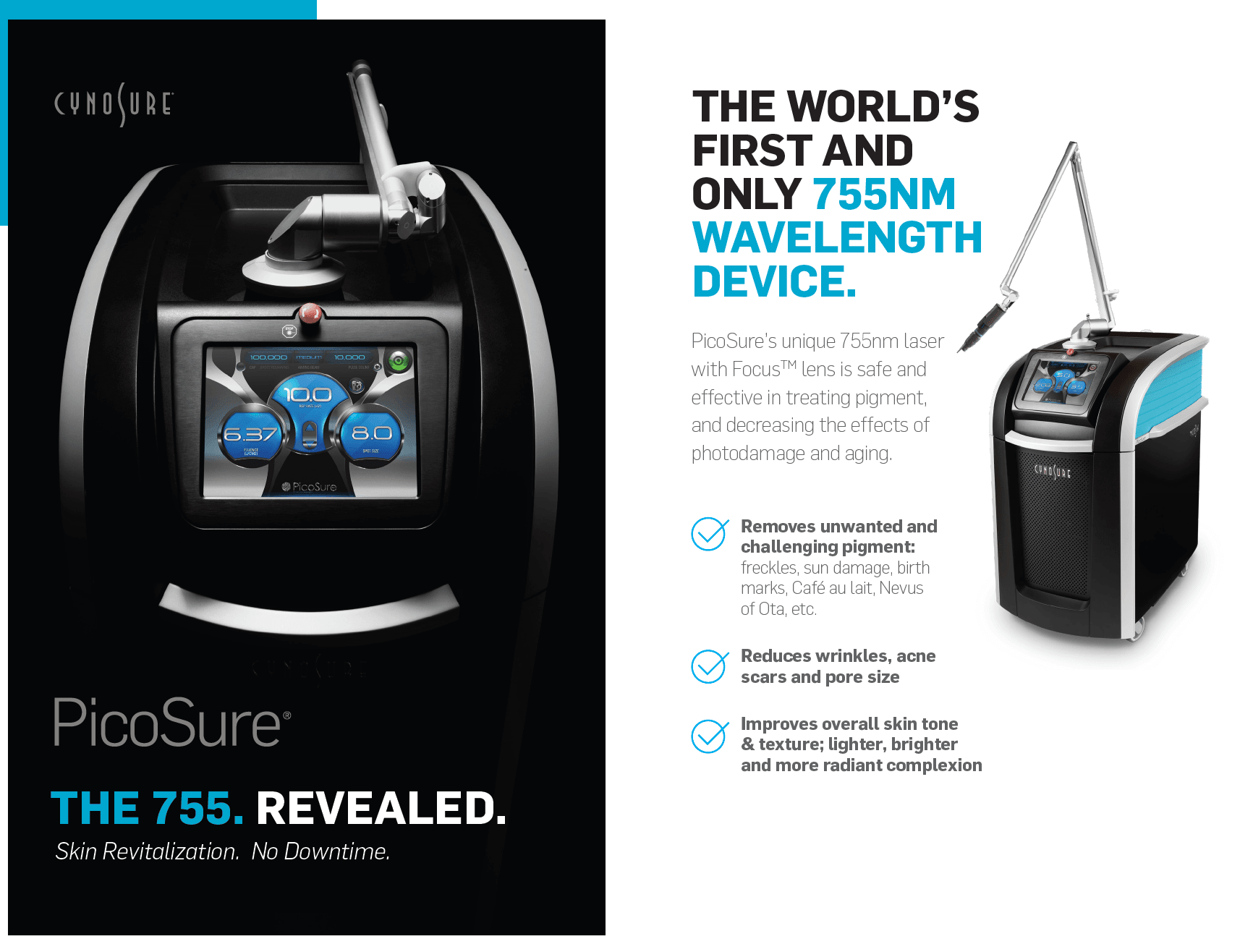
Top 10 Picosecond Laser Machine Manufacturers for Clinics in 2026
LEARN MOREYou may also like


Further reading

Tattoo Removal Laser Machine Cost and Ownership Guide

CO2 Laser Treatment Room Setup Checklist

Aesthetic Machine Factory Acceptance Test Before Shipment


